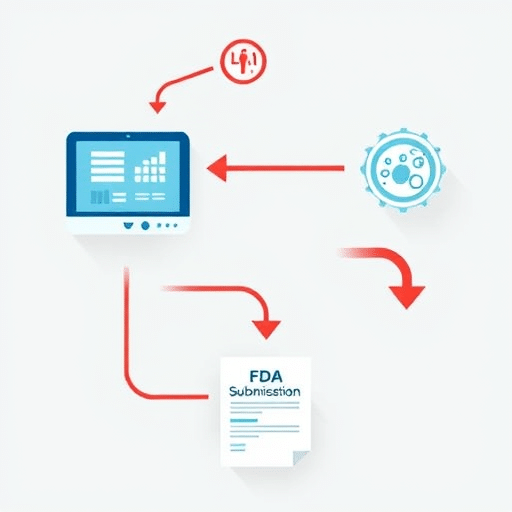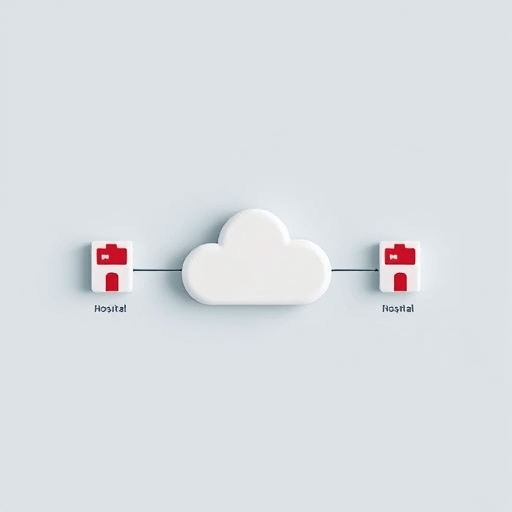
Real-world evidence submissions increasingly depend on patient registries that span dozens of hospitals, specialty clinics, and academic centers. Yet the same data that makes these submissions scientifically compelling also makes them legally and ethically sensitive. Federated learning for multi-site registry data offers a workable middle ground: collaborators train shared models without ever pooling raw patient records behind a single firewall. This guide compares three architectures that sponsors, CROs, and data partners are deploying today to keep privacy hurdles from derailing evidence generation timelines.
Why Federated Approaches Are Reshaping RWE Pipelines
Regulators expect real-world evidence packages to reflect diverse populations, not single-center cohorts pulled from one electronic health record vendor. At the same time, GDPR, HIPAA, and a growing patchwork of state-level US privacy laws make it increasingly expensive to centralize identifiable health data. Federated learning addresses both pressures by sending the algorithm to the data, rather than the data to the algorithm. The central coordinator only ever sees model updates, not patient rows.
The result is a workflow that scales across registries while preserving local data governance. For sponsors preparing RWE submissions to support label expansions or post-marketing commitments, this is no longer an experimental curiosity. It is becoming the default way to assemble multi-site cohorts in 2026.
The Three Constraints Every Architecture Must Satisfy
- Data minimization: No raw patient data leaves the originating institution.
- Statistical fidelity: Aggregated updates produce models equivalent to centralized training within acceptable tolerance.
- Auditability: Every round of training must be reproducible and defensible to regulators reviewing submission dossiers.
Architecture 1: Centralized Coordinator With Encrypted Gradient Exchange
The most mature pattern treats each registry site as a client and a trusted coordinator as the server. Each round, sites train locally on their registry data, encrypt the gradient updates, and send them to the coordinator for aggregation. Secure aggregation protocols, sometimes combined with differential privacy noise, prevent the coordinator from reconstructing individual contributions.
This architecture works best when registry partners have invested in MLOps tooling and can run containerized training jobs on demand. It also gives data scientists the familiar feel of a single distributed training run, which lowers the barrier to adoption for teams accustomed to cloud machine learning.
Strengths and Trade-offs
- Strength: Mature tooling, easy to integrate with existing experiment tracking platforms.
- Strength: Straightforward to layer in additional privacy controls such as secure enclaves or homomorphic encryption.
- Trade-off: The coordinator remains a single point of failure and a focal point for regulatory scrutiny.
- Trade-off: Sites with intermittent connectivity can stall rounds, slowing time to submission.
Architecture 2: Peer-to-Ped Ledger Networks
For consortia that want to remove the coordinator entirely, a peer-to-peer gossip network is an attractive alternative. Each site maintains its own model replica and exchanges updates directly with a small set of peers, often using a gossip protocol that converges on a global model over many short rounds. A shared ledger, typically permissioned, records the hash of each exchange so auditors can later verify provenance.
This design appeals to research networks that already operate under joint data use agreements, such as oncology consortia or rare disease foundations. Because there is no central aggregator, no single party can be accused of hoarding model insights. The ledger itself contains no patient data, only cryptographic attestations.
Strengths and Trade-offs
- Strength: Distributes trust across all participating sites.
- Strength: Tolerates nodes joining and leaving without halting the network.
- Trade-off: Convergence can be slower and noisier than coordinator-based designs.
- Trade-off: Debugging divergent model behavior is harder without a central vantage point.
Architecture 3: Trusted Execution Environment Sandboxes
A third pattern places the training workload inside a hardware-secured enclave at each site. The enclave decrypts data, runs the assigned computation, and re-encrypts the output before returning it. External observers, including the host institution’s own IT staff, see only ciphertext in transit and an attestation report at the end.
Trusted execution environments shine when registry data is highly sensitive, such as genomic sequencing, pediatric cohorts, or detailed claims-linked records. They also offer a cleaner compliance story for sites operating under strict national data protection regimes, because the enclave can be configured to reject queries that would violate local policy.
Strengths and Trade-offs
- Strength: Strongest technical barrier to exfiltration.
- Strength: Clear, attestable boundaries for local compliance officers.
- Trade-off: Requires modern CPUs or accelerator support, which not every site can provide.
- Trade-off: Operational complexity rises when multiple enclave vendors are mixed across a consortium.
Selecting the Right Architecture for a Given Submission
Most federated RWE programs end up blending elements of all three patterns. A pragmatic selection framework begins with three questions.
1. How Mature Are the Registry Sites?
If sites already run standardized Docker-based workloads, a gradient exchange design is the path of least resistance. If sites have heterogeneous stacks or limited cloud presence, a peer-to-peer approach with lightweight clients reduces friction.
2. What Is the Regulatory Exposure?
Sensitive populations, rare disease cohorts, and genomic data warrant the heavier lift of trusted execution environments. Broader outcome registries with de-identified structured fields can usually be served by the first two architectures.
3. Who Owns the Final Model?
Sponsors seeking an internal submission asset may prefer the centralized coordinator, since they can host it themselves. Consortia that intend to publish jointly may lean toward peer-to-peer designs that distribute governance.
Operational Habits That Keep Federated Programs Compliant
Architecture choice alone does not satisfy privacy officers. Three operational habits consistently separate programs that pass review from those that stall.
- Document the data flow at each site. A one-page diagram per registry showing where data lives, how it is accessed, and what leaves the boundary remains the most persuasive artifact in regulatory interactions.
- Run privacy audits before each submission cycle. Replays of past training rounds using synthetic data can reveal whether membership inference or reconstruction attacks have become feasible.
- Version the model and the policy together. Storing the privacy configuration alongside the model artifact ensures that any reviewer can reconstruct exactly what safeguards were in place when the results were produced.
Conclusion
Federated learning for multi-site registry data has matured into a practical foundation for evidence generation across institutions. Centralized coordinator designs offer familiarity, peer-to-peer networks distribute trust, and trusted execution environments provide the strongest technical guarantees. The right choice depends on the sensitivity of the data, the maturity of the partner sites, and the governance model of the consortium. Sponsors that invest early in clear data flow documentation, recurring privacy audits, and joint version control of models and policies are best placed to turn federated registries into reliable assets for the next wave of RWE submissions.