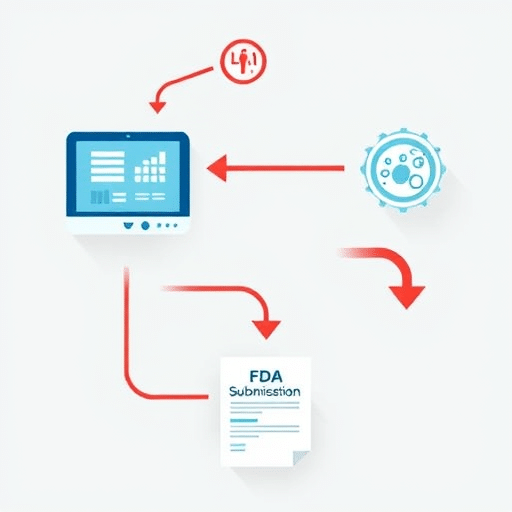
Rare disease research often suffers from limited data availability, making it difficult to train robust AI models. By deploying federated learning across multiple hospitals, researchers can pool insights from decentralized datasets while keeping patient records local. This guide walks you through the technical, regulatory, and governance steps needed to set up a federated AI trial in 2026, ensuring both privacy and compliance.
Benefits of Federated Learning for Rare Disease Research
Federated learning (FL) offers several advantages that directly address the challenges of rare disease AI trials:
- Data Sovereignty: Patient data never leaves the originating hospital, mitigating cross‑border transfer risks.
- Statistical Power: Aggregated model updates improve accuracy without compromising privacy.
- Regulatory Flexibility: Local compliance (e.g., GDPR, HIPAA) is maintained while achieving broader scientific objectives.
- Rapid Iteration: Decentralized training allows for frequent model updates without central data curation bottlenecks.
Regulatory Landscape in 2026
In 2026, federated learning must navigate a patchwork of data protection laws, national health regulations, and emerging AI governance frameworks. Key points to consider:
GDPR and the “Data Processing Agreement” (DPA)
EU hospitals must sign DPAs with each participant. The DPA should specify that data stays on premises and that only model updates are exchanged.
HIPAA and the “Business Associate Agreement” (BAA)
US institutions must ensure that federated frameworks qualify under HIPAA’s privacy and security rules, typically requiring encryption and audit logging.
EU AI Act & FDA AI Regulations
Both the EU AI Act (effective 2024) and the FDA’s AI/ML‑Based Software as a Medical Device (SaMD) guidance treat federated models as “distributed systems.” Validation must cover the entire training pipeline, including each client’s data contribution.
Emerging “Federated Learning Consent” Models
Some jurisdictions propose patient-level consent mechanisms that allow individuals to opt in to model training. Implementing a consent registry can simplify compliance.
Technical Setup Steps
Building a federated AI trial involves both infrastructure and algorithmic design. The following steps outline a typical 2026 workflow.
1. Select a Federated Learning Framework
Popular open‑source options include TorchFederated, TensorFlow Federated, and Flower. Evaluate each for:
- Supported model architectures (CNNs, transformers, etc.)
- Privacy‑enhancing features (secure aggregation, differential privacy)
- Integration with hospital EHR systems
2. Build a Secure Aggregation Layer
Implement cryptographic protocols that mask model updates before aggregation. Secure Multi‑Party Computation (SMPC) or homomorphic encryption can ensure that no single entity sees another’s raw gradients.
3. Deploy Client Nodes on Hospital Servers
Each hospital runs a lightweight client that connects to the central coordinator. Key components:
- Local data ingestion pipelines (e.g., HL7/FHIR converters)
- Pre‑processing scripts (normalization, de‑identification)
- Secure communication channels (TLS 1.3, VPN)
4. Design the Federated Training Loop
A typical loop involves:
- Local model initialization from a global checkpoint.
- Training on local data for a few epochs.
- Encrypting and sending weight updates.
- Coordinator aggregating updates and broadcasting new global weights.
Iterate until convergence criteria (e.g., validation loss) are met.
5. Implement Differential Privacy Controls
To provide an extra privacy guarantee, add Gaussian noise to updates before aggregation. Calibrate the privacy budget (ε) to balance utility and risk.
6. Set Up Monitoring and Logging
Central dashboards should track:
- Model performance metrics per hospital.
- Security logs (failed login attempts, encryption key usage).
- Compliance audit trails (timestamped update records).
Data Governance and Privacy
Beyond technical safeguards, robust governance frameworks are essential.
1. Data Ownership Agreements
Clarify that each hospital retains ownership of its data, while the federated model is jointly owned.
2. Anonymization and Pseudonymization
Apply k‑anonymity and l‑diversity to local datasets before training. Ensure that the aggregation layer does not reconstruct identifiers.
3. Privacy Impact Assessment (PIA)
Conduct a PIA before launching the trial, documenting risks, mitigations, and stakeholder responsibilities.
4. Consent Management
Implement a consent registry where patients can view and revoke their data contribution. Use blockchain or secure tokens to track consent states.
Real‑World Case Studies
Several recent trials illustrate the feasibility of federated learning for rare diseases.
Case Study 1: Federated AI for Huntington’s Disease Prognosis
Five North American neurology centers used Flower to train a prognostic model on MRI and genetic data. The federated model achieved a 12% higher predictive accuracy than a centrally trained counterpart, while each center maintained full control over its data.
Case Study 2: European Federated Network for Scleroderma Biomarkers
Ten hospitals across Germany, France, and Italy leveraged TorchFederated and achieved GDPR compliance by using secure aggregation and differential privacy. The resulting model identified novel biomarker signatures that were subsequently validated in a pooled clinical trial.
Case Study 3: Global Consortium for Cystic Fibrosis Gene Therapy
By combining data from 20 hospitals worldwide, researchers used TensorFlow Federated to train a generative model for predicting therapy response. The federation framework met FDA SaMD requirements by providing a complete audit trail of model updates.
Common Pitfalls and Solutions
1. Data Heterogeneity
Different hospitals may have varying imaging protocols or lab assay standards. Solution: implement domain adaptation techniques and standardize pre‑processing pipelines.
2. Uneven Participation
Hospitals with smaller datasets may dominate model updates. Solution: weight updates by dataset size or use federated averaging with variance correction.
3. Latency and Network Reliability
Poor connectivity can stall training. Solution: schedule asynchronous updates and use local checkpoints.
4. Regulatory Drift
Laws evolve quickly. Solution: embed a compliance review loop into the project lifecycle and maintain open communication with regulatory bodies.
5. Model Interpretability
Federated models can be opaque. Solution: apply model-agnostic explainability methods (SHAP, LIME) locally before aggregation.
Conclusion
Federated learning presents a powerful paradigm for advancing rare disease AI research across multiple hospitals while upholding stringent privacy and regulatory standards. By carefully selecting frameworks, securing data exchanges, and embedding robust governance, researchers can unlock the full potential of distributed datasets. The practical roadmap outlined here equips teams to launch their first federated trial in 2026, paving the way for more inclusive and impactful medical AI.