Voice-based digital biomarkers for early Parkinson’s disease detection are moving from research curiosities into practical clinical tools, and 2026 marks a turning point in how neurologists and movement disorder specialists can deploy them. Acoustic signatures captured during routine speech tasks can reveal hypokinetic dysarthria years before motor symptoms become obvious, but turning a promising algorithm into a validated clinical signal requires rigor. This guide walks clinicians through the validation framework that separates a meaningful digital biomarker from a noisy prototype.
Why Voice Is a Front-Runner Among Non-Motor Biomarkers
Prodromal Parkinson’s disease affects the laryngeal and respiratory musculature well before a patient notices tremor or rigidity. Subtle changes in pitch variability, vowel articulation, and breath group timing can be quantified with consumer-grade microphones and a few minutes of scripted speech. Unlike blood tests or imaging, voice collection is remote, repeatable, and inexpensive, which makes it ideal for longitudinal tracking and population screening pilots.
- Speech requires fine motor control across respiratory, phonatory, and articulatory subsystems.
- Acoustic features such as jitter, shimmer, harmonics-to-noise ratio, and formant transitions degrade measurably in early Parkinson’s.
- Smartphones and ambient devices make passive sampling feasible at scale.
The challenge for clinicians is not whether voice carries signal, but how to interpret the output in the context of comorbidities, medication effects, and aging voices.
Anatomy of a Voice Biomarker Pipeline
Understanding the pipeline helps clinicians evaluate published evidence and vendor claims. A typical system has four layers:
1. Signal Acquisition
Recording protocols range from clinic-based controlled captures to smartphone apps prompting daily readings. Standardized tasks, such as sustained phonation, reading a fixed passage, and spontaneous monologue, provide complementary information about phonatory stability and prosodic variability.
2. Feature Extraction
Hand-crafted acoustic features remain common, but deep-learning embeddings trained on large speech corpora are gaining traction. Clinicians should ask whether the feature set is interpretable enough to support clinical reasoning or whether the model functions as a black box.
3. Modeling and Classification
Most published classifiers treat the problem as a binary case-control task. More clinically useful outputs include continuous severity scores aligned with the MDS-UPDRS speech item, or probability trajectories that flag meaningful change over time.
4. Decision Support Layer
Results must be presented in a way that fits a clinical workflow. A score out of context is unhelpful; longitudinal trend lines, confidence intervals, and comparable reference cohorts are essential.
Designing Validation Studies That Clinicians Can Trust
A robust validation framework rests on four pillars: analytical validity, clinical validity, clinical utility, and reproducibility. Each addresses a different layer of evidence and must be satisfied before adoption.
Analytical Validity
Analytical validity asks whether the biomarker measures what it claims under controlled conditions. Sensitivity to microphone type, background noise, and language must be characterized. Studies should report signal-to-noise thresholds and exclude recordings that fail quality checks. Reproducibility across operating systems and device generations is a frequent weak point in early literature.
Clinical Validity
Clinical validity establishes the biomarker’s ability to identify disease or predict progression. A well-designed study recruits a cohort that includes prodromal cases, established Parkinson’s patients, and relevant controls such as essential tremor, atypical parkinsonism, and age-matched healthy speakers. Cross-sectional accuracy is a starting point; prospective follow-up that confirms conversion to clinically defined Parkinson’s is the gold standard.
Clinical Utility
Clinical utility evaluates whether using the biomarker improves outcomes compared with standard care alone. Does early detection change management? Does it reduce diagnostic odyssey length? Decision-impact studies embedded within neurology clinics are increasingly required by payers and guideline committees.
Reproducibility and Generalizability
Multicenter studies across diverse linguistic and demographic groups are non-negotiable. Voice is shaped by accent, dialect, and cultural speech patterns, so a model trained on American English speakers will not transfer cleanly to Japanese or Brazilian Portuguese without retraining and local validation.
Navigating Regulatory and Ethical Considerations
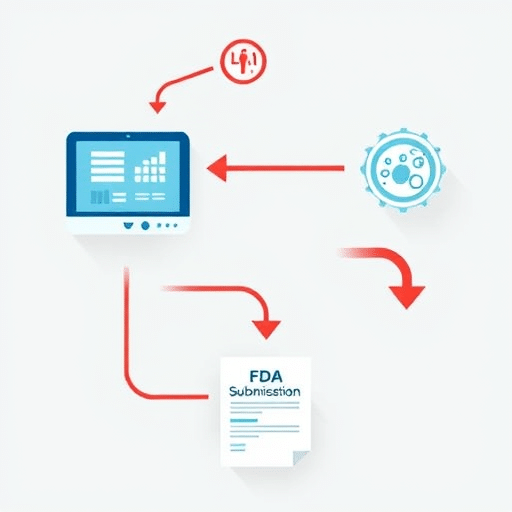
Regulators now differentiate between wellness apps and software as a medical device. A voice biomarker intended to inform diagnosis or disease monitoring typically falls under the latter category. In the United States, the FDA’s predetermined change control plan framework allows iterative model updates without resubmission, provided the sponsor commits to rigorous performance monitoring.
Ethical considerations include informed consent for passive recording, data minimization, and clear disclosure when algorithms are used. Voice data can reveal mood, cognitive load, and identity, so governance frameworks should treat recordings as sensitive health information subject to HIPAA or GDPR protections.
Integrating Voice Biomarkers Into Clinical Workflows
Technology adoption fails when it adds friction. Successful integration patterns share three traits.
- Pre-visit capture: patients record speech at home through a portal app, and results arrive in the chart before the appointment.
- Decision-aligned output: scores map to existing clinical constructs such as MDS-UPDRS speech subscores or risk categories for phenoconversion.
- Actionable thresholds: alerts fire only when longitudinal trajectories cross predefined boundaries, avoiding alert fatigue.
Clinicians should pilot these tools in a defined patient subgroup, such as individuals with REM sleep behavior disorder or hyposmia, where pretest probability is meaningfully elevated and the value of early signal is highest.
Common Pitfalls When Interpreting Voice Biomarker Outputs
Even validated tools can mislead if used without context. Common interpretation traps include:
- Confounding by upper respiratory infections, which temporarily distort acoustic features.
- Medication effects, particularly levodopa, which can acutely improve phonatory stability and mask progression.
- Cognitive load and fatigue, which alter prosody independent of motor disease.
- Linguistic mismatch, where a model is applied to a speaker population outside its training distribution.
A practical safeguard is to require multiple recordings over several weeks before acting on an abnormal result, mirroring the confirmatory approach used for other laboratory biomarkers.
Looking Ahead: Multimodal Biomarkers and Continuous Monitoring
Voice will not stand alone in the future biomarker landscape. Combining acoustic features with wearable gait sensors, digital handwriting analysis, and sleep metrics produces multimodal signatures with stronger predictive value than any single modality. Continuous passive monitoring through smart speakers and hearing aids may eventually provide ambient speech sampling without active patient effort, though this raises additional privacy questions that the field is only beginning to address.
For now, the clinician’s role is to demand evidence aligned with the four-pillar framework, participate in validation cohorts, and apply these tools where the clinical question is well defined. Done thoughtfully, voice-based digital biomarkers can shorten the path to diagnosis, sharpen monitoring between visits, and ultimately give patients earlier access to disease-modifying therapies as they emerge.
The transition from research prototype to validated clinical biomarker is neither quick nor automatic, but the methodology now exists to do it responsibly. Clinicians who engage early with the validation process will shape tools that fit real practice rather than retrofitting their decisions to whatever the algorithm produces.