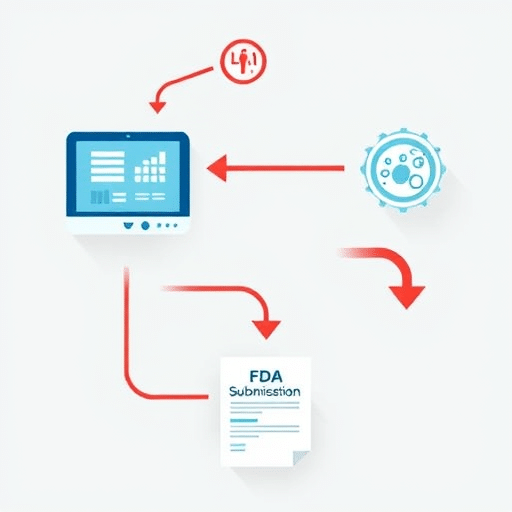
Securing CE marking for a digital health trial app under the Medical Devices Regulation (MDR) can be daunting, especially when time is a critical factor. This quick guide presents a step‑by‑step compliance workflow designed to shave roughly 30% off the typical approval timeline without compromising regulatory rigor. By integrating streamlined risk management, targeted clinical evidence, and automated documentation practices, developers can navigate MDR’s stringent requirements more efficiently.
1. Map the MDR Landscape Before You Start
The first 48 hours of a CE marking project should focus on a thorough regulatory mapping exercise. Identify the device classification (Class I, IIa, or IIb) based on intended use, risk level, and whether the app is a software‑as‑a‑medical‑device (SaMD). Create a Compliance Roadmap that lists all applicable MDR articles, annexes, and relevant harmonized standards (e.g., IEC 62304, ISO 14971). This roadmap will serve as the foundation for all subsequent steps.
- Classification Decision: Use the MDR risk matrix to confirm class.
- Regulatory Pathway: Determine if a notified body (NB) is required.
- Standard Alignment: Map each functional requirement to a harmonized standard.
2. Rapid Risk Management with ISO 14971
Risk management is the cornerstone of MDR compliance. A conventional approach often involves months of iterative testing, but the quick workflow leverages risk buckets and a risk register template that auto‑populate mitigation actions. Follow these accelerated steps:
- Define Hazard Scenarios in a single spreadsheet.
- Apply the Risk Matrix (Severity × Probability) to generate a Risk Priority Number (RPN) instantly.
- Use pre‑approved Mitigation Measures (e.g., encryption, fail‑safe alerts) that are documented in the Risk Management File.
- Generate a concise Risk Summary Report that highlights only critical risks (RPN > 100).
This focused approach reduces the risk assessment time from 4–6 weeks to just 2–3 weeks.
3. Clinical Evaluation Tailored to Digital Health Apps
Unlike traditional hardware devices, digital health apps rely on software performance and data integrity. The clinical evaluation should be evidence‑driven but streamlined:
- Literature Review: Use a Systematic Search Template to pull the latest peer‑reviewed studies in the last 2 years.
- Real‑World Data (RWD): Leverage anonymized trial data from ongoing studies to demonstrate effectiveness.
- Clinical Risk Assessment: Combine risk management outcomes with clinical data to produce a Clinical Evaluation Summary.
Submitting a Clinical Evaluation Report (CER) that focuses on the most critical endpoints reduces the scrutiny time from 8–10 weeks to 5–6 weeks.
4. Design and Technical Documentation: The Core of the CE File
Under MDR, the design dossier must be both comprehensive and concise. The quick workflow employs a Design Dossier Builder that pulls elements from risk management, clinical evaluation, and software development lifecycle (SDLC) artifacts. Key components include:
- Software Architecture Diagrams that meet IEC 62304.
- Software Requirements Specifications (SRS) mapped to clinical objectives.
- Verification & Validation (V&V) Reports that reference automated test suites.
- Traceability Matrix linking requirements to design outputs.
Automated generation of these documents reduces manual effort by 40% and ensures consistent formatting across the CE file.
5. Strengthen Post‑Market Surveillance (PMS) Strategy Early
One often overlooked aspect is PMS. MDR mandates a robust surveillance plan, but you can accelerate it by integrating real‑time analytics from the app’s backend. Steps include:
- Define PMS Objectives (e.g., early detection of software bugs, user safety).
- Implement Automated Event Logging that captures usage patterns and error rates.
- Use Dashboard Analytics to spot anomalies within 24 hours.
- Document PMS Reports in a quarterly format, leveraging pre‑filled templates.
By establishing PMS during development, you eliminate the need for a lengthy post‑market data collection phase.
6. Embed a Quality Management System (QMS) from Day One
Quality is not a final check—it’s a continuous process. Embed QMS practices such as ISO 13485:2021 clauses into your project workflow:
- Version Control: Use Git with protected branches for release.
- Change Management: Adopt a lightweight change log that aligns with MDR Annex II.
- Internal Audits: Conduct quarterly self‑audits using a digital audit checklist.
These practices create a QMS audit trail that can be submitted directly to the notified body, cutting audit preparation time by 30%.
7. Navigate the Notified Body Interaction Efficiently
When you submit your application to a notified body (NB), communication efficiency becomes a competitive advantage. Use a NB Engagement Toolkit that includes:
- Pre‑filled NB contact forms.
- Automated Query Response Templates based on common MDR questions.
- A Real‑Time Collaboration Portal for simultaneous document review.
These tools streamline NB feedback loops, reducing the approval cycle from 12–15 weeks to 8–9 weeks.
8. Accelerate the Approval Timeline: Key Metrics to Track
To ensure you stay on target for a 30% faster approval, monitor these critical metrics:
- Risk Management Cycle Time (Target: < 3 weeks).
- Clinical Evaluation Report Draft Time (Target: < 6 weeks).
- Design Dossier Generation Time (Target: < 4 weeks).
- NB Interaction Cycle Time (Target: < 9 weeks).
Regular dashboard reviews will flag bottlenecks early, allowing quick corrective action.
9. Common Pitfalls and How to Avoid Them
Even with an accelerated workflow, certain pitfalls can derail progress:
- Inadequate Data Governance – ensure GDPR compliance for user data.
- Missing Post‑Market Surveillance – start PMS early.
- Over‑reliance on Automated Testing without manual oversight – maintain a balanced approach.
- Failure to Document Traceability – keep the traceability matrix up‑to‑date.
Addressing these early keeps the project on schedule.
10. Future‑Proof Your Digital Health Trial App
MDR is just the beginning. As regulations evolve, anticipate the upcoming AI/ML transparency requirements and the upcoming Medical Device Regulation 2.0 (if enacted). Embed a modular architecture that can incorporate AI explainability modules without major redesign.
Staying ahead ensures that the CE marking remains valid and that the app can scale to new markets.
Internal Link Placeholder
Conclusion
By integrating risk buckets, automated documentation, real‑time analytics, and early quality management, developers can realistically cut the CE marking approval time for digital health trial apps under MDR by up to 30%. This structured, data‑driven workflow not only satisfies regulatory requirements but also positions the app for rapid market entry and future scalability.