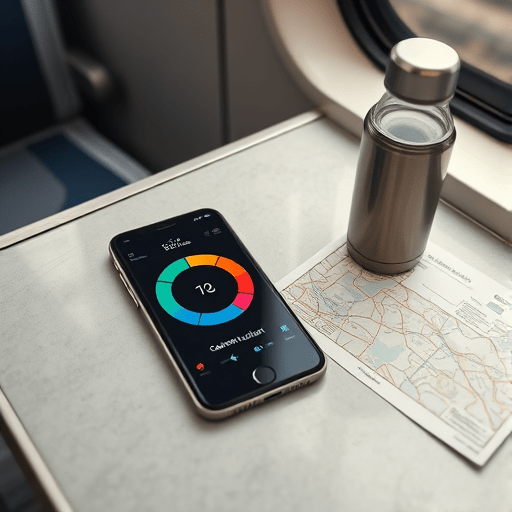
Travel with a carbon budget is a mindset shift as much as a toolset: instead of asking “can I afford this flight?”, you ask “how much of my annual carbon budget will this trip use?” The good news is that carbon budgeting apps have matured considerably in the last year. They no longer show just a single number after the fact; they help you plan, compare, and adjust in real time. If you’re ready to make eco-friendly travel decisions based on data rather than vague promises, these are the top apps to track trip emissions and build a holiday that feels lighter on the planet.
Why Your Trip Needs a Carbon Budget
Aviation and travel emissions are notoriously hard to track because the same route can generate very different footprints depending on aircraft type, load factor, seat class, and even landing approach. A carbon budget app cuts through the noise. It gives you a single, consistent unit—kilograms of CO₂—across every transport option. More importantly, it connects the trip to a bigger personal budget, which is what triggers behavior change. When you see that a weekend city break uses 12% of your yearly allowance, a slower overnight train starts to look genuinely appealing.
This year, several travel platforms have started opening up their data, making it easier for apps to calculate trip-level emissions before you book. Instead of relying on a vague carbon label, you can now set your own limits, monitor your balance, and decide where to spend your remaining carbon.
What Makes a Trip Emissions Tracker Actually Useful
Not all apps are created equal. The best ones share a few important features:
- Mode coverage: Flight, car, bus, train, and even ferry data in one place.
- Transparent assumptions: They clearly state whether the estimate includes radiative forcing or only direct fuel burn.
- Budget alerts: They push notifications when you are about to exceed your self-set cap.
- Offline support: You can log trips without a connection, which matters if you travel to remote areas.
- Group profiles: Useful for families or friends who want to share a trip budget rather than monitor each other individually.
The 2026 Shortlist: Top Apps to Track Trip Emissions
These five apps stand out because they combine accuracy with user-friendly design. Each one has a different strength, so choose the one that matches your travel style.
Capture: The Best All-Rounder for Trip Planning
Capture has evolved from a simple daily footprint tracker into a true travel companion. You create a “trip” inside the app, and Capture calculates emissions for each leg as you add it. It uses public transport schedules and flight databases to give real-time numbers. The design is friendly, but the scoring is strict: a return flight from Lisbon to Barcelona will instantly consume most of your monthly transport budget. Capture also suggests alternative itineraries using trains and buses, with a “swap cost” that shows both money and emissions saved.
Joro: Best for Syncing Travel with Your Bank Account
If you want a hands-off approach, Joro links to your payment cards and automatically identifies travel-related purchases. It reads transaction descriptions and maps them to transport and accommodation categories. If you buy a plane ticket or a train ticket, Joro estimates the emissions and deducts them from your monthly carbon budget. It is not perfect for every trip, but it is excellent for seeing the cumulative impact of travel across multiple vacations, business trips, and weekend getaways. By the end of the year, you know exactly which trip used the largest slice of your carbon pie.
My Climate: Best for Flight Comparisons
My Climate has a long history as a flight CO₂ calculator, and its mobile app now puts that tool in your pocket while you are planning. You can compare different flight options on the same route, including stopovers and cabin classes. What sets it apart is the granularity: it tells you how much emissions come from the flight itself, from airport ground services, and from the extra space in business class. That level of detail helps you make more nuanced eco-friendly travel decisions, such as choosing a direct morning flight over a nighttime connection with a long layover.
Greenly: Best for Group and Family Carbon Budgets
Greenly initially focused on corporate carbon accounting, but the personal mode is a useful addition for group travel. You can set up a shared trip budget with a simple invite link. Each person adds their flights, accommodation, and activities. The app aggregates the total and compares it with the group’s target. This is especially helpful for family reunions or friend trips where one person might not want to be the “carbon police.” Instead of blaming anyone, you see the group-level impact and collectively decide where to trim.
Earth Hero: Best for Turning Travel into a Climate Challenge
Earth Hero adds a playful element to carbon budgeting. It offers challenges like “stay under 500 kg for a round trip from London to Morocco” and lets you see how your route compares with community-created low-impact itineraries. It is less detailed than Capture or My Climate for exact flight emissions, but it is the most motivational app on this list. For beginners, it turns carbon budgeting into a game, which is often more effective than a spreadsheet.
Making Eco-Friendly Travel Decisions with a Carbon Budget
At its best, carbon budgeting is not about sacrifice; it is about choosing the right trade-offs. You can travel further in a year if you take the train once and skip the cruise the next. Apps that track trip emissions help you identify those trade-offs in real time. They also help you avoid greenwashing by asking hard questions: does that “carbon-neutral” airport offset really cover the full impact? The better apps let you remove offsetting from the calculation altogether and focus on absolute emissions.
If you are new to carbon budgeting, start with one app and one small trip. Set a realistic limit—say, 200 kg for a short weekend away—and then log every piece of transport, from the bus to the airport to the taxi at the other end. You will quickly notice which parts of the journey cost the most in carbon. Usually, it is not the big flight that surprises you; it is the collection of short car rides and extra checked bags that pushes you over the limit. Once you see that pattern, you can make changes without giving up travel altogether.
A carbon budget should not add anxiety. It should add clarity. Many apps now let you “bank” the carbon you save from daily choices, like cycling to work instead of driving, and then spend that budget on a future vacation. This makes the whole process feel less like restriction and more like a system of rewards. You decide what matters, and the app helps you spend your carbon where it matters most.
Travel with a carbon budget is the natural next step for anyone who likes feeling both adventurous and responsible. With the right app, you can set a limit, make eco-friendly travel decisions, and still get lost in the moment. The tools are here; the only thing left is to decide how much your trip should cost the planet.