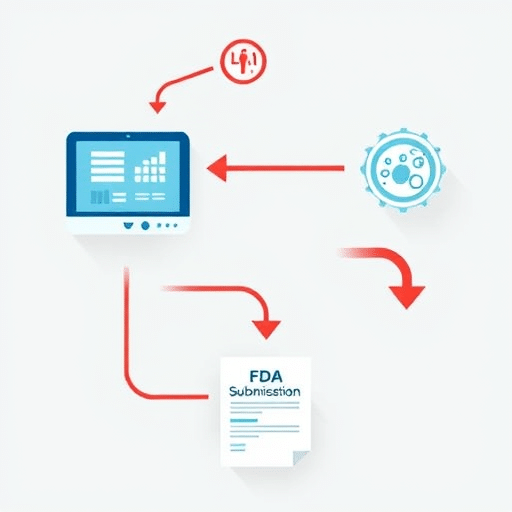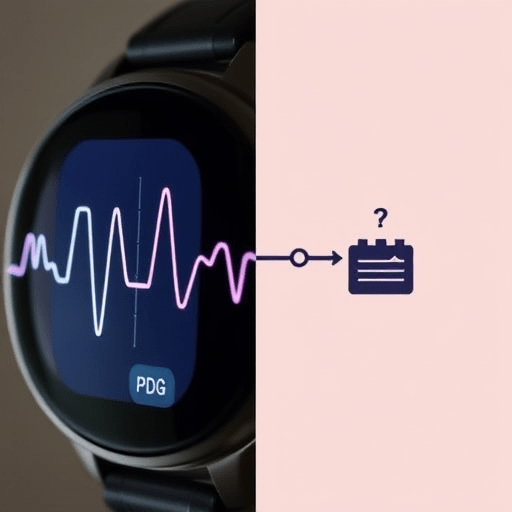
How do you audit wearable data for clinical-grade accuracy and privacy when the signal comes from a wristband worn while commuting, sleeping, or typing? The answer is no longer found in a marketing slide that says “FDA-cleared algorithm.” Instead, it lives in the raw photoplethysmography (PPG) signal and the on-device privacy pipeline. In 2026, the gap between consumer wearables and regulated medical devices is narrowing, but that gap is still filled with hidden artifacts, casual de-identification, and algorithm drift. This article lays out a five-point checklist designed to help data engineers, clinical researchers, and device reviewers evaluate wearable data with the same rigor they would apply to a clinical-grade sensor.
Why Clinical-Grade Wearable Data Audits Are Harder Than They Look
Consumer wearables are optimized for battery life and user engagement, not for FDA-grade data quality. That means the PPG signal is often filtered, compressed, and averaged before anyone ever sees it. A conventional audit may look at heart rate correlation and mean absolute error, but those metrics can hide periodic motion artifacts, sensor contact problems, and privacy gaps. The challenge is to audit the data pipeline from the skin interface to the cloud—and to check whether de-identification is built in before data leaves the device. Without that level of scrutiny, a device can look accurate in aggregate while being clinically unreliable at the beat-to-beat level.
Below are the five areas that matter most in 2026. Each one includes practical audit questions to adapt to your own workflow.
Five-Point Checklist for Wearable Data Accuracy and Privacy Audits
1. Audit PPG Artifact Detection at the Source, Not After Smoothing
The raw PPG signal is a waveform of light absorption that depends on blood volume, but it also absorbs motion, ambient light, and changes in contact pressure. The first step in any audit is to verify that the device’s artifact detection runs on the same sample-by-sample PPG data that feeds the algorithms, not on a 5-second averaged waveform. If the device discards raw traces, or if artifact labels are only available as aggregate percentages, the audit cannot confirm whether bad sections were removed or simply smoothed over. A common failure mode is “artifact suppression,” where the algorithm removes an entire segment rather than labeling it; clinicians then see a clean signal but no estimate of missing data.
- Are accelerometer channels time-synchronized with PPG for motion artifact correlation?
- Is the raw signal stored locally for a clinically meaningful period, or only the derived metrics?
- How does the device classify periods of low perfusion, pressure-induced waveform distortion, and motion edge effects?
2. Scrutinize Beat-to-Beat Intervals and Confidence Scores for Heterogeneous Physiology
Clinical-grade accuracy depends on individual pulse intervals, not just a clean average. An audit should examine the beat-to-beat interval series and the corresponding confidence score for every detected heartbeat. Many consumer wearables still reject or insert beats based on statistical smoothing, which works for typical healthy adults but can fail for people with cardiac arrhythmias, low perfusion, or deeply pigmented skin. The audit should also check whether the sensor uses multiple wavelengths and wavelength-specific artifact cancellation to account for skin tone and tissue thickness. It is equally important to confirm that confidence scores are not computed after the fact using the same model that generated the intervals, as that circular validation can hide systematic bias.
- Does the device output a per-beat confidence score that can be filtered downstream?
- Are ectopic beats and premature contractions flagged instead of silently excluded?
- What post-processing is applied to the interval data before HRV metrics are calculated?
3. Verify That On-Device De-Identification Is Authentic and Irreversible
Privacy in clinical wearable data is not just about removing a participant ID. True on-device de-identification means that raw PPG traces are transformed into features—heart rate, HRV, respiratory rate—inside the device’s secure processor, and that the raw signal never leaves the sensor package. In an audit, ask to see the device’s data flow diagram and look for any path where raw PPG, accelerometer, or audio-derived blood pressure data can be transmitted. Also check whether de-identification includes secure key management and whether a software update can silently revert to a more transparent data mode. This requirement is especially important for regulated research trials, where informed consent often covers what happens to data after it leaves the device.
- Are feature extraction and de-identification performed in a secure element with separate firmware?
- Are raw PPG signals ever available to app developers through an SDK?
- Is differential privacy or local noise added to features before transmission?
4. Test for Re-Identification Risk in Time Series and Metadata
Even a de-identified PPG feature stream can become personally identifiable when combined with time stamps and daily patterns. A person’s 24-hour heart rate profile can be as distinctive as a fingerprint, especially when merged with GPS location, app usage, or sleep-wake timing. The audit should simulate realistic re-identification attacks, using only the data that would be accessible to a cloud backend after de-identification. Metadata, such as device firmware version, time-zone transition history, and serial number, can often bypass de-identification. Re-identification risk also includes ecological inference: if a small clinical trial has narrow enrollment, the nightly HR drop of one subject can be matched to other datasets through a combination of time stamps and demographic context.
- Are time stamps coarse-grained or rounded to reduce temporal fingerprinting?
- Are device identifiers replaced with rotating pseudonymous IDs?
- Can a short heart rate segment be matched to a known individual using public databases?
5. Document Algorithm Versions, Drift, and Population Validation
A wearable sensor is a computational platform. When the manufacturer updates its firmware, the interpretation of the same PPG signal can change. A clinical-grade audit must include an algorithmic version manifest, along with validation sets that reflect the target population’s skin tone distribution, perfusion range, and movement patterns. It should also capture model uncertainty over time, because a model trained on healthy volunteers in a lab can drift into dangerous behavior when deployed on older adults with low pulse pressure or chronic conditions. Versioned validation should include synthetic PPG waveforms with known ground truth, plus a holdout set of real ambulatory recordings that were not used to tune the algorithm.
- Which firmware and algorithm version produced each used dataset?
- Has the system been re-validated after every over-the-air update?
- What is the documented margin of error for arrhythmia detection, oxygen saturation, and sleep staging?
Conclusion
Auditing wearable data for clinical-grade accuracy and privacy is a continuous discipline, not a one-time certification. By methodically checking PPG artifact handling, beat-to-beat confidence, on-device de-identification, re-identification resistance, and algorithm versioning, a team can turn a consumer wearable into a defensible source of clinical evidence. The five-point checklist will not make consumer-grade hardware perfect, but it will expose the exact places where the data becomes too uncertain—or too personal—to leave unexamined.