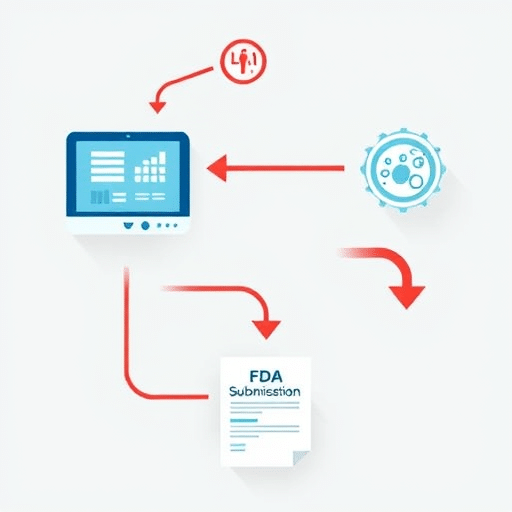
The landscape of regulatory evidence is undergoing its most significant shift in decades. In 2026, real-world data (RWD) quality frameworks have moved from supplementary support to primary submission material for a growing share of FDA approvals. Sponsors are submitting evidence packages built on curated electronic health records, patient-generated wearables data, and claims databases, validated through structured quality frameworks that meet standards once reserved for randomized controlled trials (RCTs). This change reflects both scientific maturity and practical necessity, as the cost, duration, and patient-reach limitations of traditional trials have collided with the urgency of treating complex, fast-moving diseases.
From Supplementary Evidence to Submission Backbone
For years, the FDA accepted real-world evidence (RWE) on a case-by-case basis, often as confirmatory support for traditional trials. That approach has matured into formal guidance, and 2026 is the year the new normal is in effect. Sponsors in oncology, rare disease, and chronic care are increasingly designing regulatory strategies where pragmatic study designs, registry-based cohorts, and synthetic control arms do the heavy lifting. Why? Because the data infrastructure, statistical methods, and auditing tools have caught up to the ambition.
Three forces converged to make this possible: the widespread adoption of the FDA’s Framework for Real-World Evidence Program, harmonization with international regulators through ICH and the European Medicines Agency, and a generation of clinicians trained in digital phenotyping. The result is a regulatory environment that treats high-quality RWD as equivalent to traditional trial data, provided the underlying methodology meets pre-specified quality benchmarks.
The Core of a Modern RWD Quality Framework
A quality framework is not a checklist. It is a structured system of controls that governs how data is sourced, processed, analyzed, and reported. Sponsors building submissions around RWD in 2026 rely on four interconnected pillars:
- Data provenance and fitness: Documented lineage from the original clinical encounter through extraction, transformation, and loading, with explicit confirmation that the data elements map to the research question.
- Quality metrics and thresholds: Pre-specified targets for completeness, consistency, timeliness, and plausibility, with rejection criteria for substandard data sources.
- Bias assessment and sensitivity analysis: Quantitative evaluation of residual confounding, selection effects, and measurement error, paired with transparent reporting of how robust the conclusions are under alternative assumptions.
- Reproducibility and auditability: Version-controlled analytic pipelines, code review, and the ability for FDA reviewers to reconstruct results from raw inputs.
The Open Source Consortium for Real-World Evidence has been instrumental in standardizing these practices, and its 2025 quality metric catalog is now referenced in more than 60% of RWE-heavy submissions, according to industry tracking.
Where Randomized Trials Still Win, and Where They Don’t
It would be inaccurate to suggest randomized trials are disappearing. For first-in-class mechanisms, dose-finding, and regulatory approvals requiring a clean efficacy signal, the RCT remains the gold standard. What has changed is the threshold. When a therapy already has a well-characterized mechanism and the relevant patient population is rare, geographically dispersed, or historically excluded from trials, the cost-benefit calculation shifts. In these cases, a well-designed real-world study can answer the same regulatory question with greater external validity and a fraction of the timeline.
Practical examples in 2026 include label expansions for already-approved oncology agents, post-market commitments in cell and gene therapy, and pediatric extrapolation packages for drugs with adult indications. In each case, the framework lets sponsors demonstrate effectiveness in the populations that will actually receive the drug, not just the narrow cohorts that participated in phase 3.
Pragmatic Trial Design as the Bridge
One of the more interesting developments is the rise of pragmatic embedded trials, where randomization is layered on top of routine clinical care. These designs preserve the causal inference strength of an RCT while generating data within the operational workflow of hospitals and clinics. The result is a hybrid: regulatory-grade evidence collected at near-real-world speed and cost.
For sponsors, the appeal is straightforward. A pragmatic trial embedded in a learning health system can enroll patients who would never meet strict RCT inclusion criteria, capture outcomes that matter to payers and providers, and produce a dataset that doubles as real-world evidence for downstream label expansion. The FDA has signaled openness to these designs in draft guidance issued in late 2025, and final guidance is expected later this year.
Digital Endpoints and Patient-Generated Data
Wearables, smartphone-based assessments, and remote patient monitoring have unlocked endpoint categories that were impossible a decade ago. Continuous activity metrics, passive voice biomarkers, and digital symptom diaries now sit alongside traditional clinical outcomes in submission dossiers. The challenge, and where quality frameworks earn their keep, is ensuring these signals are reliable, validated, and clinically meaningful.
The Digital Medicine Society’s 2026 library of qualified digital endpoints includes measures for Parkinson’s disease, heart failure, depression, and several autoimmune conditions. When sponsors use these qualified measures, the regulatory path is smoother, because the validation work has already been peer-reviewed and accepted.
Common Pitfalls in 2026 RWE Submissions
Even with mature frameworks, sponsors make predictable mistakes. The most frequent issues flagged by FDA reviewers in the first half of 2026 include:
- Missing a priori protocols: Submitting analyses where the research question, cohort definition, or outcome definitions appear to have been decided after looking at the data.
- Inadequate missing data handling: Ignoring or superficially treating missingness patterns that differ systematically between treatment groups.
- Uncalibrated outcome definitions: Using billing codes or EHR fields to identify outcomes without validating against a gold-standard source.
- Overreach in generalizability claims: Inferring effectiveness in populations not represented in the underlying data, particularly across racial, socioeconomic, or geographic lines.
Frameworks do not eliminate these risks, but they force teams to confront them explicitly before submission rather than during the review clock.
What This Means for Sponsors Preparing Submissions
Sponsors planning 2026 and 2027 submissions should treat RWD quality as a program-level investment, not a study-level deliverable. That means building cross-functional teams that include clinical, data engineering, biostatistics, and regulatory affairs from the earliest planning stages. It also means budgeting for data curation, linkage, and validation as core costs, not as overhead.
For smaller biotechs without in-house data infrastructure, partnerships with specialized RWE platforms have become the standard route. These partners bring pre-validated datasets, established quality controls, and regulatory experience that compresses timelines and reduces the risk of refuse-to-file decisions.
Conclusion
Real-world data quality frameworks have matured into the regulatory substrate of modern drug development. In 2026, they are not replacing randomized trials out of ideology but out of demonstrated capability. Sponsors who invest early in fit-for-purpose data, transparent methodology, and integrated analytic pipelines are submitting faster, reaching broader patient populations, and earning approvals that reflect how medicine is actually practiced. The era of treating real-world evidence as a footnote has ended, and the era of treating it as a foundation has begun.