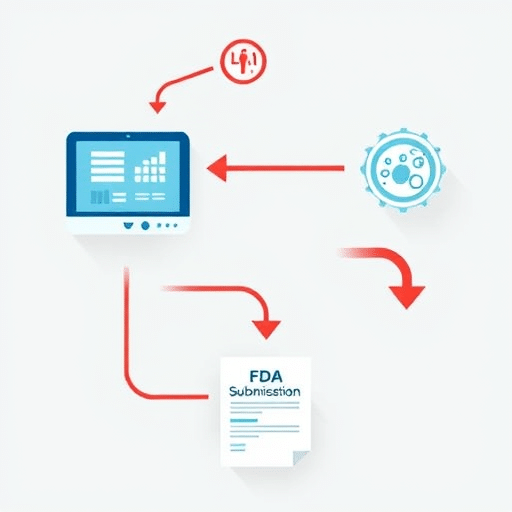
Sponsors who invested years developing wearable sensors, smartphone-based assessments, or algorithm-driven clinical measures are increasingly receiving FDA letters citing gaps in digital endpoint validation. The regulatory bar has shifted as the agency matures its expectations around digital health technologies, and a Complete Response Letter (CRL) tied to endpoint integrity can derail a launch even when the therapy itself is sound. Understanding why your digital endpoint failed FDA review is the first step toward rebuilding credibility and submitting a defensible package on the next attempt.
The Regulatory Inflection Point for Digital Endpoints
The FDA’s October 2023 final guidance on digital health technologies for clinical investigations signaled a transition from permissive pilot programs to rigorous evidentiary standards. By 2026, reviewers expect the same depth of analytical and clinical validation evidence for a smartphone gait metric as for a traditional laboratory assay. The shift has produced a wave of CRLs referencing endpoints that lack clear context of use, sparse verification studies, or insufficient evidence linking the measure to a meaningful aspect of the patient’s experience.
Many sponsors entered the digital endpoint era under the assumption that software-based measures would face lighter scrutiny. The opposite is now true. Algorithm updates, firmware changes, sensor drift, and platform heterogeneity all become validation triggers. When the agency cannot trace a measure from raw signal to clinical interpretation through documented evidence, the endpoint collapses under review.
The Five Most Common Reasons Digital Endpoints Fail Validation
Reviewer feedback collected from publicly available CRLs, Type C meeting minutes, and sponsor disclosures points to a recurring set of root causes. Identifying which apply to your program clarifies the remediation strategy.
1. Unclear or Inconsistent Context of Use
The context of use defines the population, the concept being measured, and the clinical decision the endpoint will inform. Sponsors often describe the concept of interest too broadly, such as “disease severity,” rather than anchoring it in a specific clinical concept that maps to a regulator-recognized outcome. Reviewers respond with requests to narrow the claim or supply additional evidence bridging the abstraction to a patient-meaningful benefit.
2. Inadequate Analytical Validation
Analytical validation answers the question: does the device measure what it claims to measure, and how precisely? Common failures include missing accuracy and precision data across the full operating range, sparse inter-device comparison studies when multiple hardware versions are used, and reliance on healthy volunteer data when the target population exhibits different signal characteristics. Reviewers also flag measurement drift across firmware updates without documented bridging studies.
3. Weak Clinical Validation Evidence
Clinical validation establishes that the digital measure correlates with, or predicts, a recognized clinical outcome. Sponsors frequently submit correlation coefficients without demonstrating minimal clinically important difference, responsiveness to intervention, or replication across independent cohorts. Reviewers increasingly request evidence that the endpoint can detect change in a treatment arm and that the detected change is interpretable to clinicians and patients.
4. Algorithm Transparency and Change Control Gaps
Endpoint algorithms evolve. Reviewers expect a predetermined change control plan that describes version control, performance monitoring thresholds, and the validation evidence required when an algorithm is updated. Sponsors who treat algorithms as proprietary black boxes or who cannot describe input feature provenance face extended review cycles and formal deficiencies. The agency’s recent draft guidance on predetermined change control plans underscores the importance of transparency.
5. Missing or Incomplete Usability Engineering for the Target Population
A digital endpoint is only valid if the target population can use it consistently and correctly. Sponsors who fail to demonstrate task success rates across age, disease severity, and digital literacy subgroups encounter deficiencies rooted in human factors. This issue is particularly common in decentralized trials where unsupervised data collection introduces user-driven variability that the validation framework did not anticipate.
Building a Remediation Roadmap Before Resubmission
A CRL is not a verdict; it is a diagnostic. The most successful resubmissions begin with a structured remediation plan that aligns evidence generation with the specific deficiencies cited. The roadmap below reflects the approach sponsors have used to convert a first-cycle CRL into an approval within twelve to eighteen months.
Conduct a Formal Gap Analysis Against Cited Deficiencies
Map each reviewer concern to a specific evidence gap. For analytical validation gaps, identify the studies required to fill the missing data, including the population, sample size, and statistical thresholds. For clinical validation gaps, determine whether existing data can be re-analyzed or whether new studies are required. A formal gap analysis document becomes the foundation for both the Type C meeting request and the eventual resubmission.
Engage the FDA Through a Type C Meeting
A Type C meeting offers sponsors the opportunity to propose remediation evidence and obtain feedback before initiating costly studies. Coming to the meeting with a written gap analysis, a draft study synopsis, and clear acceptance criteria demonstrates maturity and accelerates alignment. Reviewers appreciate when sponsors present their own solution and ask for confirmation rather than asking the agency to design the fix.
Strengthen Analytical Validation With Bridging Studies
Bridging studies resolve concerns about sensor changes, firmware updates, and population differences. A well-designed bridging study evaluates agreement between the original and updated measurement pipeline using paired data, with pre-specified acceptance thresholds. For sponsors with multi-site or multi-device deployments, a representative sampling strategy across geographies and hardware versions is essential.
Generate or Reanalyze Clinical Validation Evidence
When clinical validation evidence is weak, sponsors should first explore whether existing datasets can support a more rigorous analysis. Reanalysis using responder definitions, longitudinal modeling, or anchor-based approaches sometimes satisfies reviewer concerns without new data collection. When new evidence is required, pragmatic registry designs or observational follow-ups of completed trials can be more efficient than de novo prospective studies.
Implement a Predetermined Change Control Plan
If algorithm transparency contributed to the CRL, a predetermined change control plan filed before resubmission demonstrates that future updates will be governed rather than ad hoc. The plan should describe the categories of changes anticipated, the performance monitoring framework, and the documentation required for each modification. This shift reframes algorithm evolution from a compliance liability to a managed process.
Refresh Usability and Human Factors Documentation
For deficiencies related to usability, a targeted summative usability study with the target population often resolves the issue more efficiently than additional analytical work. The study should focus on the specific use scenarios and user groups cited in the CRL, with clear definitions of task success and use error. Documenting training materials, support infrastructure, and adherence strategies rounds out the package.
Leveraging Lessons From Recent Approvals
The clearest signals about what regulators expect come from recent approvals rather than from guidance alone. Endpoints tied to heart failure hospitalization prediction, continuous glucose monitoring, and actigraphy-based sleep measures have all been approved in recent cycles, and the public decision summaries reveal patterns. Reviewers rewarded sponsors who pre-specified validation cohorts, published their bridging study protocols, and provided longitudinal performance data across multiple device generations. These sponsors treated the endpoint as a living measurement system with documented evolution rather than a frozen deliverable.
Designing for Validation From the Start
The strongest programs embed validation thinking into endpoint selection and trial design rather than treating it as a late-stage hurdle. Early engagement through the pre-IND or pre-meeting process allows sponsors to align context of use, analytical benchmarks, and clinical interpretation frameworks before committing to a registrational design. Endpoint-specific Data Standards Plans and Statistical Analysis Plans that reference digital measure characteristics reduce ambiguity and signal rigor.
Forward-looking sponsors also invest in endpoint stewardship roles that span biostatistics, clinical science, regulatory affairs, and software engineering. This cross-functional model recognizes that a digital endpoint is simultaneously a clinical measure, a software product, and a regulatory artifact. Without explicit ownership, validation evidence accumulates reactively rather than strategically.
Conclusion
A digital endpoint that fails validation is rarely a sign that the underlying science is unsound. More often, the failure reflects an evidence narrative that did not keep pace with the FDA’s evolving expectations around context of use, analytical rigor, clinical interpretation, algorithm transparency, and usability. Sponsors who approach resubmission as a structured remediation exercise, anchored in a formal gap analysis and early agency engagement, consistently recover faster than those who attempt to generate evidence in isolation. As digital endpoint standards continue to mature, the programs that succeed will be those that treat validation as a continuous discipline rather than a submission-stage checklist.