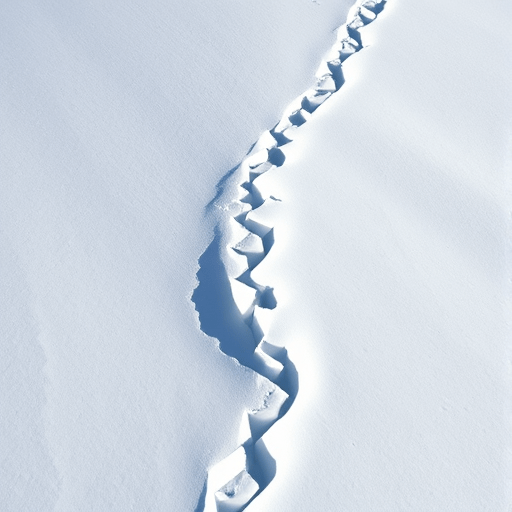
In the backcountry, a stable avalanche forecast can feel like a permission slip. Skiers read the local avalanche center bulletin, see green and yellow shapes across the mountain, and proceed into the start zone with quiet confidence. Yet every winter, a stubborn pattern repeats itself: well-informed riders trigger slides on terrain that, by every measurable indicator, should have been safe. The culprit is rarely a forecasting failure. More often, it is a chain of human-factor blind spots that quietly distorts how backcountry users read the snowpack beneath their skis.
This case-driven investigation examines three real-world incidents from the 2024–2025 season in which parties with strong technical skills, up-to-date training, and access to professional stability tests still triggered avalanches on slopes rated “considerable” or lower. The goal is not to assign blame but to expose the invisible reasoning gaps that convert routine tours into burial events.
The Illusion of a Complete Forecast
Avalanche bulletins compress vast three-dimensional landscapes into two-dimensional polygons. Within each polygon, snow structure can vary dramatically by elevation band, aspect, wind exposure, and underlying terrain features. Skiers tend to anchor on the polygon color rather than the gradient inside it. Cognitive psychologists call this category resistance: once a label is accepted, contradictory data struggles to overwrite it.
One documented case from the Wasatch illustrates the pattern precisely. A guided group of four toured into a south-facing bowl that the local center had rated “moderate.” Formal Extended Column Tests produced ECT results that propagation stopped after one tap at the interface of concern. The group descended one at a time, the textbook approach. On the fourth rider’s second turn, the slab released 60 centimeters deep and 200 meters wide. The bulletin had not lied. The slope’s structure simply differed by less than 100 meters of horizontal distance from a persistent slab problem the bulletin had highlighted two days earlier in an adjacent aspect.
Anchoring on a Single Stability Test
The Extended Column Test and its companion, the Propagation Saw Test, are powerful diagnostic tools. They are also single-point samples drawn from a slope that may contain numerous microclimates. When a test returns a clean result, recreational users often treat the entire start zone as cleared, an effect the risk perception literature calls confirmation closure. The test result becomes the closing argument, and contrary evidence is filtered out.
In a February 2025 incident near Crested Butte, two experienced ski mountaineers performed a Compression Test on a representative column near the entrance to their intended run. Results showed resistant planar fractures with no propagation. They skied the slope without further investigation. Twenty minutes later, a remotely triggered avalanche from an adjacent convexity released above them while they were still in the runout zone. Post-accident analysis revealed a previously unidentified faceted layer 80 centimeters down that the test column had inadvertently bridged over. A second pit, dug five meters away on the convex rollover, would have shown propagation in the same layer.
Three Biases That Distort On-Snow Judgment
- Commitment bias: Once skin tracks are laid and partners are committed to a line, the human mind discounts disconfirming evidence at an accelerating rate.
- Expertise mirror effect: Deep technical training can paradoxically increase confidence in terrain the practitioner has not personally observed, leading them to extrapolate from one slope’s data to another’s structure.
- Social proof compression: The presence of other parties skiing a slope functions as an unintentional vote of confidence, even when those parties possess less information than the observer.
Terrain Memory: The Slope You Skied Yesterday
Recurrent ski tours build mental shortcuts. Skiers who have safely descended a face fifteen times in a season develop a powerful, implicit trust in its character. This is one of the most underappreciated hidden avalanche triggers in repeat-use zones. Snow structure evolves through wind loading, temperature cycling, and precipitation events, but terrain memory holds the prior season’s template in place.
A March 2025 near-miss in the Selkirks demonstrates how that memory can override new data. A party had skied a specific northeast-facing glade on every tour for six weeks with no results. On a bluebird day following a 12-hour period of intense solar radiation, one skier noted a notable temperature spike in the upper snowpack but discounted it based on prior experience. The group dropped in. A wet slab released mid-run, carrying two members 300 vertical feet through a narrow gully. The slope had previously tolerated identical weather events; an early-season rain crust had since formed a new, deeply buried bed surface that none of the prior tours had encountered.
Group Dynamics and the Suppression of Doubt
Backcountry travel is a social activity, and group dynamics introduce their own layer of distortion. The desire to maintain group cohesion can suppress hesitation. A lone voice of concern is often softened, reframed, or silenced entirely before it reaches a decisive form. In structured debriefs of avalanche accidents, this pattern shows up more often than any single technical mistake.
One 2025 incident involving a party of five in the Tetons illustrated the dynamic sharply. The most cautious member, a ski patroller with formal avalanche training, noted a recent shooting crack 30 meters above their intended skin track. He mentioned it once to the group, received affirming nods, and continued. No one suggested re-routing. When the slope later avalanched, triggered by a party member who had stepped off the skin track to adjust a binding, the patroller later reflected that he had framed his concern as an observation rather than a recommendation. The group processed it as informational noise rather than actionable warning.
Wind: The Most Consistent Hidden Variable
Of every hidden avalanche trigger, wind loading remains the most physically real and the most cognitively discounted. Forecasts describe wind direction and speed at ridgetop stations. They cannot describe how that wind interacts with the specific terrain features a party intends to ski. Cross-loaded gullies, lee pockets behind sub-ridges, and wind-pressed pillows on the windward side of stands all create localized instability that the bulletin does not map.
An incident from the Coast Range in January 2025 underscores this gap. Avalanche danger was rated “moderate” across the zone, with wind noted as a contributing factor in the bulletin. A party entered a north-facing bowl and observed substantial wind-affected snow near the entrance. Their stability test, performed in a sheltered micro-site near the trees, returned clean results. They skied toward the apron. The avalanche released in a heavily wind-loaded pocket near the center of the bowl, an area they had identified visually but not investigated. The clean pit result had anchored their confidence while the most unstable snow sat 50 meters away.
Building Defenses Against Invisible Triggers
Hidden avalanche triggers cannot be eliminated, but their influence on decision-making can be reduced through deliberate practice. The most effective mitigation is structural rather than informational: building protocols that require the group to articulate uncertainty rather than smooth it over.
Three practices have shown consistent benefit in accident debriefs:
- Pre-tour doubt mapping: Before committing to a route, each group member names one specific feature they would need to see before reversing the plan. This converts private doubt into shared decision criteria.
- Multi-pit sampling: Treating stability tests as a network of observations rather than a single verdict. Two to three pits across a slope, particularly on convex or roll-over features, dramatically reduce the risk of bridging across a weak layer.
- External observation pauses: Scheduled stops from a vantage point to observe the intended slope from a distance, asking what looks different from this angle compared to the planned entry point.
Conclusion
Avalanche bulletins, formal tests, and accumulated experience are necessary but insufficient defenses against burial. The hidden avalanche triggers that claim lives on stable-looking slopes are rarely exotic phenomena. They are the predictable consequences of cognitive shortcuts, social dynamics, and the spatial compression of information that no forecast can fully resolve. Backcountry users who treat their decision process as the primary terrain to be navigated, rather than the snowpack alone, build the most resilient protection against the slopes that look safe until they speak otherwise.