Pricing skins based on player demand without backlash has become the defining challenge of live-service monetization. In 2026, players are more observant and vocal than ever, and a single tone-deaf price increase can ignite a firestorm on social media. The solution is not to hide pricing decisions but to make them visible, logical, and participatory. By pairing transparent dynamic pricing tiers with a structured player voting system, game studios can set cosmetic prices that genuinely reflect demand while giving the community a real sense of ownership. This approach turns pricing from a top-down decree into a shared experiment — and that changes everything.
The High Cost of Tone-Deaf Skin Pricing
Every developer remembers the backlash. A legendary skin drops at $40, only for players to discover that it was built from recycled assets. Or a fan-favorite character receives a skin with a high price tag while a niche hero gets a discount nobody asked for. The result is the same: angry threads, review-bombing, and a sharp drop in trust. Pricing in a vacuum ignores the two forces that should steer every cosmetic decision — perceived value and actual demand. Without a feedback loop, prices become guesses, and guesses anger people.
The core problem is informational asymmetry. Developers know cost structures, sales targets, and profit margins. Players know what they love, what they consider fair, and what they are willing to pay. When those two bodies of knowledge never meet, every price feels arbitrary.
How Transparent Dynamic Pricing Tiers Work
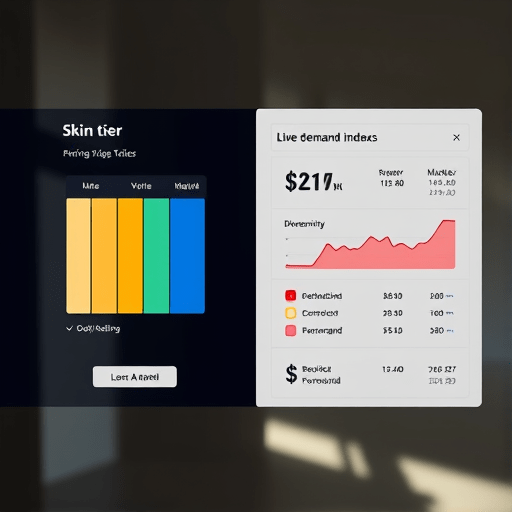
Transparent dynamic pricing tiers replace static price tags with a clear, data-driven framework that players can understand at a glance. Instead of one universal price, each skin is assigned to a tier based on factors like production complexity, rarity, thematic appeal, and real-time demand signals. The key word is transparent — players can see why a skin is in a particular tier and what conditions would move it to another.
For example, a tier system might look like this:
- Core Tier: Standard skins with reusable animations, priced at a baseline that rarely changes.
- Premium Tier: Skins with unique models, effects, and voice lines. Prices fluctuate within a narrow range based on play rate.
- Elite Tier: Limited-availability skins tied to majors or events. Prices can rise with demand, but only if the community votes to keep them scarce.
Dynamic pricing means that demand directly influences the final number. If a skin is being equipped by 40% of the player base, it moves to a higher tier. If it sinks into obscurity, the price drops. But here’s the critical part: the algorithm and its rules are published in a blog post or in-game menu. Players can see the exact formula — including the weight of each factor — so nothing feels like a trick.
This is not surge pricing. Surge pricing is opaque and reactive, punishing players for their own enthusiasm. Transparent dynamic pricing is proactive and explanatory. It says: “This skin is popular, and here’s why that affects its price.” Players might not love that a popular skin becomes more expensive, but they accept it when they can see the logic.
Designing a Player Voting System That Builds Trust
Voting is the other half of the equation. Players don’t just want to be informed; they want to be consulted. A well-designed voting system does not ask players to set the price directly — that would invite chaos and hoarding. Instead, it invites them to influence the demand signals that feed the pricing tiers. You can think of it as a form of collective market intelligence.
Here are several voting mechanics that work well in practice:
- Demand Index Votes: Each week, players can vote on which five skins they would like to see featured in the store. The votes shape a public “demand index” that adjusts tier placement.
- Price Cap Referenda: Before a major event, the community votes on the maximum price an Elite skin can hit. This creates a safety valve against runaway inflation.
- Pricing Transparency Audits: After every patch, players can vote on whether the current tier ratios feel fair. Dozens of responses trigger a review, with results published.
The secret to voting is binding consequence. If votes are just decorative little thumbs up, players will feel manipulated. But if a certain threshold of votes triggers a real change — even a small price reduction or a re-release of a skin at a lower tier — then the system has teeth. Players learn that their participation matters, which changes how they engage with the store. They become shareholders in the pricing process rather than passive consumers.
Another important rule: voting should be visible and auditable. Everything happens in the open. No hidden multipliers, no special moderator override. When players can verify that their votes were counted and acted upon, the trust deficit shrinks. This reduces the inevitable backlash that comes when a new price surprises a community.
Practical Guardrails to Prevent Backlash
Even with transparent tiers and honest voting, a system can wobble. To keep things stable, you need a few hard rules that are non-negotiable.
First, set a lifetime price floor and ceiling. No matter how high demand goes, a skin can never exceed a publicly known absolute maximum. No skin can be sold below a minimum that guarantees basic revenue. These bounds communicate fairness and prevent panic.
Second, grandfather original prices. When a skin moves to a higher tier, players who already own it keep their full collection unlocked. Never ask players to pay more for content they already purchased. This might sound obvious, but bad implementations have caused huge backlash when reruns of skins carried new price tags.
Third, delay price increases by one full patch cycle. If demand spikes, the price does not change instantly. Players get a warning period where they can buy at the old price. This removes the “fear of missing out” pressure and makes price movements feel deliberate, not predatory.
Fourth, tie voting to playtime, not wallets. A monetization system should not be skewed by the top 1% of spenders. Give every account one culture-neutral vote, perhaps unlocked by reaching a certain account level. That keeps pricing decisions aligned with the broader player base, not just the whales.
Measuring Success Beyond Revenue
Rolling out this approach requires a broader definition of success. Instead of just tracking immediate revenue, look at healthy proxies: how many players participate in pricing votes each week, how often the demand index matches actual purchase behavior, and whether social sentiment around price changes improves. Also watch the complaint ratio. A transparent system does not eliminate complaints, but it shifts the conversation from “this is a rip-off” to “this price is higher than I would like, but at least I understand and can vote to change it.” That shift alone is worth a thousand lines of telemetry.
The data will show something else too: if players feel heard, they are more tolerant of reasonable price fluctuations. Emotional backlash is not really about the number — it is about being treated as an afterthought. When players are invited into the pricing process, they become collaborators, not adversaries. In fact, some studios that have run player voting experiments report that players often suggest prices above the developer’s initial guess, especially when the formatting logic feels honest.
A Shared Price, A Shared Game
Pricing skins based on player demand without backlash is not about finding a magical algorithm that predicts the perfect number. It is about building a pricing system that players can see, understand, and shape. Transparent dynamic pricing tiers give structure and predictability, while player voting injects a constant stream of community sentience. Together, they create a living ecosystem where the price of a cosmetic feels like a shared verdict rather than a corporate mandate. The next time a skin price needs to change, you can present the data, point to the voting results, and say: “This is what we all decided.” That is the strongest backlash shield in any game studio’s arsenal.