Emerging-market players are not just price-sensitive; they are exhausted by monetization that ignores their economic reality. The term premium fatigue captures the moment when players stop dreaming about the battle pass, the season pass, or the premium shop because those items feel permanently out of reach. In 2026, live-service studios are turning to AI-driven local pricing tools to fight premium fatigue in emerging markets. Instead of applying a one-size-fits-all price, these tools adapt every transaction to the local economy in real time, making premium content feel attainable and fair.
Why Premium Fatigue Is a Live-Service Design Problem
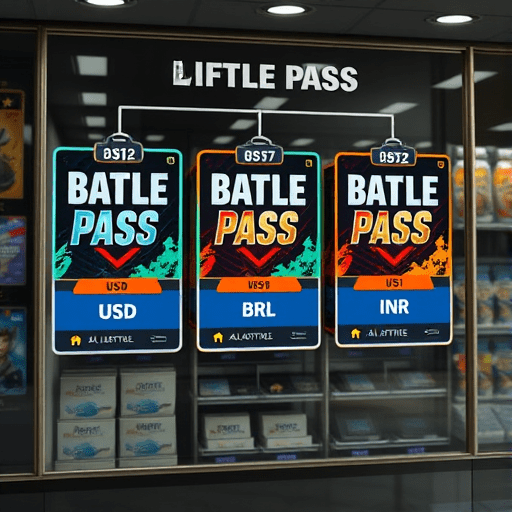
Premium fatigue is often mistaken for simple price sensitivity. In reality, it is a deeper product failure. When players in Brazil, Nigeria, India, or Indonesia look at a battle pass priced at US$9.99, they are not just calculating whether they can afford it; they are calculating whether the game’s designers understand their reality. If the answer feels like no, engagement drops, social sharing stops, and the live-service loop starts to rot from the core.
In many emerging markets, top-paying players make up a very small fraction of the audience. The majority spend in small, irregular increments. Static pricing pushes those players out of the premium loop entirely, leaving them stuck with free-tier rewards and endless ads. That is not just a revenue problem; it is a design problem. The game is telling most of its players that the premium experience is not for them. Over time, players internalize that message and leave the game entirely, which is why premium fatigue is one of the silent killers of live-service retention.
The Limits of Static Regional Pricing
Traditional regional pricing—setting a fixed price multiplier based on country or continent—has helped, but it was never designed for live services. It ignores the difference between a player in São Paulo and a player in Manaus. It fails to react to sudden currency swings, local inflation, or shifts in purchasing power that can change overnight.
Static regional tiers also create arbitrage opportunities. Players can use VPNs to purchase from cheaper regions, which forces developers to disconnect stores or impose restrictions that punish genuine local players. By the time a studio manually reviews its price tables, a market may have changed completely. A regional price that felt fair in January can feel exploitative by April. In contrast, AI-driven local pricing treats price as a living variable rather than a fixed table.
What AI-Driven Local Pricing Tools Look Like in Practice
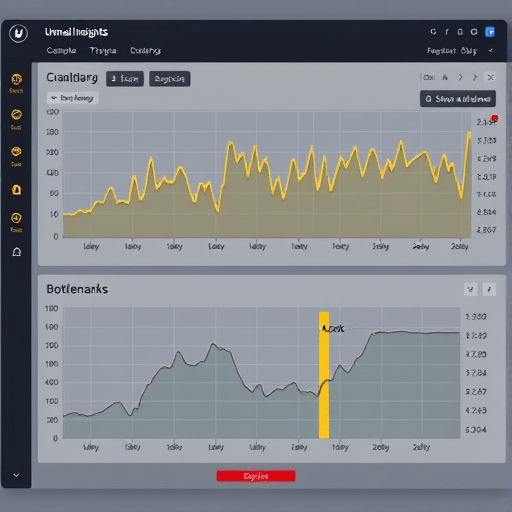
AI-driven local pricing flips the approach. Instead of setting a price and hoping it works, the game’s pricing engine continuously analyses local marketplace data, player spending patterns, and exchange-rate signals to generate a price curve that fits a specific player segment. This is not a one-time discount; it is a dynamic system that learns how much a player segment can—and will—pay without resentment.
Imagine a live-service shooter with a seasonal pass. In a static system, the pass costs the same in Mexico City, Karachi, and Lagos. In an AI-informed system, the engine might set the price in Mexican pesos based on local median income, the price of competing entertainment, and the average spend per active player in that cluster. It might also offer alternative entry points, such as a stripped-down “starter pass” that costs a fraction of the full pass, giving players access to the premium track without a full premium commitment.
Signals a Modern Pricing Engine Considers
- Local purchasing power: Real income distribution, not just GDP per capita, so the system doesn’t guess the median player’s budget.
- Exchange-rate volatility: A moving average that smooths out daily currency swings instead of punishing players after a bad week.
- Competitive alternatives: The price of local mobile data, movie tickets, or even street food—the real opportunity cost of a premium purchase.
- Spending rhythm: How players buy currency packs, how often they engage with seasonal content, and when they tend to become inactive after a price increase.
- List-price normalization: A dynamic comparison between the game’s local prices and observed prices in adjacent market clusters.
These signals allow the pricing tool to make smart choices in real time. But the goal is not to charge every player the maximum they can afford. The goal is to find the sweet spot where a large number of players feel the purchase is worth it. That feeling of fairness is what reduces premium fatigue and keeps the live-service economy moving.
Balancing Revenue and Player Trust
The biggest fear around AI-driven pricing is that it will become a personalized greed machine. There is a fine line between dynamic pricing and price discrimination. If the system learns that a particular group of players is willing to pay more because they are deeply invested, it might push prices down for disengaged players and up for loyal ones. That can be fatal in emerging markets, where community perception is strong and negative pricing stories spread quickly.
Trust is the real currency in live-service games. AI pricing must be anchored in clear rules: prices should align with local purchasing power, not just willingness to pay. Players should be able to understand why a price looks different. Some studios are tackling this by publishing regional price tiers or showing a localized price that is explicitly tied to their local storefront. Transparency gives players the sense that the system is on their side, not extracting every cent. When players trust that the premium shop is calibrated for their local economy, premium fatigue begins to fade. The battle pass becomes an achievable goal instead of a distant luxury.
Implementing AI Price Guardrails
An AI pricing engine should never have absolute control. Live-service designers still need to define boundaries. For example, a price should have a floor and a ceiling relative to the base US price. Currency conversion should be smoothed to avoid wild daily fluctuations. Price changes should be gradual, not abrupt. If the system is allowed to change the price of a premium currency pack by 5 percent from one week to the next, players will feel it. If it changes by 50 percent, they will revolt.
Another guardrail is limiting price discrimination across segments. A common approach is to group players into broad regional clusters and then apply AI within those clusters rather than relying on individual-level pricing. This reduces the risk of a player feeling personally targeted while still capturing the benefits of local price adaptation.
Data privacy also matters. The AI should use aggregated storefront data, purchase history, and exchange-rate feeds, not personal information or behavior traces that cross ethical lines. The goal is to make a price that is appropriate for a player’s economy, not a price that is tailored to their playtime or spending addiction.
A Localized Future for Live-Service Economies
Premium fatigue is not a sign that emerging-market players are unwilling to spend; it is a sign that the pricing system has failed to meet them where they are. AI-driven local pricing gives live-service games a way to speak the economic language of every player. The studios that get this right will unlock the long-promised potential of emerging markets: vibrant communities, steady revenue, and players who feel that the premium experience actually belongs to them.
In the end, the most important price is not the lowest one—it is the one that feels fair enough to be paid without resentment. AI cannot fix every monetization mistake, but it is quickly becoming one of the most powerful tools live-service designers have for keeping premium content within reach.