For most of the past decade, patient apps were viewed as digital notebooks—useful for recording symptoms, reminding patients about medications, and sharing basic activity data. But the rise of digital biomarkers is changing that relationship. By using continuous sensor data from smartphones, wearables, and connected patches, digital biomarkers turn patient apps into diagnostic tools that can anticipate clinical events. The goal is no longer simply to describe what has happened; it is to predict outcomes before symptoms appear.
From Step Counts to Subtle Signals: The New Biomarker Vocabulary
Digital biomarkers are more than advanced step counters. They are precise, measurable physiological features captured passively in everyday life. Their vocabulary extends well beyond heart rate and calories burned.
- Voice and speech patterns that reveal changes in tone, rhythm, or breathiness
- Gait and balance metrics from accelerometer and gyroscope data
- Typing dynamics that capture motor speed, hesitations, and cognitive effort
- Heart rate variability, skin temperature, and electrodermal activity
- Cough and breathing sounds captured by the built-in microphone
Each signal is a potential clue. The real power, though, lies in combining multiple signals into a digital phenotype—a richer picture of a person’s health than any single metric could provide.
From Raw Sensor Data to a Clinical Signal
Raw sensor data is not diagnostic on its own. It must be transformed into a reliable clinical signal. The pipeline begins with preprocessing: noise filtering, artifact removal, and time-series segmentation. Next, algorithms extract features that reflect meaningful physiological states. A feature might be the average pause length in a patient’s typed response, or the variability in step cadence during an evening walk. Finally, machine learning models compare those features to a personalized baseline, flagging deviations that have been clinically linked to impending events.
This processing often happens on the device itself. Edge-based machine learning keeps sensitive information private while still allowing real-time feedback. The app only sends aggregated, de-identified features to the cloud, unless a clinically meaningful deviation has been detected.
One of the strongest advantages of this approach is personalization. A 70-year-old with heart failure has a different normal range than a 30-year-old athlete. Rather than applying a universal threshold, digital biomarkers are evaluated relative to each patient’s own patterns. That makes them more sensitive and reduces false alarms.
Why Predictive Algorithms Are Gaining Clinical Trust
The predictive power of digital biomarkers comes from temporal patterns. A patient app can learn that a combination of decreased speech entropy, shorter sleeps, and reduced daily step count often precedes a depressive relapse by five days. The algorithm does not see these as isolated data points; it sees a trajectory moving toward a clinically relevant threshold.
Machine learning models are trained on longitudinal datasets in which outcomes are already known. For example, sensor data from the weeks before a heart failure hospitalization can be labeled and used to teach the model which early deviations are meaningful. Once validated, the same model can run on a smartphone and generate a probability score that may appear as a simple progress bar or a low-key notification. This is how sensor data can predict outcomes before symptoms appear.
The Regulatory and Evidence Shift That Changes Everything
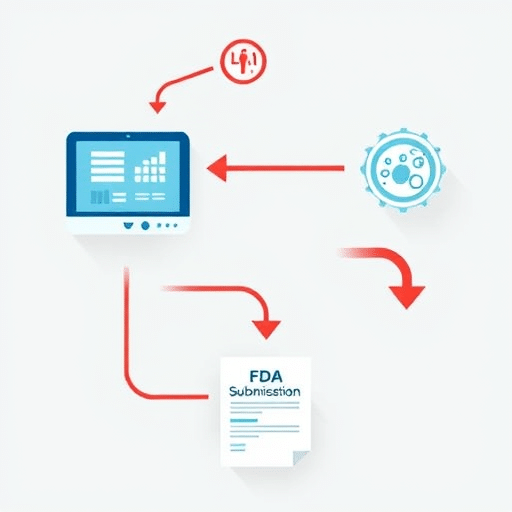
Credibility, of course, requires evidence and regulatory clarity. Health authorities have recognized software as a medical device and now allow certain digital biomarker apps to enter the market with a defined intended use. The approval pathway is stricter than for wellness apps, but it is no longer a black box. In 2026, several large decentralized trials are producing the kind of data needed to convince clinicians that a smartphone-derived signal is as trustworthy as a traditional laboratory test.
One important shift is the move toward continuous evidence generation. Once an app receives clearance, post-market data from thousands of users can be used to further validate or refine its algorithms. This creates a feedback loop in which the diagnostic tool improves over time without requiring a new study for every minor update.
A digital biomarker is only useful if it changes management. Researchers therefore distinguish between detection and actionability. A model can be highly accurate and still fail if its output does not integrate with clinical workflows, electronic health records, or reimbursement pathways. This is why design teams now include clinicians, regulators, and patients in the development process.
What Still Stands in the Way—and How It’s Being Solved
Several obstacles remain. Interoperability is a major one. Sensor data is still fragmented across device manufacturers, making it difficult to build biomarkers that work across all consumer hardware. Open standards are slowly emerging, but they need better adoption. Privacy is another concern. Collecting voice, movement, and typing data is sensitive. Strong encryption, on-device processing, and user-controlled consent are non-negotiable. Finally, digital biomarkers must be trained on diverse populations. If an algorithm has only learned from a narrow patient group, it will be less accurate—or even harmful—for others. As these issues are addressed, clinical trust will continue to grow.
The good news is that these barriers are not permanent. Open-source annotation tools, federated learning, and privacy-preserving algorithms are already being tested in real-world studies. Interoperability initiatives like HL7 FHIR are beginning to accommodate sensor data, and patient advocacy groups are pushing for stronger data protection.
The Future Outlook: Pre-Symptomatic Care
The future of digital biomarkers is not a lot of noisy alerts. It is a quiet, continuous form of clinical intelligence. Patient apps will become more selective about what they surface, focusing on changes that truly warrant attention. For chronic conditions such as COPD, heart failure, neurological disorders, and mental health, this could transform the rhythm of care from reactive visits to proactive check-ins.
Preventing a crisis before it occurs is the ultimate goal. A patient whose app detects the early physiological signature of an infection can be contacted and treated days earlier. A person with Parkinson’s disease may have their medications adjusted based on subtle gait changes without ever stepping into a clinic. By integrating sensor data with electronic health records and clinical workflows, digital biomarkers will become one of the most important bridges between daily life and medicine.
In the coming years, we will likely see hybrid diagnostic tools that combine digital biomarkers with traditional lab results and patient-reported outcomes. The sensor does not replace the blood test; it adds a continuous layer between tests. That layer is exactly what makes pre-symptomatic care possible.
Conclusion
Digital biomarkers are quietly turning patient apps into diagnostic tools, reading the body’s subtle signals before symptoms become obvious. The technology is already here; the remaining work is validation, integration, and trust. With continued investment in clinical evidence and patient-centered design, the app on a patient’s phone may soon be the earliest warning system medicine has ever had.