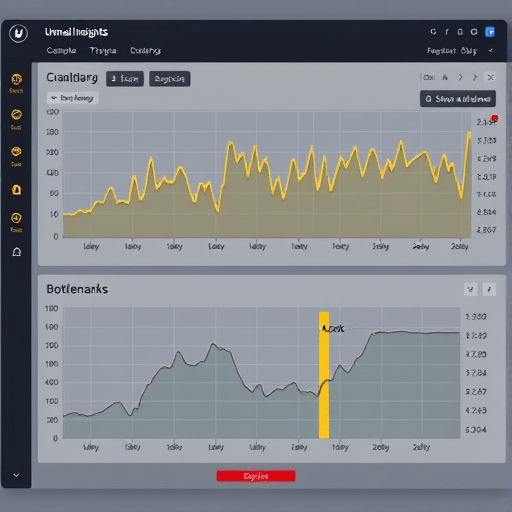
The moment a massively anticipated game goes live, the digital floodgates open. Chat streams become incomprehensible waterfalls, forum posts accelerate from a trickle to a torrent, and user-generated content (UGC) mushrooms across every platform. For community teams and Trust & Safety (T&S) operators, this is the “exploding launch”—a period where the line between a thriving community and a toxic wasteland is drawn in real-time. Relying on ad-hoc moderation at this scale is a recipe for disaster. To survive, you must strategically pre-wire auto-mod and human triage for launch-day spikes, creating a synchronized system that converts an existential threat into a manageable, orderly queue.
The Anatomy of a Launch-Day Trust & Safety Tsunami
Launch-day spikes are fundamentally different from the day-to-day drifts of an established game. They bring a hostile trifecta: sheer volume, unprecedented speed, and contextual novelty. A game launching with 10 million concurrent players isn’t just a server stress test; it’s a sociological experiment compressed into a few hours. The content isn’t merely more of the same—it often breaks new ground. Players discover exploits, invent niche lingo, and weaponize in-jokes within minutes. Furthermore, malicious actors (bot farms, crypto-grifters, and griefers) specifically target launch windows knowing that your safety systems are likely oversaturated and under-tested.
In this environment, legacy moderation tools—static keyword blacklists and simple spam filters—fail spectacularly. They choke on ambiguous context, nuke innocent players for using slang, and allow sophisticated bots to bypass them with obfuscated characters. To maintain order, your workflow must be architected to handle this specific, violent interaction between volume and novelty. The foundation of this architecture is a clear division of labor: AI handles the relentless firehose, while human agents focus on nuanced judgment calls that machines cannot yet make reliably.
Building a Resilient Automated Moderation Stack
The first layer of your defense is a pre-wired automated moderation stack. But we aren’t talking about simple regex filters here. The modern stack leverages a hybrid model that combines deterministic rules with adaptive machine learning (ML) classifiers. This layered approach ensures you can catch surface-level spam instantly while grappling with the subtler toxicity that requires semantic understanding.
Deterministic Filters: The First Line of Defense
These are your instant, non-negotiable barriers. They focus on items that don’t require context:
- PII and Credential Scraping: Automated removal of social security numbers, addresses, and suspicious URL/domain patterns.
- Spam Signatures: Detecting repeated character strings, known botnet payloads, and crypto-asset solicitations.
- Binary Content: Flagging NSFW images or violent media via perceptual hashing (PHash) against a pre-built database.
The AI Semantic Layer: Context is King
Unlike static filters, the AI layer reads for context. In 2026, these are typically large language models (LLMs) fine-tuned on specific game lore and community vernacular. This allows the system to understand the difference between the exclamation “This game is KILLING me!” (positive feedback) and the threat “I’m going to kill you.” (bannable offense). Pre-wiring this layer means priming the AI with the game’s specific “spectrum of toxicity,” including potential hate speech variants and emerging slang that might be weaponized. The output should be a confidence score, not just a binary “keep/remove” decision. This score is vital for routing to the human triage queue.
Calibrating Aggression Thresholds
During launch, a strict threshold might seem appealing, but over-aggressive automod devastates legitimately excited communities. The key is to set variable thresholds. At T-minus-zero, you might set a “high sensitivity” mode to catch the initial waves of botnets, but schedule a decay to “standard sensitivity” after the first 24 hours. This prevents innocent long-time fans from getting caught in the crossfire while the worst opportunistic actors are auto-confirmed and removed.
Designing the Human Triage Pipeline for Escalation
If AI is the bouncer, the human triage agents are the judges. The goal of triage is not to review everything—that is physically impossible. The goal is to review the edge cases that fall into the AI’s “uncertainty zone” (confidence scores between, say, 40% and 80%). To make this efficient, you need a triage dashboard tailored for high-speed decision-making.
Triage Tiers: Sorting the Noise
A flat queue will bury your team in marginal cases. Pre-wire the dashboard to categorize incoming items into distinct severity tiers:
- Tier 1—Critical: Credible threats of violence, active doxing, CSAM. These are legally actionable and require immediate response (often within minutes).
- Tier 2—Accelerated: High-confidence toxicity, targeted harassment (raids), and coordinated spam. These need swift action to prevent community contagion.
- Tier 3—Contextual: Borderline cases, nuanced sarcasm, or potentially weaponized in-jokes. These can wait for review but still need to be cleared within a few hours to avoid backlog rot.
The “Co-Pilot” Approach to Human Decision-Making
To speed up the human triage, your interface should act as a “co-pilot.” Instead of just presenting a piece of content for a yes/no decision, the system should suggest a lifespan. For example, the AI might say: “This appears to be a traumatic personal story posted in the wrong channel. Recommend moving to r/support or issuing a 24-hour timeout.” This allows agents to apply nuanced solutions—such as mutes, content removal, or channel redirection—rather than resorting to a heavy-handed full-account ban that could incite a community backlash.
Pre-Launch War Games: Simulating the Spawn Spike
Pre-wiring the workflow isn’t just about configuring software; it’s about rehearsing the human-machine interaction. Days before the launch, run a moderation war game. Simulate the spike—inject synthetic events that mirror your biggest historical failures. Include a coordinated hate raid, an exploitable URL spam bot, and a surge of players reporting false positives because a popular emoji has been co-opted by a toxic faction.
During this drill, deliberately break the process to see where the pipeline clogs. How long does it take a Tier 1 item to reach an agent’s screen? Are the AI confidence scores aligned with the human agent’s gut instinct? Does the dashboard become unresponsive at 50,000 events-per-minute? These rehearsals expose the brittle seams in your workflow. They allow you to refine your auto-mod rules and visually verify that human agents are confident in their routing decisions before the real chaos ensues. It is far better to fail in a simulated environment than during the actual launch.
The Post-Launch Retrospective and Continuous Loop
A launch is not the finish line; it is the first race of a long season. In the 72 hours following the launch spike, your workflow enters its most critical phase: the feedback loop. Your carefully pre-wired systems will have produced a trove of data—not just about offenders, but about your own mistakes. Host a mandatory post-mortem within 48 hours.
- Review the Label Drift: Look at the human decisions that overrode the AI. Where did the AI consistently fail? These are the training examples needed for the next model iteration.
- Analyze the Time-to-Response: Are there bottlenecks where items sat in queue too long? Should those have been auto-handled by strict filters instead of human judgement?
- Map New Toxicity Trends: Identify the unique slurs and exploitative behaviors that cropped up post-launch. Update the AI’s lexicon to immediately catch these in the future.
This iterative process ensures that your auto-mod becomes smarter after every major content patch, seasonal event, and community migration.
The transition from chaotic launch-day pandemonium to structured, orderly moderation is not won by throwing more bodies at the problem. It is won by designing a pre-wired architecture that respects the strengths of both machine speed and human empathy. By pre-wiring auto-mod and human triage for launch-day spikes, you transform what is historically a career-ending level of stress into a manageable, data-driven operation—ensuring that when the world logs in to play, your community stays safe, vibrant, and alive.