For frontend teams tired of maintaining brittle E2E mocks, the path to stable integration testing starts with a deceptively simple idea: generate contract tests from integration suites to replace E2E mocks. Instead of hand-writing stubs or running massive end-to-end tests, teams can capture real API interactions, turn them into contracts, and let CI catch API drift before it reaches production. This approach shifts testing left, removes the frustration of mock maintenance, and gives frontend engineers a reliable signal that the backend still speaks their language.
The E2E Mock Trap
Most frontend teams have been here: a suite of mocked API responses that perfectly reflect the backend as it existed six months ago. The UI works in tests, but when the app is deployed, real requests return fields that no longer exist. The mocks were hand-written from documentation, and documentation drifted the moment a backend engineer renamed a property.
End-to-end tests with real services would catch this, but E2E suites are heavy, flaky, and slow. They require a fully provisioned environment, seeded data, and orchestration. And when they fail, it is often because of a non-deterministic timeout, not the actual contract mismatch. The result is a testing pyramid where frontend teams avoid E2E entirely and rely on mocks that protect them from nothing.
Contract testing offers a middle path. It is not a full E2E test, but it is not a mock either. A contract test verifies that one side of the API boundary can trust the other. For frontend teams, that means checking that the API responses your components expect are exactly what the backend will deliver.
From Integration Suite to Consumer Contract
The freshest angle in 2026 is not adopting a separate contract testing tool and starting from zero. It is mining your existing integration suites for contracts. Most frontend apps already have integration tests that hit a running API, either in a staging environment or against a local backend container. Those tests are already executing real request/response pairs. Why not record them and turn them into reusable contracts?
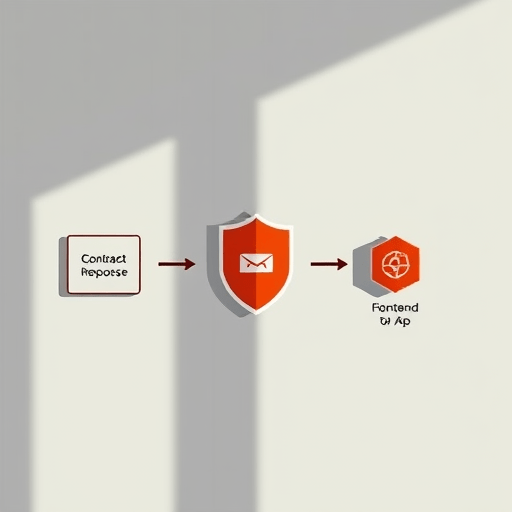
This is the core of the new workflow: run your integration suite, capture every HTTP interaction, and generate contract files for each endpoint. These contracts contain the request shape the frontend sends and the response shape the frontend actually consumed. They become versioned artifacts that can be checked into the repo, shared with backend teams, and verified in CI.
What Makes a Contract Usefully Different from a Mock?
- A mock is authored by hand. A contract is generated from a real interaction and reflects actual frontend usage.
- A mock lives only in your frontend repo. A contract is bidirectional and designed to be verified against the provider.
- A mock can drift silently. A contract is a machine-checkable promise that is tested on every relevant change.
- A mock is static. A contract is a starting point for negotiation and versioning.
This is not just about replacing one test double with another. It is about moving from blindly trusting your own assumptions to automatically proving compatibility.
Wiring Contract Checks into CI Without Slowing Down Frontend Deploys
The main concern frontend teams have is that adding contract tests to CI will make pipelines slower. The trick is to design the contract check as a separate, targeted job rather than bolting it onto every push.
Here is a practical pattern:
- Run the integration suite that generates contracts on a nightly basis or on pull requests that touch API client code.
- Store the generated contracts in a dedicated artifact store or a separate branch.
- Have the provider verification step run on the backend repository or as part of a cross-repo workflow triggered by the contract change.
- Only block the frontend deploy if the contract verification failure is caused by a breaking change in the API that the frontend depends on.
By separating the contract generation from the verification, you avoid slowing down the developer loop. The frontend team keeps pushing features; CI silently keeps an eye on API drift.
Replacing E2E Mocks with Contract-Backed Test Doubles
Once you have generated contracts, you can use them as a source of truth for your frontend test doubles. Instead of a hand-written fixture like { "user": { "name": "John" } }, your test double is generated from the contract. The test double is not a fake version of the API; it is a minimal, valid replica of the API response that the contract promises.
This works for unit tests, component tests, and integration tests. In a React or Vue test, you import a stub that builds its response from the contract file. If the backend changes the response shape, the contract changes, and the stub automatically reflects the new shape. The test suite fails if your component tries to read a property that no longer exists. That failure is exactly where you want it: in the fastest and most deterministic tier of the testing pyramid.
Consumer-Driven Contracts in Practice
This pattern is often called consumer-driven contract testing because the consumer (the frontend) declares what it needs. The integration suite you already run is the best tool for that declaration. Your tests are not written to satisfy a contract; they are written to simulate a user. But as they run, they produce evidence of the actual API shape your app depends on. That evidence is gold.
Automating this with a tool like Pact, Spring Cloud Contract, or a lightweight custom recorder is straightforward. The key is to make the contract generation a byproduct of tests you would already write, not an extra chore.
Handling Breaking Changes When the API Moves Faster Than You Do
APIs evolve. The backend team may change a required field, remove an endpoint, or add a new error code. Contract testing does not stop change, but it makes the change visible. When a provider verification fails, the frontend team gets a clear message: “Your consumer contract expects user.avatar_url, but the provider now returns user.avatar.” That is much more useful than a failed E2E test on a Thursday afternoon.
The process for breaking changes becomes a negotiation between teams, not a delayed mystery. You can add a contract version header, allow a grace period for old contracts, or use tags to mark which contracts are active and which are deprecated. The CI pipeline can publish a provider verification result to a shared dashboard, giving both teams a single place to see the impact of an API change.
For frontend teams, this is a huge win. You no longer discover API drift in production. You discover it in the merge request where the backend changed, with enough context to adapt before your users ever see an error message.
A Frontend Team’s Clear Path to API Drift Detection in 2026
Here is the journey many teams are taking this year:
- Start by recording the HTTP traffic in your current integration test suite.
- Generate contract files for the top 10 endpoints your frontend depends on most.
- Add a CI job that uploads those contracts and triggers provider verification on the backend side.
- Replace your hand-written API mocks with stubs derived from the contracts.
- Watch your E2E suite shrink as you delete the tests that were only there because mocks were unreliable.
This approach does not require a full rewrite, a massive cultural shift, or a new testing team. It builds on the integration tests you already have, turns them into reusable contracts, and puts CI to work watching the API boundary. The result is a frontend codebase that stays green, a backend team that knows exactly what you need, and a deploy pipeline that no longer carries the hidden risk of drifted mocks.
Contract testing from integration suites is not a compromise between E2E tests and mocks. It is a better model for frontend teams that want speed, confidence, and a clear signal when the API changes. Generate the contracts, wire them into CI, and turn API drift from a production incident into a routine test failure. That is the difference between guessing and knowing, and it is available to every team with a CI pipeline and a test suite.