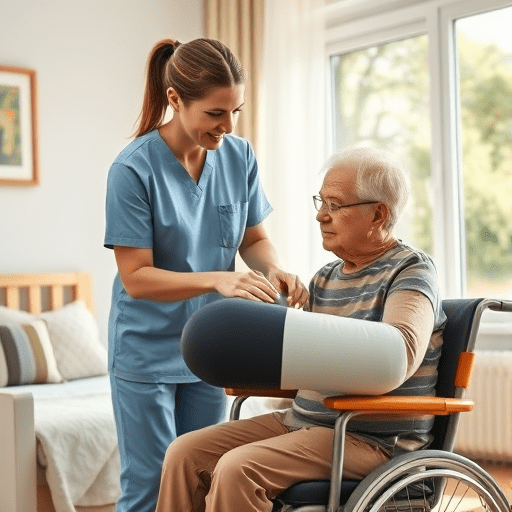
Mobility transfers—lifting a resident from a bed to a wheelchair, repositioning someone after a meal, or steadying a senior during a bathroom visit—are among the most physically demanding tasks in any assisted living facility. For decades, these movements have been the leading cause of musculoskeletal injuries among caregivers and a source of anxiety, discomfort, and even falls for older adults. In 2026, a quieter revolution is taking shape in hallways and bedrooms across senior care campuses: soft robots in elder care are stepping in to absorb the heavy lifting, literally and figuratively. Built from compliant, air-filled, or fabric-based materials rather than rigid metal, these machines can cradle a human body with the gentleness of a second pair of hands.
The technology is not a futuristic fantasy. Pilot programs in the United States, Japan, the Netherlands, and South Korea have already begun integrating soft robotic exosuits, inflatable transfer sleeves, and bedside assist devices into everyday workflows. What makes this moment significant is not the novelty of soft robotics itself but how mature it has become—and how urgently the long-term care industry needs it.
Why Mobility Transfers Remain the Most Dangerous Daily Task
Ask any certified nursing assistant what part of the job keeps them up at night, and the answer is almost always the same: transferring residents. According to industry data cited by occupational safety researchers, caregivers are more likely to suffer career-ending back injuries during patient handling than in any other activity. Many leave the profession within their first two years, citing physical exhaustion.
For residents, the equation is just as concerning. Manual transfers performed in a hurry, by an overstretched caregiver using improper body mechanics, can cause skin tears, bruising, joint pain, and loss of dignity. A startled or improperly supported older adult may grab at the caregiver, flail, or resist movement, increasing the risk of a fall for both parties.
The Compliance Advantage of Soft Robotics
Traditional assistive devices, including mechanical Hoyer lifts and rigid exoskeletons, solve part of the problem but introduce new ones. Hoyer lifts require slings that can feel clinical and confining. Rigid exoskeletons, originally designed for industrial workers, do not accommodate the curved, vulnerable anatomy of a 90-year-old. Compliance—the ability of a robot’s structure to deform safely when it meets an unexpected force—is exactly what soft robotics brings to the bedside.
Inflatable cuffs, fabric-based sleeves, and silicone-skinned grippers distribute pressure across broad surface areas. If a resident shifts unexpectedly mid-transfer, the robot yields rather than resists. That single property is reshaping how engineers and clinicians think about safe human-robot contact.
Real-World Applications Emerging in 2026
Several categories of devices are now moving from research labs into pilot deployments at assisted living facilities.
Soft Robotic Transfer Sleeves
Perhaps the most visible innovation is the soft transfer sleeve, a fabric garment worn around the resident’s torso or legs that contains inflatable chambers. A caregiver initiates a transfer by guiding the sleeve through a sequence of inflation and deflation steps. The chambers lift and support the resident smoothly while the caregiver provides balance and emotional reassurance. Pilot sites in Osaka and Rotterdam have reported significant reductions in caregiver exertion scores during trials.
Bedside Inflatable Positioning Aids
Repositioning a bedridden resident every two hours to prevent pressure ulcers is another high-risk, high-frequency task. New bedside soft robots tuck beneath the sheets and use quiet, slow air movements to gently roll the resident laterally. Caregivers report that residents sleep through the procedure, which was rarely the case with manual turning.
Soft Exosuits for Caregiver Support
While much of the conversation focuses on resident comfort, a parallel stream of development is aimed at the caregiver. Passive soft exosuits, garments with embedded elastic and pneumatic assist elements, support the lower back and shoulders during repeated lifts. Unlike rigid industrial exoskeletons, these suits are lightweight, breathable, and quiet enough for a residential environment.
What the Evidence Shows About Injury Reduction
Early studies, including multi-site evaluations conducted in late 2024 and 2025, point to measurable benefits. Facilities using soft robotic transfer systems have documented:
- Reductions in reported back and shoulder strain incidents among caregiving staff during the first six months of use.
- Lower rates of skin tear and bruising events among residents during assisted transfers.
- Faster transfer times once staff are trained, freeing caregivers to focus on relational care.
- Improved resident willingness to ask for help, particularly among those who previously dreaded the discomfort of manual lifting.
Researchers caution that numbers are still small and that outcomes depend heavily on training and workflow integration. Even so, the directional evidence is encouraging enough that several U.S. state Medicaid programs are exploring reimbursement pathways for certified soft robotic transfer devices.
Comfort, Dignity, and the Sensory Experience
Beyond injury metrics, the most compelling feedback is often qualitative. Residents describe soft robotic sleeves as feeling “like being held rather than lifted.” Caregivers describe being able to make eye contact throughout a transfer because they no longer need to focus on bearing weight. Family members report that their loved ones seem less apprehensive about being moved.
This sensory dimension matters more than it might appear. In elder care, the quality of an interaction is often shaped by how a body feels during it. A soft, warm, compliant surface communicates safety in ways that cold metal cannot. Designers are increasingly considering the texture, warmth, and even the sound of the air pumps to make these devices feel less clinical.
Designing for Quiet Operation
Noise is a frequent concern in elder care settings, where startling sounds can trigger anxiety or confusion, particularly among residents living with dementia. The latest generation of soft robotic devices uses brushless micro-pumps and insulated air channels to keep operational noise below the threshold of most bedroom conversations. Some manufacturers are even experimenting with white-noise masking modes that double as soothing ambient sound.
Barriers to Widespread Adoption
Despite the promise, several practical issues still slow adoption.
Cost and Reimbursement
Soft robotic transfer systems remain more expensive than traditional Hoyer lifts, and most facilities operate on thin margins. Until insurance reimbursement and capital purchasing programs catch up, adoption will be uneven. However, the cost calculus is shifting when facilities factor in workers’ compensation claims and staff turnover.
Training and Workflow Integration
New devices require new routines. Caregivers must learn when to inflate, when to deflate, and how to read the subtle cues the device provides. Training programs are evolving alongside the hardware, but facilities report that the learning curve is shorter than expected, particularly among caregivers who already use mechanical lifts.
Maintenance and Hygiene
Soft materials must be cleaned rigorously to prevent infection. Manufacturers are responding with removable, washable fabric skins and antimicrobial inner layers, but facilities need clear protocols.
Looking Ahead: The Next Layer of Gentle Automation
The next wave of soft robotics in elder care is likely to focus on multi-modal systems that combine transfer assistance with continuous monitoring. Imagine a soft sleeve that not only helps lift a resident but also tracks heart rate variability, skin temperature, and grip strength, alerting staff to early signs of infection or dehydration. Researchers at ETH Zürich and MIT have published early prototypes along these lines, and clinical pilots are expected within the next two years.
Voice and intent recognition will also play a role. As natural language models improve, soft robotic systems may be able to interpret a resident’s verbal cues during a transfer—”wait, my hip”—and respond by adjusting support in real time.
Conclusion
Soft robots are quietly reshaping one of the hardest parts of elder care. By replacing rigid mechanics with compliant, air-driven structures, these devices protect caregivers from the daily wear of lifting and give residents a transfer experience that feels safer, warmer, and more dignified. The technology is not a replacement for human hands, intention, or relationships. It is a way to free those hands for the parts of care that truly require them. In 2026, that gentle shift is beginning to redefine what assisted living can feel like.