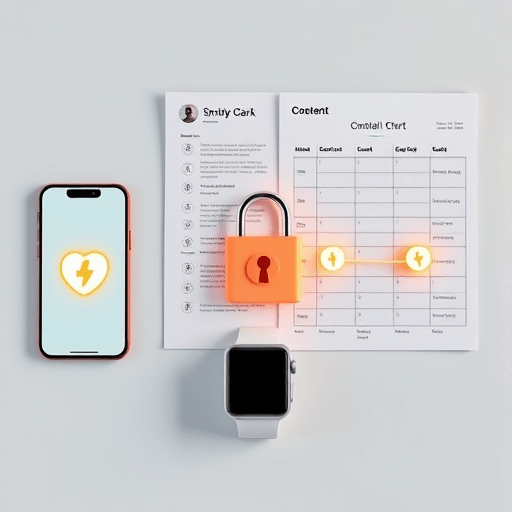
When a patient steps on a smart scale, checks a lab result in a hospital portal, and then confirms a prescription refill through a smartwatch, three separate systems are quietly negotiating who can see what. Too often, those systems disagree. A zero-trust architecture for patient portals offers developers a blueprint to reconcile that fragmentation without sacrificing usability, especially as health apps multiply across phones, wearables, and embedded clinical workflows.
Why Consent Is the Weakest Link in 2026’s Health App Stack
Wearables have moved well beyond step counts. Continuous glucose monitors, ECG patches, and over-the-counter ring sensors now stream clinically relevant signals that often need to land in an electronic health record (EHR) for a clinician to act on. Each new device introduces its own consent surface, and each surface tends to age independently.
The result is a consent drift problem: a user may have revoked an app’s access to heart rate data on their phone while the same data still flows freely to a clinician dashboard through a partner integration. From a developer’s standpoint, this is not just a privacy bug. It is an audit-trail problem, a HIPAA exposure, and a growing liability under regional rules like the EU’s European Health Data Space regulation.
Zero-trust reframes the question. Instead of asking “did the user once grant this app access?”, zero-trust asks “can this specific request, from this device, for this resource, be verified right now?” That shift is what makes it suited to consent.
What Zero-Trust Actually Means for Patient Portals
Zero-trust is often described in enterprise terms, but its principles translate cleanly to health apps when scoped tightly:
- Verify explicitly. Every API call from a wearable, portal, or EHR integration carries an identity, a scope, and a context that must be re-checked.
- Assume least privilege. A smartwatch asking for weight readings should not also receive medication lists by default.
- Expect breach. Token lifetimes are short, scopes are narrow, and logs are detailed enough to reconstruct any access pattern.
For a patient portal, that translates into an authorization layer that does not trust a session because it started five minutes ago on the same phone. It revalidates scopes against the patient’s current consent record, which itself is treated as a first-class object rather than a buried flag.
The Anatomy of a Consent Gap
A gap usually forms in one of three places, and developers tend to discover them only after an integration ships:
1. Device-Level Authorization Drift
Most operating systems grant permissions at the install moment and rarely surface them again. A user who disables a sensor permission in their phone settings may still have that data proxied through a cloud sync. Without server-side checks, the portal never knows the data feed has effectively been muted.
2. Cross-App Consent Inheritance
When a third-party nutrition app reads from a glucose monitor and writes to a portal, the consent chain stretches across three vendors. If any link in that chain silently upgrades its scopes during a routine update, the patient’s documented wishes fall out of sync with reality.
3. EHR-Portal Reconciliation Lag
Patient-facing portals and clinician EHR systems often maintain their own consent tables. A revocation in one can take hours or days to propagate to the other, leaving windows where data flows against the patient’s wishes.
A Blueprint: Building a Zero-Trust Consent Plane
The pattern below keeps consent as a single source of truth while letting each device and system negotiate access in real time.
Centralize Consent as a Versioned Resource
Treat consent like any other clinical artifact: a versioned, signed object with an audit trail. Every grant or revocation writes a new version rather than mutating state in place. The portal, the EHR, and any wearable companion app query this resource by ID and version, which makes reconciliation trivial.
Issue Short-Lived, Scoped Tokens
Replace long-lived OAuth refresh tokens with short-lived access tokens bound to specific scopes, such as read:glucose:30d. When a wearable requests new data, it presents a token that the consent plane revalidates against the patient’s current version. If the scope no longer matches, the request is denied and the caller is told why.
Bind Identity to Device Posture
Zero-trust in healthcare also means accounting for the device. A token issued to a phone that has not checked in for 90 days, or that has dropped below a minimum OS version, should be treated as suspect. Device posture signals can be attested through platform APIs and folded into the authorization decision without requiring users to re-enter credentials.
Stream Consent Events Everywhere
Every grant, revocation, denial, and token refresh should be published as an event. The portal consumes these to update its own UI, the EHR consumes them to mirror consent in its audit tables, and analytics pipelines use them to spot anomalies like a device suddenly requesting a scope the patient has never used before.
Enforce at the Edge, Not Just the Origin
Wearable and mobile traffic should pass through an authorization proxy that enforces consent before requests reach backend services. This keeps sensitive resources behind a perimeter that does not assume any caller is safe based on network location, a core zero-trust tenet.
Practical Considerations for Health App Developers
Adopting this blueprint is rarely a single sprint. Three trade-offs tend to dominate early planning.
Latency vs. Verification Depth
Every additional check adds milliseconds, and wearables often stream on tight cadences. The fix is layered verification: cheap checks (token validity, scope match) on the hot path, and deeper posture or risk checks on slower, less frequent calls.
Patient Experience vs. Security Theater
Users abandon health apps faster than most consumer apps. Avoid prompting for re-consent on every session; instead, surface meaningful changes such as a new scope request or a new device, and let routine access flow without interruption.
Legacy EHR Constraints
Many EHRs were not designed for event-driven consent. Plan for a thin adapter layer that translates consent events into the vendor’s native audit format. This isolates the rest of the architecture from any one vendor’s roadmap.
What a Mature Implementation Looks Like in 2026
The signs that a zero-trust consent plane is working are subtle but measurable:
- Revocations propagate to all connected systems within seconds, not days.
- Audit logs show denials alongside grants, which proves the system is actively enforcing rather than just recording.
- Developers can answer “who has access to this patient’s data right now, and why?” with a single query.
- New device integrations ship with consent flows already wired in, rather than bolted on later.
As regulators tighten requirements around data minimization and patient control, the portals that adopt this model early will find compliance audits less disruptive and patient trust easier to sustain.
Conclusion
Consent gaps in multi-device health apps are not a UI problem or a legal problem in isolation; they are an architectural problem. A zero-trust approach turns consent into a living, queryable, event-driven resource that every wearable, portal, and EHR consults before granting access. For developers, the payoff is a system that survives the next wave of devices and the next round of regulation without a rewrite, and a patient experience where what was promised at the consent screen is what actually happens across every screen the data touches.