As wearable electrocardiogram technology moves from gym accessory to clinical decision tool, a quiet tension has emerged in cardiology offices. A patient walks in with a weeks-long stream of smartwatch ECG tracings captured during palpitations, while the clinic’s medical-grade Holter monitor sat on the patient’s chest for only 24 hours and captured nothing. Which dataset should the physician actually trust? The answer in 2026 is more nuanced than a simple “the Holter is medical-grade, so it wins.” Detection accuracy, context of use, data integrity, and patient privacy all shape the answer.
What Each Device Actually Measures
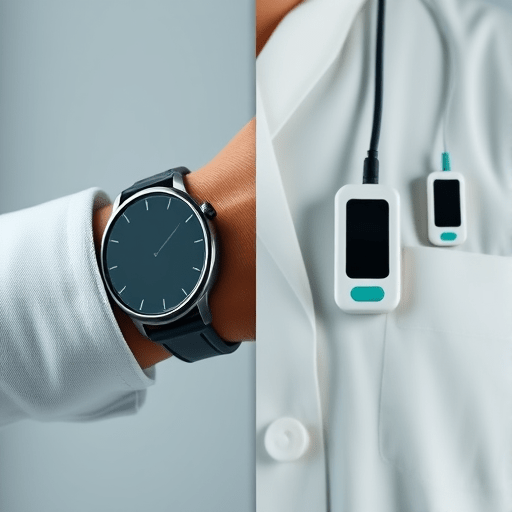
A smartwatch ECG is a single-lead recording, typically sampled between 250 and 512 Hz depending on the device. It is excellent at capturing the moment a user feels symptoms, because the wearer chooses to initiate the recording. A medical-grade Holter is a multi-lead continuous recorder, usually 3 to 12 leads, worn for 24 hours to 14 days, sampling at 1000 Hz or higher. It captures every heartbeat, whether the patient feels them or not.
This structural difference matters. Smartwatch ECGs answer the question, “What does my rhythm look like right now?” Holters answer, “How often and under what conditions does my rhythm misbehave over an extended window?”
Single-lead convenience vs multi-lead context
Single-lead tracings can misclassify wide QRS complexes, bundle branch blocks, and some atrial patterns because they lack the spatial resolution of multiple leads. Multi-lead Holter recordings provide vector information that helps distinguish atrial fibrillation from atrial flutter with aberrancy, identify ventricular origin of ectopy, and localize ischemia.
Detection Accuracy in Real-World Conditions
Peer-reviewed validation studies over the last three years have tightened the gap between consumer and clinical devices, but have not closed it. Sensitivity for atrial fibrillation detection on a clean 30-second smartwatch tracing now exceeds 93% in many published cohorts, and specificity sits between 85% and 95% depending on the rhythm being distinguished. Holter monitors, when analyzed by trained technicians or validated AI pipelines, reach sensitivity above 98% with specificity above 95% for sustained arrhythmias over the recording window.
The catch is that smartwatch accuracy drops sharply when tracings are taken during motion, with poor skin contact, or when users self-interpret ambiguous strips as “AFib” and act on them. Holter accuracy, while higher, still depends on proper electrode placement and the patient keeping the device dry and secure.
Where the smartwatch consistently outperforms
For paroxysmal and symptomatic arrhythmias, smartwatch ECG outperforms Holter not because of fidelity, but because of coverage. A patient who experiences an episode once a month is unlikely to be caught by a 24-hour patch, but is very likely to capture the event on a wrist-worn device within a few weeks. This is the central clinical trade-off: density versus duration.
The Privacy Question No One Wants to Talk About
Cardiac data is uniquely intimate. Unlike step counts or sleep scores, a continuous ECG stream can reveal not just arrhythmias, but also sleep apnea patterns, medication timing effects, autonomic tone, and even early markers of neurodegenerative disease. Once that data leaves the wrist, it enters a complicated ecosystem.
Medical-grade Holter data is governed by HIPAA in the United States, GDPR in Europe, and equivalent frameworks elsewhere. The clinic owns the recording, the analysis runs on protected servers, and the patient must consent to any third-party access. Smartwatch ECG data is governed largely by the consumer terms of service of the device maker. Health-data portions of those agreements have improved since the early 2020s, but they still typically allow de-identified data sharing with research partners, advertising partners, and acquired subsidiaries.
What “de-identified” really means
An ECG is a biometric signature. Re-identification of de-identified cardiac waveforms using auxiliary data has been demonstrated in multiple academic papers. A patient whose anonymized ECG matches their anonymized fitness tracker route, anonymized purchase history, and anonymized location pings can be re-attached to a name with surprising confidence. Clinicians who accept consumer ECGs into the chart should understand that the privacy exposure is real and largely opaque to the patient.
Clinical Workflow Integration in 2026
The most forward-looking cardiology practices now treat consumer ECG data as a screening layer rather than a diagnostic one. The workflow looks roughly like this:
- Patient presents with palpitations and brings smartwatch tracings.
- Physician reviews the tracings visually, looking for clear AFib, clear sinus, or noise.
- If tracing is ambiguous or symptomatic burden is high, a prescription-grade extended Holter is ordered for 7 to 14 days.
- Findings are correlated: did the Holter catch what the smartwatch showed? Did it catch more?
- Diagnosis is made on the Holter data, with the smartwatch stream serving as patient-reported outcome evidence.
This approach respects both the strengths and the limitations of each device class. It also shifts the trust calculation: the smartwatch is trusted to flag events, the Holter is trusted to characterize them.
What Physicians Should Communicate to Patients
Patients increasingly arrive with their own diagnoses already formed. A short, honest conversation about what each device can and cannot do prevents both false reassurance and unnecessary alarm.
- The smartwatch is a recorder, not a diagnostician. Its interpretation software can misread motion artifact as arrhythmia.
- A normal smartwatch ECG does not rule out intermittent arrhythmia between recordings.
- A Holter provides the spatial and temporal context needed for treatment decisions.
- Consumer cardiac data is not protected to the same standard as medical data, and that matters if the patient values privacy.
Framing it this way also reduces the chance that a patient will dismiss a concerning Holter result because their watch recently told them they were fine.
The Trust Equation Going Forward
The real question is not which device is more accurate in isolation, but which dataset carries more clinical weight in a specific decision. Prescribing anticoagulation, scheduling ablation, or recommending a pacemaker should rely on multi-lead, continuous, clinically-governed data. Lifestyle changes, symptom journaling, and shared decision-making are reasonable uses of consumer ECG. The two are complementary, not competitive.
As wearable sensors improve and on-device AI gets regulatory clearance, the line between consumer and clinical ECG will continue to blur. Until that line disappears, the prudent 2026 approach is to trust the right device for the right question, and to keep the privacy conversation open from the first clinic visit onward.