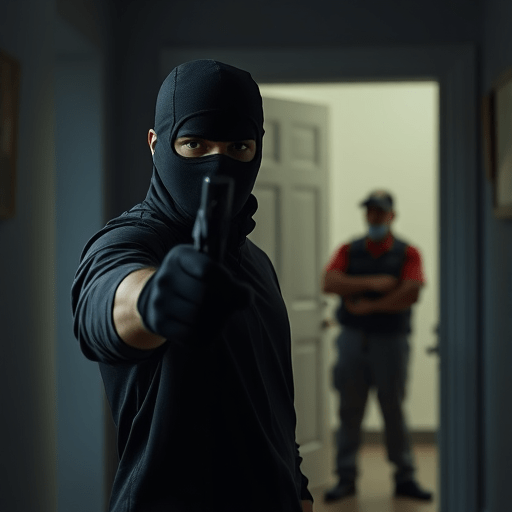
Most self-defense training assumes your eyes will be there when the fight starts. But in a dark parking garage, a blacked-out hallway, or a room during a power failure, your visual system is about as useful as a dead battery. Developing spatial awareness for dark self-defense scenarios means teaching your brain to build a reliable picture of the world without continuous sight. The most effective—and most overlooked—method to accelerate this skill is to train blindfolded.
In 2026, a growing number of martial arts and defensive tactics programs are adding no-vision drills to their curriculum. This shift is not about pretending you won’t have a flashlight. It’s about preparing for the uncomfortable truth that attacks in low-light environments rarely begin on your terms.
The Visual System Crumbles First
Human visual processing is expensive. The brain dedicates massive resources to interpreting what the eyes capture, so when the lights go down, that entire system degrades quickly. In near-total darkness, depth perception becomes unreliable, peripheral vision collapses, and the brain struggles to judge distances. Even in partial moonlight or dim streetlight, your eyes can fool you—a shadow becomes a person, a coat rack becomes an armed attacker.
Violent encounters in transitional spaces—parking garages, stairwells, utility rooms, and alleyways—are disproportionately nocturnal. Criminals choose these environments because darkness hides their intentions. If your defensive strategy depends on visual confirmation of a threat, you are already behind the curve.
How Blindfold Training Builds a Cognitive Map
The brain’s spatial navigation system relies on specialized cells that map your body’s position in the environment. These grid cells and place cells construct an internal representation of space through movement, not just vision. When you close your eyes, the brain is forced to compensate using proprioception—your sense of joint and limb position—along with the vestibular system and tactile feedback from your feet and hands.
Repeated blindfold training creates what neuroscientists call a body-scaled map. Over time, you learn door widths relative to your shoulder span, ceiling heights relative to your reach, and floor textures relative to your footsteps. This map persists even when your eyes are open, making you more aware of your surroundings in ordinary daylight as well. For dark self-defense scenarios, that accurate internal map is what lets you move, strike, and escape without stopping to visually verify every step.
A Progressive Drill Protocol for Dark Self-Defense Training
Jumping straight into a full-contact sparring match while blindfolded is reckless. Instead, build capability in clear stages with a partner or spotter. These drills work equally well in a home living room, a martial arts gym, or a community center.
Phase 1: Static Orientation
Start in an empty, padded room. Put on a quality sleep mask or blindfold, stand in a neutral fighting stance, and slowly scan the space by reaching, stepping, and turning. Identify the main entrance, the nearest wall, the widest open area, and any obstacles you can touch. Then, without moving, point to each feature from memory. Do this for ten minutes, making a mental compass that stays accurate when you rotate and reposition.
Phase 2: Obstacle Navigation
Add foam pads, exercise mats, cones, or padded chairs to the space. Walk slowly from one end of the room to the other using light shuffling steps and trailing fingertips against surfaces. The goal is to move through the clutter without crashing. This simulates navigating a dark hallway filled with furniture or debris. As you improve, increase the complexity and move at a brisk walking pace.
Phase 3: Partner Reaction Drills
Have a partner gently tap your shoulder, push your chest, or pull your sleeve from different directions. Respond by deflecting, retreating, or repositioning—all while blindfolded. Then, have the partner move a padded target around the room, calling your name or snapping to create a sound cue. Track the sound, close distance, and make controlled contact with the target. This builds the timing and distance judgment needed to manage low-light altercations.
Phase 4: Environmental Adaptation
Change the training room regularly. Rearrange the furniture slightly each session. Practice entering a familiar-but-adjusted room blindfolded and identifying what has changed. This prevents the memorization trap, where you only know one layout. Adaptive blindfold training forces your spatial awareness to stay flexible, which is precisely what a changing threat environment demands.
Distance, Angles, and Exit Routes
In darkness, you do not need perfect sight. You need micro-decisions: Is the exit to my left? Can I cross to that partition without hitting the table? Is the attacker inside my striking range or just beyond it? Blindfold training develops those answers through felt sensation.
Add targeted exit drills. Blindfolded, locate a door by sliding your hand along the wall, open it, step through, and close it again—without peeking. Then find a different exit point, such as a window or secondary doorway. Practice identifying safe lines of retreat and cover positions so that withdrawal becomes an automatic option, not a panicked guess.
Tech Tools That Accelerate Spatial Awareness Training
You do not need expensive gear to make meaningful progress. A simple cloth blindfold, gym mats, and two or three foam obstacles are enough to begin. However, certain tools can sharpen the work. Use a laser distance measurer to mark precise zones, so you can verify whether your mental estimates of distance match physical reality. A smartphone with a LiDAR scanner can capture a 3D model of a room; review it after training to compare your cognitive map against the real layout.
Virtual reality headsets also offer a complementary way to rehearse dark environments, especially useful for visual memory of common spaces like offices or schools. But virtual reality cannot replace the true proprioceptive load of moving through physical space. Treat it as a supplement, not a substitute, for real blindfold training.
Safety Rules for Blindfold Training
Because blindfold training removes the primary safety mechanism, structure is critical. Follow these rules:
- Always have a sober, attentive spotter nearby, especially in the early phases.
- Train in a padded or clutter-free space before adding obstacles.
- Do not incorporate weapons or hard objects until a very late stage of practice, and only under qualified supervision.
- Stop immediately if you feel dizzy, nauseous, or overly disoriented.
- Progress gradually. A few focused minutes of blindfold work are more valuable than an hour of sloppy, frustration-driven drilling.
From Blindfolded to Presence of Mind
Blindfold training does not give you supernatural night vision, but it changes how you inhabit dark spaces. Instead of freeze-and-squint behavior, your body already knows the room’s shape, the likely obstacles, and the most efficient path toward safety. By developing spatial awareness for dark self-defense scenarios, you build a calm confidence that no power outage, broken streetlight, or dim corridor can take away. Start with a simple mask and a quiet room—you will be surprised how quickly your brain learns to see without eyes.