The overwater bungalow has long been the default daydream for luxury travelers, but in 2025, a quiet revolution is underway in the world of high-end accommodations. Travelers willing to look beyond the glass-floor panel and the ladder-into-the-lagoon are discovering suite categories that offer more space, more privacy, and a deeper sense of place than the iconic room everyone already knows. This case study compares five hidden luxury suite categories across four continents, weighing the experience, the inclusions, and the nightly rate against the classic overwater villa.
Why the Overwater Bungalow Is No Longer the Automatic Winner
Average nightly rates for an overwater bungalow now sit between $1,400 and $2,800 at marquee properties, and the most photographed categories often book out nine to twelve months in advance. More importantly, resort design has evolved. Architects trained in biophilic principles are creating suites that feel rooted in their surroundings rather than suspended above them, and operators are bundling experiences like private chefs, in-suite spa setups, and curated local excursions into categories that once would have been add-ons. The result is that the suite with the best story is increasingly not the one floating over a reef.
The Five Suite Categories We Compared
- Cliffside cantilever suites in coastal Asia
- Heritage estate rooms within converted palaces and haciendas
- Private villa compounds with dedicated staff in safari regions
- Tented suites in desert and canyon landscapes
- Urban residential suites in restored landmark buildings
Case Study 1: Cliffside Cantilever Suites in Coastal Asia
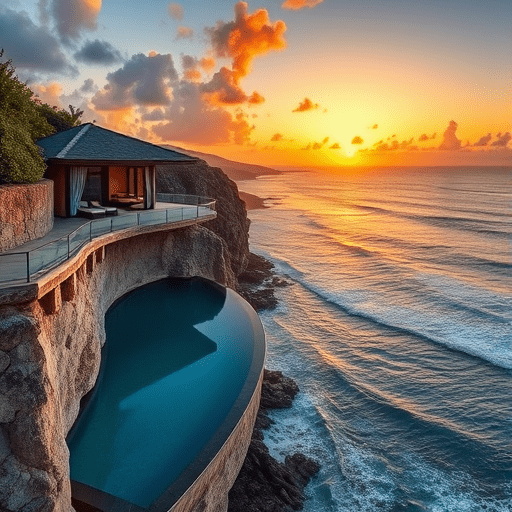
At properties in northern Bali and along the Andaman coast, cliffside suites are jutting out over the canopy on engineered cantilevers, and they are quietly stealing bookings from the overwater market. At one five-star resort near Uluwatu, a 180-square-meter cantilever suite lists at $1,950 per night in high season, roughly $850 less than the entry-level overwater villa at the same brand’s Maldives flagship. The suite includes a 24-meter infinity edge, a soaking tub positioned to face the surf break, and a dedicated experience host who books surfboards, temple visits, and sunset cliff walks.
Compared head-to-head, the cliffside suite wins on space by more than 40 percent, on included activities by a factor of three, and on view variety, since the reef below an overwater bungalow stays visually static while a cliff perch changes with light and tide.
Case Study 2: Heritage Estate Suites in Converted Palaces and Haciendas
Heritage suites inside restored colonial palaces, maharaja-era townhouses, and 17th-century haciendas are quietly becoming the most coveted sleep in Mexico, India, and Portugal. A suite inside a former Rajasthani palace, for instance, averages $1,100 to $1,600 per night and includes a private rooftop dinner, a walking tour with the resident historian, and a sunset boat ride on a private lake. The comparable overwater villa at a tier-one Indian Ocean resort costs between $1,900 and $2,400 and excludes nearly all of those touches.
The heritage category wins on cultural immersion, on a sense of narrative that simply does not exist in a newly built bungalow, and on repeat value, because each visit can unlock a different wing, ritual, or private courtyard.
What Heritage Suites Deliver That Bungalows Cannot
- Architecture tied to centuries of local craft
- Curated storytelling tours led by trained cultural hosts
- Private dining in spaces that are not available to other guests
- An immediate sense of place the moment you cross the threshold
Case Study 3: Private Villa Compounds in Safari and Reserve Settings
Overwater villas and safari villas rarely appear on the same shortlist, yet the math is compelling. At a leading Kenyan reserve, a two-bedroom villa compound with a private vehicle, guide, chef, and butler averages $2,400 per night for four guests, which works out to $600 per person. A Maldives overwater bungalow at a comparable brand runs $1,600 per night for two guests, or $800 per person, and that figure does not include a single off-property experience.
The villa compound wins on per-guest value, on wildlife immersion, and on the variety of included meals, beverages, and game drives. The overwater bungalow wins on the photogenic bathtub and the ease of a beach week. For travelers who measure value by what they do rather than what they look at on Instagram, the safari compound is the stronger bet.
Case Study 4: Tented Suites in Desert and Canyon Landscapes
Tented luxury has moved far beyond the canvas and copper tub era. In southern Utah, Morocco, and the Namib, modern tented suites feature heated floors, climate-controlled bedrooms, and astronomy decks, and they often include guided hikes, naturalist talks, and silent dawn yoga as part of the rate. A premium tented suite in the NamibRand Reserve lists at $1,750 per night all-inclusive, with two daily guided activities, while an overwater bungalow at a flagship Indian Ocean resort at the same price point typically includes none.
The tented suite wins on quiet, on the quality of the included programming, and on the romance of sleeping under a sky dense with stars. It loses only on the convenience of a marine environment, which is a feature for some travelers and irrelevant for others.
Where Tented Suites Outperform on Experience
- Daily guided activities baked into the nightly rate
- Minimal light pollution for stargazing
- A sense of expedition that bungalows cannot replicate
- Smaller property footprints, which translate into a feeling of having the landscape to yourself
Case Study 5: Urban Residential Suites in Restored Landmark Buildings
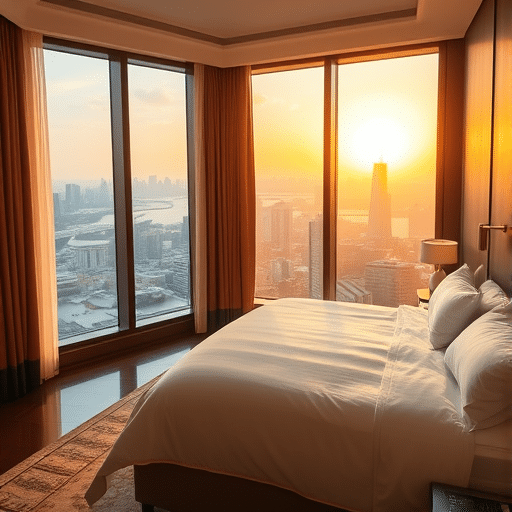
City stays are often dismissed in luxury rankings, and that is precisely why the best urban suites are an under-the-radar splurge. A restored 19th-century building in Lisbon, a former textile mansion in Milan, and a converted telegraph office in Singapore all offer residential suites with kitchens, libraries, and private terraces at rates between $900 and $1,400 per night. A comparable overwater bungalow is often double that, and the urban suite includes a curated neighborhood itinerary designed by the concierge.
The urban suite wins on culinary diversity, on cultural depth, and on the practicality of combining a luxury stay with meetings, museum visits, and family travel, something that is logistically awkward on a remote atoll.
How We Compared the Suites
Each suite was evaluated on six dimensions, weighted equally. Nightly rate was the entry point, not the deciding factor. Space was measured in square meters of private indoor and outdoor area. Included experiences counted any activity, meal, or amenity bundled into the rate. Privacy was scored on the number of neighboring units within line of sight. Local immersion captured the degree to which the suite reflected its setting. Repeat value reflected how differently the same suite could feel across a second or third stay.
The Head-to-Head Scorecard
- Cliffside cantilever: strongest in view, space, and experience inclusions
- Heritage estate: strongest in immersion, repeat value, and narrative
- Safari villa compound: strongest in per-guest value and privacy
- Desert tented suite: strongest in quiet, programming, and sky
- Urban residential suite: strongest in culinary access and logistical flexibility
Choosing the Right Splurge for 2025
The lesson of this case study is that the best suite is the one that matches the trip you actually want to take. A beach week with a snorkel mask still points toward an overwater bungalow, and no hidden category will change that. A milestone celebration, a honeymoon, a family reunion, or a once-in-a-decade journey is where the lesser-known suite categories shine, because they deliver stories, privacy, and inclusions that the iconic room simply cannot match at the same price.
Travelers planning a splurge in 2025 should ask three questions before booking. What experience do I want to remember? How many people am I traveling with? Which destination lets me combine the suite with the activities I care about most. The answers almost always lead away from the overwater bungalow and toward one of the five hidden categories above.