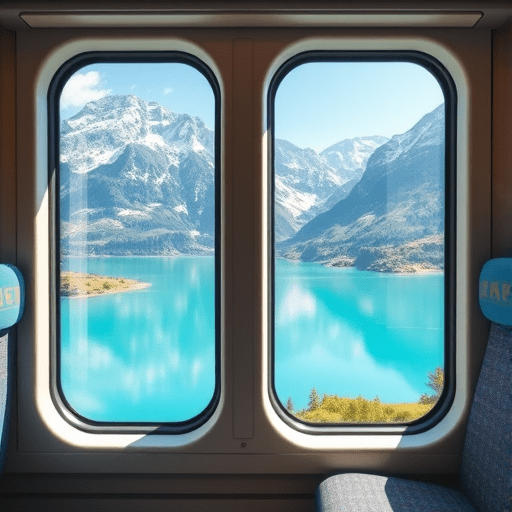
You’ve booked the panoramic train, charged your camera, and staked out a window seat. Then the train glides out of the station—and you realize you’re staring at a rock wall for the next hour while your partner across the aisle is photographing a turquoise lake. That’s the eternal dilemma of scenic rail travel: left or right? The answer isn’t random. It depends on the direction of travel, the terrain, and even the time of day. For 2026, this route-by-route cheat sheet settles it for you, with specific, carefully researched recommendations for Europe’s most beloved scenic journeys.
How to Use This Seat Guide
Every “left” and “right” below is measured from your point of view, facing the direction the train is moving. Trains sometimes reverse or loop around, so take a look at the route map before you board. Also note that while some lines have traditional “best sides,” seasonal conditions and the course of the sun can shift the magic. For example, an afternoon departure might favor the opposite side for backlighting. Where that matters, we’ve included a pointer. For most routes, you’ll want to book a reserved seat early—especially on the Bernina and Glacier Express, where the good side sells out fast.
One final tip: if you’re traveling with a companion, split up—one on the left, one on the right—and swap when you’re both satisfied. That way you’ll cover every angle, particularly on loops and switchbacks.
1. Bernina Express: St. Moritz to Tirano (and Reverse)
The Bernina Express is the undisputed queen of Swiss panorama lines, crossing the Alps at 2,253 meters with no need for a cogwheel. The most dramatic scenery—the Morteratsch glacier, the Lago Bianco, the Brusio spiral viaduct—unfurls between St. Moritz and Tirano. If you start in St. Moritz heading to Tirano, sit on the right side (the east side) for the best uninterrupted views of the Bernina Range and the glittering frozen lakes. From Tirano to St. Moritz, that means the left side. The right side is also ideal for spotting the spiral viaduct before you descend into the Italian village—the train wraps around the helix, so both sides eventually get a good look, but the right side gets the classic photo angle first.
2. West Highland Line: Glasgow to Mallaig (Scotland)
Scotland’s West Highland Line runs from Glasgow to the coastal fishing village of Mallaig, crossing the Glenfinnan Viaduct and skirting the Atlantic. This is a route where the “best side” changes halfway through, so a little strategy goes a long way. Traveling from Glasgow to Mallaig, sit on the right side for the first half to watch the Forth and Clyde valleys, then switch to the left as you approach Loch Lomond and the Highland mountains. The famous Glenfinnan Viaduct appears after Fort William—from Glasgow to Mallaig, the left side gives you the classic sweeping vista of the viaduct and the loch beyond. If you’re doing the return trip, just flip those recommendations. A smart tip: choose the left side if you’re an early riser; you’ll catch the sun rising over the peaks on the morning departure.
3. Flåm Railway: Myrdal to Flåm (Norway)
The Flåm Railway is a steep, 20-kilometer descent from the Hardanger Plateau’s Myrdal station down to the Aurlandsfjord. It’s a railway that takes you behind waterfalls, across rivers, and past narrow gorges. For the full spectacle, ride from Myrdal down to Flåm and sit on the left side. That’s where you’ll face the famous Kjosfossen waterfall—which spills right next to the track—and the deep valley. The right side has its own charms, with the river and steep mountainsides, but the left side delivers the waterfalls and the iconic photo of the train curving below you on the switchbacks. Traveling uphill from Flåm to Myrdal, sit on the right side for the same views. Don’t forget rain gear—the waterfalls are dramatic, but they’re also wet.
4. Cinque Terre Express: Levanto to La Spezia (Italy)
The Cinque Terre Express is more of a local regional train than a panoramic special, but it hugs the Ligurian coast and connects five postcard-perfect villages: Monterosso, Vernazza, Corniglia, Manarola, and Riomaggiore. The route is stunning, but it’s also short on time—the best views come between the tunnels, so seat choice matters. Traveling from Levanto to La Spezia (southward), sit on the left side to see the Mediterranean opening up, with the villages clinging to the cliffs right below you. The right side faces the hillside and the rail retaining walls, so you’ll miss the sea. On the reverse trip, La Spezia to Levanto, the right side is your ticket to the shore. Because this is a commuter line, you can’t reserve seats; just pick your side when you board, and stay alert for the brief, tunnel-free sections where the views pop.
5. Glacier Express: Zermatt to St. Moritz (Switzerland)
The Glacier Express is the slowest express train in the world, an eight-hour crawl between Zermatt and St. Moritz via the Rhine Gorge, the Oberalp Pass, and the Vorderrhein valley. With panoramic windows and full-length carriages, every seat has a view, but the “best” side is still a hot topic. If you’re traveling from Zermatt to St. Moritz (eastward), the right side offers the most striking canyon views in the Rhine Gorge, especially after Disentis. The Landwasser Viaduct, near the end of the route, is best seen from the left side, but the train actually crosses it before it turns—so you might catch it from the right as a sweeping curve. For those going the opposite direction, invert that: left side from St. Moritz to Zermatt for the gorge, right side for the viaduct. Pro tip: book the solar-powered “excellence class” for extra-wide windows, but know that the side-seat logic stays the same.
6. Douro Line: Porto to Pocinho (Portugal)
A hidden gem among European scenic trains, the Douro Line winds inland from Porto along the terraced vineyards of the Douro Valley. The line has two classes of trains: the regional (cheap and slow) and the historic train in summer. Either way, the river is the star. Traveling from Porto to Pocinho (eastward), the Douro River runs to your right on the outward journey. Yes, the left side often has steep, vineyard-covered slopes, but the right side is where the water widens and the quintas and rabelo boats appear. Some argue the left side is better for seeing the train’s relationship to the river in the distance, but that’s a minority view. On the return trip from Pocinho to Porto, choose the left side for the same river-facing views. In 2026, the regional trains are still a bargain; just hop on and grab a window seat on the correct side.
7. The Bergen Railway: Oslo to Bergen (Norway)
Not always on “scenic route” lists, but this high-altitude crossing above the Arctic and through the Hardangervidda plateau is a stunner. It reaches 1,222 meters and crosses the windswept tundra between Myrdal and Finse. Traveling from Oslo to Bergen, the right side gives you the most consistent views of the frozen lakes and snowy expanses in the high country, while the left side offers glimpses of the valley towns and the Hallingskarvet mountain. For the final descent into Bergen, the left side catches the fjord and the city’s harbor as the train rolls in. The Bergen Railway is less touristic than its southern cousins, so picking your side is often just a matter of standing on the platform early.
When the Sun Does Its Own Thing
Light quality can override pure geography. A morning ride from St. Moritz to Tirano means the sun is behind you on the right side, giving crisp, shadowed peaks; by afternoon, the light floods the valleys and the colors of Lago Bianco pop from the left. If photography is your main goal, consider the time of day in your seat choice. For most routes, an early departure favors the east-facing side, while late afternoon favors the west-facing side. When in doubt, ask a railway staff member—most know exactly where the “Instagram crows” gather on each departure.
The Bottom Line
Choosing the left or right seat on Europe’s scenic train routes doesn’t require luck—it just requires a quick look at your route and direction. With this cheat sheet, you can board with confidence, plant your camera at the best window, and let the continent’s most beautiful landscapes roll past in perfect frame. Whether you’re chasing waterfalls on the Flåm Railway or leaning into the Ligurian breeze on the Cinque Terre Express, the right side is now the informed side.