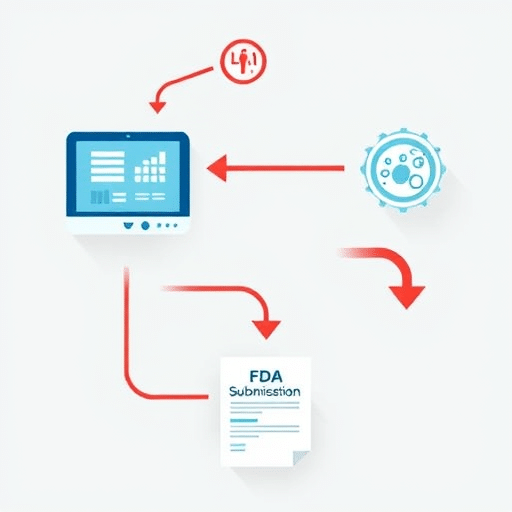
Using registry data to produce real-world evidence (RWE) is widely recognized as a powerful complement to randomized trials. Regulators, payers, and clinical guidelines increasingly rely on it to fill evidence gaps. But the road from registry to real-world evidence is littered with traps that can undermine credibility—and, in severe cases, kill a submission outright. The most devastating trap? Missing longitudinal data. That single failure has recently led to a regulatory submission being rejected after months of expensive analysis. The good news is that each of these traps is avoidable if you know what to look for. This article walks through the three most common data traps and, more importantly, the practical fixes that can save your next RWE project.
Trap #1: Treating Registries as Snapshot Databases
Too many research teams approach a registry as if it were a single snapshot of a patient’s health. They extract one record per patient, drop the time dimension, and then wonder why their survival analysis breaks. A registry is not a cross-sectional survey. It is a longitudinal infrastructure that captures events, exposures, and outcomes over time. If you flatten that structure—or if the registry itself was never designed to record follow-up visits—you will inevitably reach wrong conclusions.
The fix begins with data design. If you are building or enriching a registry, embed longitudinal rules at the collection point. Each variable should have a date, a visit type, and a clear annotation when it changes. But for existing registries, the fix is often retrospective: reconstruct the timeline for each patient from every encounter record, lab result, prescription, and procedure code available. This sounds obvious, yet many registries still store only the most recent value for a given measurement, overwriting earlier data. That is a silent killer for RWE.
When working with a registry that has limited temporal depth, you can also use external data sources to fill in the blanks. Claims data and electronic health records (EHRs) can provide the missing timestamps. The key is to define the observation window per patient, not per calendar year. Patients enter at different times, and their follow-up periods vary. A shared, artificial time zero can create spurious associations. Use patient-anchored time scales, such as days from diagnosis or index procedure, to keep longitudinal structure intact.
Trap #2: Ignoring the Patient Journey Between Touchpoints
Even when a registry records multiple visits, the gaps between those visits can be as informative as the visits themselves. A patient who misses a scheduled six-month follow-up may have either improved so much they no longer need care or worsened to the point of hospitalization. If you simply treat missingness as random, you are ignoring a major source of selection bias. This is especially dangerous in oncology and chronic disease registries, where patients who drop out often have worse outcomes.
The missing longitudinal data here is not necessarily a blank field—it is the absence of events during the inter-visit interval. A patient who experiences a stroke three months after a recorded visit will only show up in the registry if the stroke was captured, which it rarely is. To fix this, you need to link the registry to other data that continuously captures events: hospital admission records, emergency department visits, death indices, and increasingly, remote monitoring devices. Linkage should not be an afterthought. It must be planned from the start of the RWE protocol.
Another practical solution is to use the registry’s own “last known alive” date as a censoring point, but also to flag any patient whose visit pattern deviates from what the care protocol expects. These deviation flags become valuable variables in your analysis, adjusting for the fact that follow-up intensity itself is a proxy for disease severity. In 2026, with the rise of decentralized trials and patient-generated health data, registries can be transformed into continuous data streams. But only if you explicitly model the intervals between touchpoints rather than pretending they don’t exist.
Trap #3: Overlooking the Linkability of Your Data Assets
The third trap is treating each dataset as an island. A registry may contain excellent clinical detail, but it lacks other critical dimensions: socioeconomic status, treatments received outside the registry institution, or patient-reported outcomes. Real-world evidence requires a complete picture. When you fail to link registry data to external sources, you introduce a subtle form of missingness—variables that matter but are simply not available.
The fix is to make linkability a primary requirement. Start by assessing the registry’s unique patient identifiers. Are they national health IDs, or just in-house medical record numbers? Can you map them to claims datasets or state-level immunization registries? Strong linkage is not just about having an identifier; it is about having a governance framework that allows data to be joined while respecting privacy and consent. Techniques like deterministic and probabilistic matching, when applied with a clear validation strategy, can yield high-quality linkage rates.
One underappreciated aspect is the ability to link to emerging data sources. Patient wearables, smartphone apps, and biosensors are generating continuous physiological data that can complement registry visits. In 2026, many RWE protocols still exclude these sources because they are messy and irregular. But the effort to clean them is worth it—they are often the only way to capture what happens between traditional care encounters. Build a data dictionary that includes source variables from every linked dataset. This helps future analyses understand where each value originated, reducing the risk of duplicate or contradictory information.
How to audit your registry for longitudinal integrity
- Map every variable to a timestamp, not just a visit number.
- Identify patients with unexpectedly long gaps between records, and check whether those gaps are clinically plausible.
- Count the percentage of missing records for key outcomes over time; if it rises steeply after a certain point, suspect informative dropout.
- Verify that all sites contributing data use the same coding standards for dates and event types.
- Conduct a linkage test with at least two external sources to calculate match rates and false-positive rates.
Once you have addressed these traps, your registry-to-RWE pipeline becomes far more resilient. But it is not enough to fix the data after the fact. The best time to prevent these problems is before you ever write your statistical analysis plan. Every registry should have a data quality dashboard that tracks longitudinal completeness, visit cadence, and linkage success rates in real time. That dashboard should be reviewed by both clinical and technical teams. In the fast-moving world of real-world evidence, regulators expect transparent, reproducible pathways from raw registry entries to analyzed results. The three traps above are often hidden in plain sight—but with the right checks, they become opportunities to demonstrate rigor.
Conclusion
Missing longitudinal data is not a minor data quality issue; it can undermine an entire RWE submission, exactly as it did in the recent regulatory rejection that prompted this reflection. The path from registry to real-world evidence demands that you respect the temporal dimension, account for the story between visits, and prioritize data linkability from day one. Avoid these three data traps, and your registry can become a trusted source of evidence rather than a source of regret.