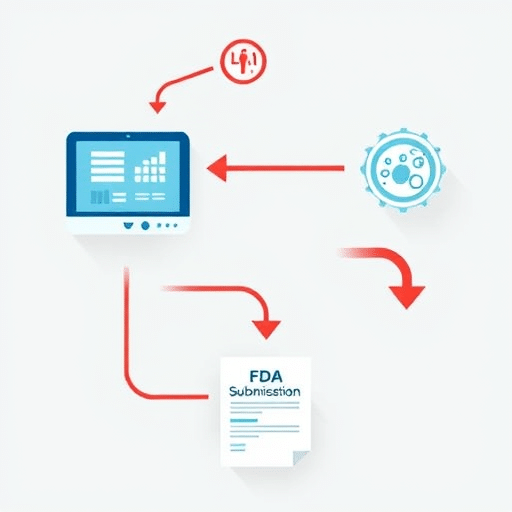
For years, the debate over real-world data vs RCTs for DTx payer approval was framed like a heavyweight match. In one corner, the randomized controlled trial—slow, costly, but unshakeable. In the other, real-world data—fast, abundant, but often dismissed as too noisy. In 2026, that framing no longer works. Payers reviewing digital therapeutics have become evidence consumers, not evidence philosophers. They want to know which study design answers the specific coverage question at hand, and they increasingly expect both types of evidence in a single reimbursement dossier. The real winner is not a study design at all—it is a rigorous, payer-informed evidence strategy.
Why the Payer Evidence Debate Has Shifted for Digital Therapeutics
DTx products are not pills. They are software-driven interventions where the outcome depends on user engagement, the algorithm version, clinician workflows, and even patient digital health literacy. This means a classic placebo-controlled trial, while valuable, cannot capture all the variables that determine whether a payer’s members refill, engage, and improve. Payers know this. The medical policy committees reviewing a DTx reimbursement dossier are increasingly looking for evidence that reflects their actual patient population, not just a rigorously selected trial cohort.
Part of the shift in 2026 is the sheer volume of outcomes data generated by connected health tools. A standard DTx product can report daily patient-reported outcomes, app engagement, step counts, sleep duration, and titration patterns. This is not a clinical trial dataset; it is an epidemiology-grade stream of information. Payers know that and expect developers to use it. This is why the conversation around RWD vs RCT is no longer about which is scientifically superior. It is about which evidence can answer a payer’s three favorite questions: Does it work? For whom? In what real-world setting?
What RCTs Still Deliver in a DTx Reimbursement Dossier
RCTs remain the gold standard for establishing causal efficacy. If your digital therapeutic claims to reduce blood pressure, improve HbA1c, or lower depression severity, a randomized trial is still the fastest way to convince a skeptical clinical reviewer. A well-designed RCT controls for confounding, establishes a clear comparator, and provides the sort of definitive endpoints that budget impact models and clinical guidelines rely on.
In 2026, the better RCT is the pragmatic randomized trial. These trials randomize patients through normal care pathways, use broad inclusion criteria, and collect outcomes digitally. They preserve the internal validity of a traditional RCT while generating data that looks closer to real-world evidence. For DTx developers, a pragmatic RCT built into the product’s clinical integration plan is one of the strongest first layers of a reimbursement dossier.
- RCTs prove causation and provide clean effect sizes for clinical value.
- Randomized designs remain the most persuasive evidence for regulatory claims and clinical guideline inclusion.
- Pragmatic RCTs can double as implementation evidence, making them an efficient choice for 2026 budgets.
The Case for Real-World Evidence in 2026
Real-world data is no longer a post-launch afterthought. In 2026, the most compelling RWE studies for DTx come from the product itself: time-stamped usage logs, sensor data, patient-reported outcomes, and integration with electronic health records. This data is not just plentiful—it is uniquely capable of describing the actual patient journey. Payers want to know what happens when a patient is prescribed a DTx after a primary care visit, not just what happens in a clinical trial environment.
For many DTx companies, real-world evidence can also answer reimbursement-critical questions that trials cannot. Does engagement remain high after thirty days? Does the treatment effect hold in patients with comorbidities? Is there a dose-response relationship between sessions completed and outcomes? These questions matter to payers because they affect whether the product will be effective across a large, varied membership base. RWE, when collected with a pre-specified analysis plan, can provide those answers faster and at lower cost than another randomized trial.
External Control Arms and Synthetic Data: A Middle Path
One of the most valuable uses of RWD is as a substitute for a control group when a traditional placebo or waitlist arm is not feasible. In 2026, digital therapeutics developers increasingly use propensity score-matched external control arms built from claims databases, EHRs, or existing disease registries. This approach allows a non-randomized study to include a credible comparator, giving payers confidence that the observed improvement is attributable to the product, not to natural recovery or baseline care.
How to Decide: A Framework for Choosing the Right Evidence
The “which wins” question only makes sense if you forget why payers want evidence in the first place. Instead of picking a default, DTx developers should ask three questions when deciding where to invest.
1. What is the primary claim? If the claim is symptomatic improvement or disease modification, an RCT is likely non-negotiable. If the claim is cost reduction, workflow efficiency, or patient retention, real-world data will carry more weight.
2. Which payer are you trying to convince? Some regional and national payers accept RWE for digital health coverage decisions; others require at least one randomized trial for medical policy review. Build your dossier to meet the evidence standard of your priority market, not the generic ideal.
3. Where is your product in its lifecycle? A pre-launch DTx with no user base cannot generate meaningful RWE. It needs an RCT first. An established DTx with thousands of active users, however, may use RWE to maintain coverage, expand indications, or negotiate value-based contracts.
The 2026 Hybrid Dossier: Sequencing Evidence for Payer Approval
The most durable reimbursement dossiers in 2026 do not force a debate between real-world data vs randomized trials. They present a layered story. The first layer is a randomized trial that establishes clinical efficacy in a controlled cohort. The second layer is a real-world study that demonstrates external validity in the payer’s population. The third layer is a budget impact model that uses real-world utilization metrics—engagement, adherence, health care resource use—to project net cost impact.
- Layer 1: RCT for causal proof and regulatory claims.
- Layer 2: RWE for generalizability, subgroup effects, and durability.
- Layer 3: A cost-consequence model built on real-world engagement and leakages.
This layered approach also aligns with payer expectations around coverage with evidence development. Rather than treating RWE as a replacement for RCTs, a DTx reimbursement dossier can use RWE to address the limitations of the RCT: lack of diversity, short follow-up, and artificial conditions. In doing so, the dossier becomes more flexible and more responsive to payer questions as they arise.
Building the Evidence Plan Before the Dossier Writeup
The biggest mistake is starting with the dossier rather than the evidence strategy. Too many DTx teams run one small trial, then ask a writer to transform it into a payer packet. In 2026, clinical operations and reimbursement teams should map the evidence plan to payer objections before a single patient is enrolled. That means defining the target payer, anticipating their coverage criteria, and designing a study mix that satisfies both the clinical guideline community and the health economics community.
There is no universal answer to whether real-world data or randomized trials “wins.” The answer depends on the question, the product, the target payer, and the claim being made. But one thing is clear: neither evidence type alone is enough to carry a DTx reimbursement dossier through a sophisticated payer review in 2026.
Conclusion
The strongest DTx reimbursement dossier is not built on a single study design; it is built on a deliberate sequence of evidence, where randomized trials and real-world data each play a defined role. Randomized trials provide the causal foundation; real-world evidence demonstrates that the intervention works beyond the research setting. By planning both, digital therapeutics developers can speak the payer’s evidence language in 2026 and turn the old either-or debate into a practical, integrated answer.