Every time an operator slaps a “VIP Kit” into the server shop, a small piece of the competitive community stops trusting it. The question—how to monetize a competitive FPS server without alienating players—used to have a stock answer: “make it cosmetic only.” But the 2026 community-server economy has moved beyond that simplistic split. Players are now asking harder questions about who owns the server culture, where the money goes, and whether spending a few dollars reshapes the very game they are trying to play well. The answer, as seen in the case of Ironwatch Arena, lies in using donations as a trust signal and treating cosmetic purchases as curated artifacts of belonging, not as a virtual currency grind.
Why Generic Cosmetic Drops Fail on Competitive Servers
Ironwatch Arena, a community-run competitive FPS server for a fictional tactical shooter, learned this the hard way. Before its monetization overhaul, it ran a monthly cosmetic crate system that any player could open after each ranked map. It was optional, randomly rolled, and purchasable with real money. It also nearly killed the server. The admin team saw player counts drop by nearly a third in two months, not because the cosmetics were expensive, but because the presence of a purchasable slot machine in a competitive environment felt like a deflection from the server’s purpose.
What went wrong? For competitive players, even a small visual irregularity creates mental noise. A crate opening animation, a loot drop flash, or a rare skin with a unique sound effect can disrupt the focus that high-level play requires. More importantly, players resented the implicit message: the operator’s bottom line mattered more than their match quality. The old system offered “cosmetics only,” but it failed to grasp that cosmetic is not the same as inconsequential. A ladder is not pay-to-win if it never touches a weapon, but it can still be pay-to-distract.
The Donation-First Model: Funding Without Friction
Ironwatch Arena’s first repair was financial transparency. The admin team published a monthly budget on the server forum: exactly what server hardware cost, what compensation was paid to admin and map developers, and how any surplus would be earmarked for prize pools in monthly community cups. They then opened a donation page with no in-game reward attached. Donors could contribute $3, $10, or $50 per month. They received a small, suppressible supporter badge on the community site, and nothing else.
This felt risky at first. The team worried that without a tangible reward, donations would stall. Instead, the opposite happened. Long-time regulars appreciated that the server was not trying to monetize every interaction. Public donation totals were updated every week, and if a month’s costs were already covered, the donation button was replaced by a simple thank-you message with an option to contribute to the next community cup. The message was clear: we are not greedy, we are accountable.
By shifting the primary revenue stream from purchases to donations, Ironwatch Arena rebuilt player trust. People who donated felt like patrons, not customers. And because the donation had no in-game effect, there was no social hierarchy based on spending. A player who had donated $500 over three years looked no different in the server from a player who had never spent a cent. That equivalence became the foundation for every later monetization decision.
Cosmetic-Only Purchases: Carefully Chosen Indulgences
After donation support stabilized operational costs, Ironwatch Arena introduced a small cosmetic-only purchase menu. But this time, the design was governed by strict constraints that the player base helped define. The resulting store was deliberately small, seasonal, and reversible. It included only:
- Player card backgrounds and champion border frames visible only on community-site profiles, not in the game UI.
- Post-match MVP animations that last no longer than 2.5 seconds and can be skipped by any player.
- Loadout inspect animations that do not alter weapon silhouette, muzzle flash, or reload timing.
- Map flair such as a team-colored banner at the pre-match staging area, with the option for players to hide all banners in their video settings.
These items share a common trait: they are outside the performance-critical visual loop. They do not appear during combat, they do not draw attention to a specific player’s actions, and they can be entirely disabled by an opponent who does not want to see them. The purchase page also carries a disclaimer: “Cosmetics are disabled by default in ranked and scrim modes. They only appear in public and warm-up queues.” That single sentence did more for player acceptance than any discount code ever could.
The shop is not always open, either. Ironwatch Arena runs two weekend “armory windows” per season, each lasting under 72 hours. This small scarcity is not manufactured urgency; it gives players breathing room to evaluate whether the cosmetics feel aligned with the server’s culture. Most importantly, every purchase log is public on the server website. Players can see which cosmetic items were bought, how many, and how the proceeds were spent. There is no anonymous revenue stream that could privately benefit the admin team without scrutiny.
Server Rules That Keep Money From Breaking the Game
A monetization model does not stop at what you sell; it also requires explicit boundaries around how your paying players behave. Ironwatch Arena adopted a code of conduct that protects the competitive experience from donor entitlement and perceived favoritism.
- Donors and purchasing players receive no administrative privileges, no reserved slots, no map vote weighting, and no team balance override.
- Any donor caught behaving disrespectfully to other players receives a refund and a one-week cooldown from the community Discord.
- Admin staff cannot personally go on air with a donor or promote a donor’s channel unless that promotion is available to every player through a transparent community application process.
- A public “money map” shows where every dollar and coin goes, including server provider fees, moderation stipends, and community cup prize funds.
- All cosmetic purchases are marked as non-refundable, but the server offers a “compassion refund” exception for players who later regret their purchase because they felt pressured by chat.
These rules matter because competitive FPS communities are small worlds. A single visible act of donor favoritism can undo months of trust work. By making the rules explicit, Ironwatch Arena eliminated the plausible ambiguity that usually fosters resentment. Players know the server’s financial life is not hidden, and they know the admin staff are not chasing whale culture. The result is a monetization environment where a player can think of the store not as an intrusive ad, but simply as a sponsor booth outside the stadium.
Measuring What Matters: Retention and Donation Cohorts
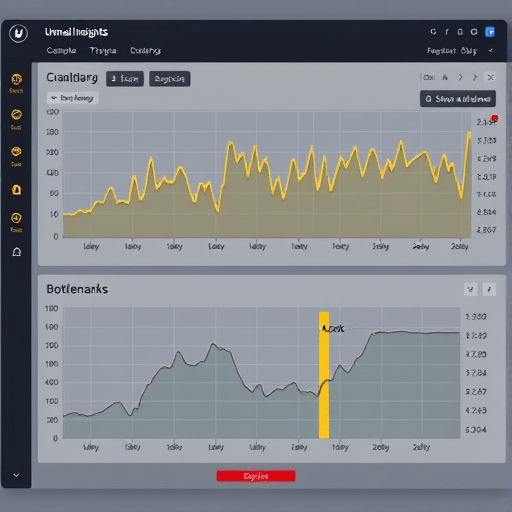
Ironwatch Arena’s success was not measured by raw revenue alone. The admin team tracked segmented player retention over a six-month period and found that players who made a small one-time cosmetic purchase had a 34% higher 60-day retention than the average player. That sounds like a victory for monetization, but the more interesting metric was that players who never purchased or donated also had a higher 60-day retention than the old crate system period. The removal of aggressive monetization was itself a retention feature.
Another useful signal was the ratio of donation revenue to cosmetic revenue. At first, donations covered roughly 70% of costs and cosmetics negligible. By the end of the case study, donations covered about 45% and cosmetics accounted for the rest. Donors did not dry up simply because they had a store option; they felt more comfortable donating knowing that the store was not psychologically manipulating their teammates. People give to communities they trust, and they trust communities that refuse to treat their players as passive consumers.
Lessons for Other Competitive FPS Server Operators
Ironwatch Arena’s experience offers three clear lessons. First, monetization begins before any payment gateway is installed: it begins with a visible, honest accounting of why money is needed. Second, cosmetic-only does not mean “anything goes.” A skin that creates a blinking light next to a sightline is not harmless; a cosmetic that can be hidden by the player who wants maximum clarity is. Third, boundaries are a feature. The server community became more engaged once the rules around donor behavior were explicit, because they no longer had to wonder whether spending money changed the social hierarchy.
There is no universal template for how to monetize a competitive FPS server without alienating players, but the intersection of donation-based funding and carefully gated cosmetic-only purchases is clearly a fertile one. Respect the competitive environment, make the financial life of the server public, and let the players define what counts as a distraction. Those are not just monetization techniques; they are community architecture.
In 2026, the most profitable community-run server is not the one that extracts the most from its player base. It is the one that has learned to ask for money without ever making anyone feel like a resource. Ironwatch Arena is only a single case study, but its logic is already spreading: when players trust the purpose of a payment, they will happily fund a playground they love—as long as the playground never changes hands.