The era of the fixed training plan is quietly ending. For decades, the default approach to fitness was to follow a spreadsheet: Monday heavy squats, Tuesday intervals, Wednesday rest. It felt disciplined, but it ignored the most important variable in performance — your body’s current ability to handle stress. That’s why more athletes and everyday lifters are now turning to autoregulation, using daily readiness scores and RPE to decide how hard, how long, and how intense each session should be. Instead of forcing a workout to match a calendar, you match the workout to yourself in real time. The result is better progression, far less burnout, and a level of consistency that rigid schedules rarely produce.
The Problem with Fixed Plans: Why Sticking to the Program Might Be Holding You Back
There is nothing inherently wrong with having a training structure. The issue arises when that structure becomes a stone tablet. A pre-planned weekly program assumes your sleep, stress, nutrition, and recovery are all perfectly predictable — which they never are. One night of poor sleep can drop your aerobic capacity by 10–20%. A stressful day at work elevates cortisol and reduces muscular strength. If you still try to hit the same percentages and prescribed sets, you are not training; you are grinding. That grind often leads to a familiar cascade: missed workouts, guilt, then forced rest days, and eventually a complete lapse.
In 2026, fitness devices and apps have made this problem even more visible. You can see your HRV tank after a late meeting or a poor night’s rest. But many people still ignore those warning signs to “stay on program.” That approach is outdated. The smart alternative is to let your daily readiness scores and RPE guide your choices — not as an excuse to skip work, but as a tool to keep quality high when you do train.
What Is a Readiness Score and How Does It Gauge Recovery?
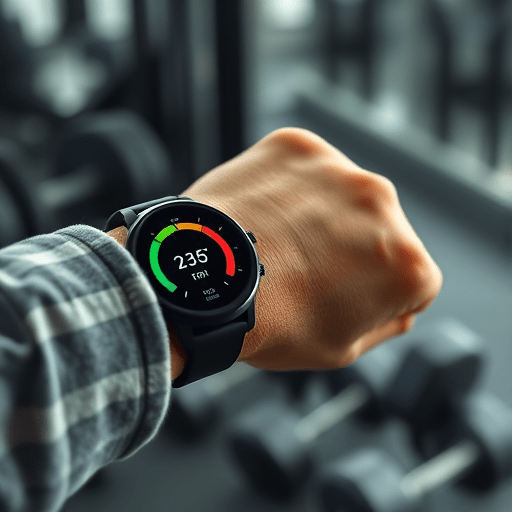
Daily readiness scores are not a single magic number. They are a composite of physiological and subjective signals that tell you how prepared your body is for physical stress. Most modern wearables combine heart rate variability (HRV), resting heart rate, sleep duration and quality, plus your own feedback on soreness and energy. Some systems also factor in previous days’ strain to suggest how much training load you can absorb today.
Think of readiness as a traffic light for your training. A high score means your nervous system is recovered and you can push hard. A low score means you are still accumulating fatigue — and adding more stress may do more harm than good. But the score itself isn’t a verdict; it’s information. The next step is to apply that information intelligently using RPE.
Using RPE to Auto-Regulate Session Intensity
Rate of Perceived Exertion (RPE) is a simple yet surprisingly precise scale that measures how hard something feels in the moment. On the common 1–10 scale, 1 is very light and 10 is a maximal effort. RPE accounts for the subjective experience of the session, which automatically includes your sleep, hydration, stress, and form — things a preplanned percentage cannot.
The key is to wed RPE to your readiness score. On high-readiness days, you might aim for an RPE 8–9 on your main lifts. On moderate days, RPE 6–7. On low-readiness days, you might choose RPE 4–5 with more focus on technique or blood flow. That may feel less impressive on paper, but it keeps you on the path. You are not missing progress; you are protecting it. Autoregulating intensity with RPE means you can finish every session feeling accomplished rather than destroyed. That feeling is what keeps people coming back.
A Practical Framework: Combining Readiness and RPE in Real Time
You don’t need a complex algorithm to start. A simple 15-minute pre-session check will tell you what you need to know. First, look at your readiness score — if your wearable gives you one. If not, create your own using a 1–10 scale based on energy, soreness, sleep quality, and overall motivation. Then, set your session plan in broad strokes: exercises you’ll do, but not fixed weights or reps. After a warm-up, choose your first work set and complete a few reps. Now ask yourself: how hard was that? That’s your RPE. Use it to adjust.
- Readiness 8–10: Target an RPE of 8–9. Add load or reps, feel free to push for a small performance record. Your body is ready for near-peak stress.
- Readiness 6–7: Target RPE 6–7. Maintain volume but reduce load by 10–15%. Focus on clean bar speed and good technique.
- Readiness 3–5: Target RPE 4–5. Reduce sets, use lighter loads, and emphasize movement quality. Consider active recovery instead of a hard session.
- Readiness 1–2: Skip the gym entirely. Prioritize sleep, walking, and breathwork. This is a natural deload day embedded in your weekly flow.
This framework works because it accommodates the inevitable ups and downs. You are not abandoning structure; you are making it smarter. The plan still gives you direction — you still decide which muscles to train or which interval session to run. But the daily variables decide the dose. That’s the essence of autoregulation.
The Long-Term Payoff: Consistency, Not Perfection
The biggest enemy of long-term fitness is inconsistency. Injury, extreme fatigue, and lack of motivation often come from pushing too hard on days when your body clearly demanded less. Autoregulation flips that model. On low-readiness days, you do just enough to stay active, which prevents the “all-or-nothing” mentality that causes so many people to quit. On high-readiness days, you capitalize on your potential, which makes training feel exciting and rewarding.
This approach also aligns better with the modern understanding of adaptation. Your body grows and repairs not from the toughest session, but from the recovery after it. When you honor your readiness scores and use RPE to guide your effort, you ensure that every session has a purpose. Sometimes that purpose is stimulus; sometimes it is recovery. Both are necessary. Over months, the result is more consistent training days, fewer skipped workouts, and a steady upward trend in performance. The calendar may look messier, but your progress and your joints will thank you.
Autoregulating your fitness using daily readiness scores and RPE is not about taking the easy route. It is about taking the intelligent route. In 2026, we have more data than ever, but data only helps when it informs action. By letting your body’s signals adjust your intensity in real time, you can avoid the burnout that plagues rigid schedules and build a training routine that lasts. The future of fitness is not perfect adherence to a plan — it’s perfect awareness of yourself.