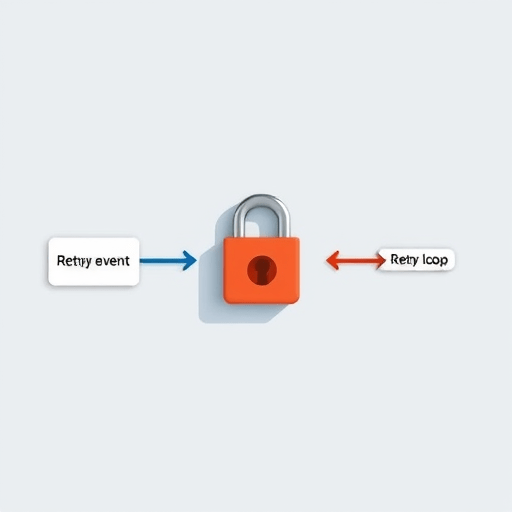
When a payment gateway retries a webhook after a timeout, your endpoint should be able to recognize the delivery, ignore the repeat, and still confirm success. That single capability — idempotent webhook handling — is what separates a fragile checkout flow from one that survives flaky networks, rotating pods, and aggressive retry policies. In an API-first payment stack, idempotency is not a nice-to-have. It is the contract that keeps a customer’s card from being charged twice because a TLS handshake dropped at the worst possible moment.
Why Idempotency Is the Bedrock of Payment Webhook Reliability
Most modern payment processors, from Stripe and Adyen to newer regional players, treat webhook delivery as best-effort with retries. A 5xx, a network blip, or a deploy in the middle of a callback window can all trigger a redelivery. Without idempotency, your system may process the same payment_intent.succeeded event twice and — in the worst case — fulfill an order, credit a wallet, or trigger a downstream transfer twice.
The fix is straightforward in theory but tricky in distributed environments: every webhook handler must be able to answer one question in constant time — have I processed this event before? If yes, respond 200 OK and move on. If no, process it once, store the result, then respond.
The Three Properties of a Truly Idempotent Endpoint
- Deterministic identity: every event carries a unique, processor-issued ID that you can index on.
- Atomic side effects: processing either commits fully or not at all — there is no partial state.
- Replayable history: the system can re-derive the correct outcome from the event payload plus stored state.
Choosing the Right Idempotency Key
The single most important decision is what to use as your idempotency key. Most processors send a stable event.id or id field in the payload, which is ideal. Resist the temptation to build a composite key from amount + customer_id + timestamp. Timestamp-based keys collide when retries happen within the same second, and amount-based keys collide across legitimate reauthorizations.
Best practice for 2026:
- Use the provider’s event UUID as the canonical key.
- Store it in a column with a
UNIQUEconstraint, so the database itself enforces idempotency. - Add a
tenant_idormerchant_idprefix when you operate a multi-tenant gateway — collisions across tenants are rare but catastrophic when they happen.
If your provider occasionally recycles IDs (some legacy gateways do), hash the payload with SHA-256 and store that as a secondary fingerprint.
Designing the Storage Layer for At-Least-Once Delivery
Idempotency is a database problem at heart. You need a store that supports a compare-and-swap pattern: attempt to insert the event ID, and if the insert fails because the row already exists, short-circuit to the cached response.
A Pragmatic Schema
A typical table looks like this:
event_id— primary key, varchar or UUID typepayload— raw JSONB for replay and auditingresponse_status— what you returned to the gatewayresponse_body— what you returned to the gatewayprocessed_at— timestamp for retention sweepslock_expires_at— for handling concurrent duplicate deliveries
The lock_expires_at column is the unsung hero. When two replicas receive the same event at the same time, only one should perform the side effect. A short-lived lease (5 to 30 seconds) lets the second replica wait, then read the cached response once the first commits.
Choosing the Database
Postgres with INSERT ... ON CONFLICT DO NOTHING RETURNING works beautifully for most teams. For very high throughput, Redis with SET NX EX handles the initial dedup, with Postgres as the durable record. Avoid relying on cache alone — a Redis flush at the wrong moment will silently break idempotency and you will discover it during a chargeback review, never sooner.
Handling Out-of-Order and Late Deliveries
Payment events do not always arrive in the sequence you expect. A payment_intent.processing event may arrive after a payment_intent.succeeded because of routing through different POPs. Your handler must tolerate this.
Two Patterns That Work
- Sequence-numbered payloads: store the latest processed sequence per payment ID and ignore events with a lower number.
- State-machine guards: treat each payment as a finite state machine. A
succeededevent is a no-op if the current state is alreadysucceededorrefunded.
Both patterns pair well with idempotency keys: the key prevents duplicate work, the sequence number prevents stale work.
Securing the Endpoint Without Breaking Retries
Webhook signatures are non-negotiable in payment systems. Most processors sign payloads with HMAC-SHA256, and rotating secrets is now standard. The naive implementation — reject if signature verification fails — is correct but incomplete.
Consider this nuance: when a secret rotates mid-retry, a previously valid signature may now fail verification, and you will respond 401. The gateway interprets that as a permanent failure and stops retrying, even though the event was real. The fix is to accept both the current and the previous secret during a rotation window, and to store the signature with the event so a later replay can still be verified against the right key.
Add replay protection by tracking a timestamp header (Stripe uses t=, others use X-Signature-Timestamp) and rejecting events older than five minutes unless you have a strong reason to widen the window.
Testing Idempotency Under Real Conditions
Unit tests rarely catch idempotency bugs because they test the happy path. To build real confidence, you need three classes of test:
- Replay tests: deliver the same event 50 times in a row, assert that downstream APIs are called exactly once.
- Concurrency tests: fire 20 parallel deliveries of the same event, assert that only one side effect occurred and the other 19 returned the cached response.
- Out-of-order tests: deliver
succeeded, thenprocessing, thensucceededagain, and verify that the final state is stillsucceededwith exactly one downstream call.
Container-based test harnesses using tools like toxiproxy can simulate the flaky networks your production webhook endpoint will actually face. If you operate at scale, a chaos test that kills your database pod mid-processing is worth running at least once per quarter.
Operational Telemetry You Should Not Skip
Once your endpoint is idempotent, instrument it aggressively. Track:
- Duplicate rate: the percentage of incoming events that were deduped. A sudden spike often correlates with a provider incident.
- Lock contention: how often two replicas race on the same event. High contention hints at a lease window that is too short.
- Tail latency on cache lookups: a slow idempotency check can drag p99 above the gateway’s timeout window and trigger more retries.
- Stale events: events arriving more than 24 hours after creation, which usually indicate a queue backlog somewhere upstream.
Surface these in a dashboard and alert on deviation from a rolling seven-day baseline. Idempotency failures are silent until they show up in a finance reconciliation report, which is far too late.
Conclusion
Designing idempotent webhooks for API-first payment systems is less about clever code and more about disciplined data modeling. Choose a stable idempotency key, enforce uniqueness in the database, wrap processing in short-lived leases, and design for events that arrive late or out of order. Layer on robust signature verification with rotation, test against concurrency rather than just correctness, and instrument the duplicate rate so you can see problems before customers do. Get these foundations right and your payment webhooks will absorb retries, regional outages, and rolling deploys without ever charging a card twice.