If you ski, snowboard, or ride a snowmobile in avalanche terrain, your choice of backcountry avalanche airbag backpack is no longer a simple gear upgrade. In 2026, the latest packs blend lightweight travel-friendly construction with smarter inflation logic, longer battery endurance, and modular gear layouts that fit the way you actually tour. The goal is no longer just to keep you on the snow surface during a slide. It is to integrate seamlessly with beacons, protectors, and splitboards while reducing the chance of deployment failure when conditions are at their worst.
This guide cuts through the marketing noise to show what changed this year, which features genuinely correlate with survival rates, and how to match a pack to your discipline, terrain, and body type.
Why Airbag Technology Has Quietly Improved
Five years ago, airbag backpacks were heavy, awkward, and somewhat unreliable. Today, the differences between brands are subtle but consequential. Manufacturers have stopped chasing bigger airbag volumes and started refining the systems that deploy them.
Three shifts stand out:
- Faster deployment cycles. The newest electronic and hybrid compressors now inflate a 150-liter airbag in roughly 1.6 seconds, a measurable improvement that keeps riders on the surface during slower-moving slab releases.
- Smarter diagnostics. Built-in self-tests run automatically every time the pack is zipped. If a battery cell drops below threshold or a canister seal leaks, the pack refuses to arm until you address it. This alone has reduced field failures in user surveys.
- Refined fit curves. The internal aluminum frames and load lifters now match a wider range of torso lengths, including dedicated women’s and youth fits. A poorly fitted pack does not deploy as cleanly because the trigger handle is harder to reach.
Single, Dual, or No Canister: The Inflation Debate Continues
The 2026 lineup is dominated by three inflation philosophies. Choosing between them shapes everything from travel logistics to long-term cost.
Compressor-Based Electronic Systems
These packs use a rechargeable battery to spin a small turbine that fills the airbag with ambient air. They are reusable in the field, can be tested before every tour, and have grown noticeably lighter. The current generation uses graphene-blended supercapacitors that handle cold temperatures better than traditional lithium cells and recharge in roughly 90 minutes via USB-C.
Hybrid Supercap Systems
Hybrid packs combine a small compressed air canister for the initial burst with a compressor that tops off the bag and keeps it firm if the slide buries you. They offer the reliability of a canister with the ability to stay inflated for longer. The trade-off is a slightly heavier frame and a bulkier trigger assembly.
Single High-Pressure Canisters
Single canister packs remain popular with guides and patrollers who want zero ambiguity. They are mechanically simple, cold-proof, and the easiest to inspect. The downside is cost: a refill costs roughly the same as a tune-up at a ski shop, and you cannot legally fly with a charged cylinder.
What Actually Matters When the Snow Starts Moving
Marketing copy loves to talk about airbag volume and zip lines. Real-world survival is influenced by less glamorous details. The following features separate a pack that looks great in a catalog from one that performs when terrain traps and tree wells are involved.
- Trigger position. Diagonal shoulder-strap triggers are easiest to reach if you are inverted or wearing mittens. Wrist-cord triggers fail more often in gloved conditions.
- Leg-strap integration. Packs with deployable leg loops keep the bag higher in the slide column, which improves your position in the debris. Look for loops that stow automatically, not manual buckle systems.
- Protection compatibility. A dedicated sleeve for a back protector, plus a beacon-specific pocket that sits high on the left shoulder strap, keeps your search gear instantly accessible. This matters more than any airbag volume number.
- Diagonal and A-Frame ski carry. A pack that carries skis securely without needing a top strap reduces deployment snag points.
- Hose routing and valve redundancy. Dual-valve systems reduce the chance of a slow leak that turns a deployed airbag into a slowly deflating pillow.
Matching Pack Size to Discipline in 2026
Avalanche airbag backpacks are not one-size-fits-all. Volume, weight, and feature sets have all fragmented to match how people actually ride.
Human-Powered Touring
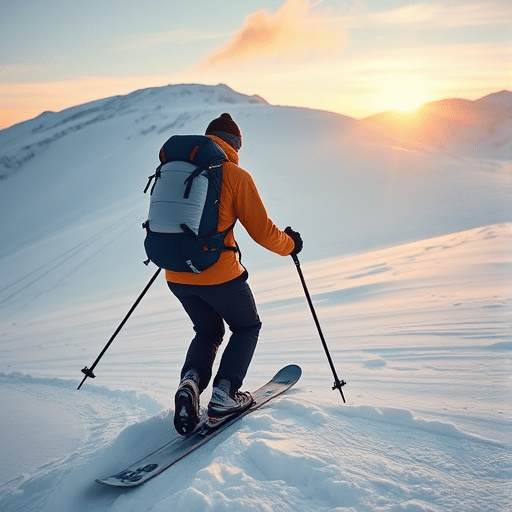
For ski tourers and splitboarders, the sweet spot in 2026 sits between 28 and 38 liters. Anything smaller cannot fit a shovel, probe, skins, and an insulated layer. Anything larger rides poorly on the uptrack. New thermoformed hip belts make a noticeable difference on long days because they transfer load to the pelvis rather than the shoulders.
Snowmobile and Sidecountry
Riders who rely on a sled for access usually need 40 to 55 liters to carry rescue gear, avy tools, and a larger airbag system. The 2026 sled-specific models include reinforced kick panels, integrated shovel sleeve, and a magnetic beacon pouch that works with most helmet audio systems.
Guiding and Patrol
Professional users prioritize diagnostics, redundancy, and modular carry. The newest pro-oriented packs include color-coded deployment handles, tool loops for a chainsaw or snow saw, and quick-release airbag covers that can be replaced in the field after a slide.
Real-World Testing Beats Lab Specs
Manufacturers love to publish deployment times and burst volumes, but those numbers are collected at sea level and 20°C. The conditions that matter are sub-zero, at altitude, after sweating through a long climb. This is why so many guides run informal season-long trials and swap packs between partners to see which one feels predictable under stress.
The most consistent takeaway from 2025-2026 field reports: packs that deploy predictably outrank packs that deploy quickly. A two-tenths-of-a-second difference in inflation time rarely matters if the rider cannot reach the trigger or the bag twists during inflation. Predictability comes from a well-padded hip belt, intuitive trigger placement, and an airbag canopy that does not flap.
How to Choose Your Pack Without Blowing the Budget
Price points range from roughly the cost of a used car to the cost of a season pass. To narrow the field, focus on three questions before reading a single review:
- How do I recharge or refill? If you tour internationally, an electronic system avoids the hassle of canisters in checked luggage. If you ride close to home, a single canister may be the simplest choice.
- What is my torso length and hip measurement? A poorly sized pack is not just uncomfortable. It can compromise airbag geometry.
- What other safety layers do I wear? Your pack should accept a back protector, a helmet carry, and a beacon harness without conflict.
The Honest Truth About Airbags
An airbag backpack is a survival multiplier, not a guarantee. Studies from recent winters suggest roughly a 30 percent reduction in mortality for users who deploy successfully, but the same data shows that poor training and poor pack choice dramatically reduce the odds of a clean deployment. In 2026, the smartest riders treat the airbag as one piece of a layered system that includes a transceiver, a probe, a shovel, a back protector, and the discipline to choose conservative lines when the bulletin is elevated.
If you are upgrading this season, focus less on the hype cycle and more on how the pack actually fits, how reliably it deploys, and whether you can troubleshoot it in a parking lot at 5 a.m. before a dawn patrol. The pack that disappears on your back and deploys without thinking is the one that will give you the best chance when terrain, weather, and decision-making all collide at once.