The era of launching an indie game with English-only support is officially over. In 2026’s deeply saturated global market, the developers who successfully execute a hyperlocal strategy—adapting not just language but economic and cultural context—are the ones unlocking massive revenue in regions traditionally sidelined by the AAA giants. If you’ve been wondering how to sell your indie game in 10 languages without exhausting your budget or missing the mark on value, the answer lies in pairing cutting-edge AI translation with meticulously calculated regional price tiers. This isn’t just about turning a profit; it’s about respecting your global player base as individual markets, not just a global aggregate.
Beyond Raw Machine Translation: Contextual AI is the New Standard
We’ve moved far past the days of clunky, literal Google Translate outputs ruining a game’s atmosphere. In 2026, the smartest indie teams are leveraging specialized AI localization engines that understand broader narrative contexts. These models aren’t just converting strings; they are preserving tone, adapting jokes, and respecting character relationships. When localizing a game with a sarcastic narrator, a generic translation engine might produce flat, robotic text. A contextual AI, fine-tuned on your specific genre and writing style, maintains that edge.
However, AI outputting decent text is only the first pillar. The real success comes from establishing a rigorous “Lore Glossary” within your translation workflow. This ensures that a “Frostblade” remains a “Frostblade,” and that lore-specific terminology translates accurately to ‘冰刃’ in Chinese or ‘Klingenfrost’ in German. Contextual AI understands these nuanced transformations, but it still requires a human-in-the-loop to catch cultural landmines and UI-breaking text expansions—the classic issue where a concise English phrase balloons into 50 characters when rendered in German or Finnish.
The Economic Layer: Regional Price Tiers Based on Purchasing Power
Language gets you into the door, but hyperlocal pricing is what makes the player pull out their wallet. A blanket conversion of $24.99 USD across ten different countries is a recipe for disaster. Emerging markets aren’t just “poorer versions” of Western markets; they have unique spending habits, platform preferences, and localized expectations for digital goods. This is where dynamic regional pricing comes into play.
Calculating Your Global Price Index (GPI)
Developing a GPI is crucial for effectively selling in 10 languages. Instead of looking at currency exchange rates, look at purchasing power parity (PPP) and SteamDB historical pricing data for your genre. For example, a $19.99 indie strategy game that performs well in Poland can often demand a slightly higher absolute price in PLN (relative to other regions) because of the high demand for that specific genre. However, the same game must be pegged significantly lower in Argentina or Turkey, not be devalued, but positioned to combat aggressive regional piracy and high inflation rates.
Let’s break down a practical 2026 tiering framework:
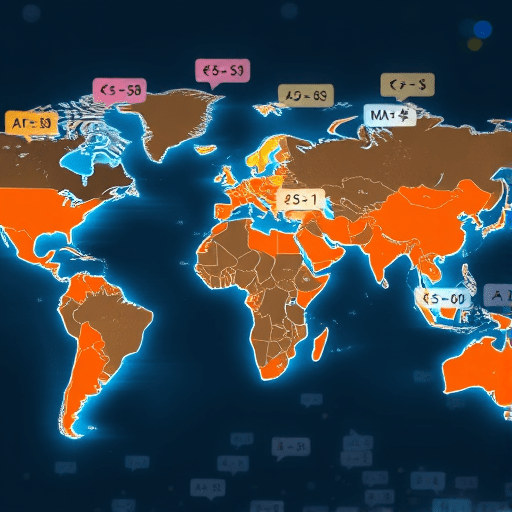
- Tier 1 (Standard): North America, Western Europe, Australia. Full price status ($19.99 – $29.99).
- Tier 2 (Balanced): Eastern Europe, Southeast Asia, Japan. A 20-30% reduction in absolute terms, but adjusted specifically to match local indie market standards.
- Tier 3 (Emerging optimized): South America, Turkey, China, India. A 40-60% reduction based on PPP, often rounded to a psychologically reassuring number (e.g., R$ 34,90 in Brazil rather than an awkward R$ 52,00 partial conversion).
- Tier 4 (High Volatility): Argentina, Lebanon. These markets require adjustable backend pricing that automatically shifts if the local currency devalues rapidly, ensuring your price tier remains fair but doesn’t encourage cross-region VPN abuse.
Building Your 10-Language Launch Stack
Executing a hyperlocal go-to-market strategy requires a reliable workflow. Trying to coordinate 10 languages manually until launch week is a logistical nightmare. Instead, consider this professional 2026 workflow:
- String Centralization: Ensure your game’s text is fully externalized, ideally using a robust localization management platform that integrates with your game engine.
- AI-First Translation: Push your base English strings (or primary language) through a context-aware AI translation pipeline. Aim for 10 target languages: Spanish, Brazilian Portuguese, Simplified Chinese, Japanese, Korean, German, French, Russian, Polish, and Turkish.
- Specialist Cultural Review: Hire native-speaking game enthusiasts (not just professional translators) from those 10 regions for a strict 2-hour review pass. They aren’t translating from scratch; they are verifying slang authenticity, checking joke impact, and confirming that cultural references don’t violate local taboos.
- UI/UX Localization Testing: Run automated and manual tests to ensure font rendering (especially for CJK and Cyrillic scripts) doesn’t break layout boxes or cause text overflow.
Platform-Specific Strategies for Emerging Markets
Steam is the dominant PC storefront, but hyperlocal success requires nuanced navigation of its regional pricing backend. While Steam offers suggested regions, the platform rewards developers who actively customize their regional pricing at launch rather than post-release. On the other hand, mobile storefronts like the iOS App Store and Google Play often auto-convert prices, but this rarely matches PPP. You must manually override these conversions by adjusting the differential pricing settings within the developer consoles.
Furthermore, physical currency isn’t the only gatekeeper. In high-inflation economies, players are incredibly sensitive to how their ‘wallet credits’ are valued. On the Steam Deck and Chinese platforms like WeGame or Bilibili, launch discounts and regional pricing tiers work synergistically. A 10% launch discount on a correctly hyperlocal-priced base price in Brazil can spike your velocity, whereas in the West, the exact same discount might lack urgency due to a saturated market place.
Brand Perception vs. Regional Accessibility
A common fear among indie devs is that offering a massive price drop in developing markets will create a “cheap game” stigma or encourage players in wealthy countries to VPN to those regions for a discount. This is a valid concern that the hyperlocal model addresses directly. This approach isn’t about bringing your $30 game down to $0.99 in Brazil. It’s about research-backed, dignity-respecting pricing that reflects the local micro-economy while maintaining the game’s perceived premium quality.
Combining AI translation with human cultural review ensures your game presents itself as a polished, high-value product in every language. When a player in Jakarta opens your Steam page and sees not only their local currency but a perfectly localized store page describing the nuanced game mechanics in their native Bahasa Indonesia, they don’t see a discount title. They see a triple-A indie experience specifically crafted for them. That level of respect cuts through the noise of low-effort, globally homogenized game listings.
Conclusion: The Hyperlocal Future of Indie Development
The roadmap for global indie success in 2026 is clear: stop treating international markets as an afterthought. By implementing a robust hyperlocal pricing model and harnessing the power of modern contextual AI translation, you can adapt your game for 10 languages with a surprisingly lean budget and development timeline. The indie developers who embrace this “global-first” mindset early on will not just unlock the massive revenue potential of emerging markets—they will pioneer a new standard of gaming inclusivity that tightens the bond between creator and player, regardless of geographical borders.