The biggest challenge in live-service design for 2026 is no longer deciding between casual reach or mid-core depth. It is merging the two into a single, cohesive experience. As the hybrid-casual market expands, studios are increasingly borrowing the retention loops that make idle games so sticky — asynchronous rewards, offline progress, and perpetual soft goals. Yet those same loops can quietly undermine the engagement of mid-core whales, the high-value players who crave mastery, challenge, and meaningful competition. The art of hybrid-casual live-service design lies in blending idle retention loops without alienating mid-core whales, creating a game where waiting feels productive, but playing feels essential.
The Tension Between Idle Loops and Mid-Core Expectations
Idle games thrive on a simple promise: progress continues while you are away. That promise lowers the barrier to entry and rewards frequent, low-stakes check-ins. Mid-core whales, however, are often drawn to the opposite — intense sessions, strategic decision-making, and the feeling that their skill, not their clock, determines success. When a game lets players earn the same resources by simply closing the app, those whales can feel that their expertise is devalued.
The solution is not to remove idle mechanics, but to reposition them. Idle rewards should function as a foundation, not a substitute for active mastery. In practice, that means making offline gains generous enough to keep casual players hooked, yet clearly inferior to what a skilled mid-core player can earn in a focused 15-minute session. The key is to design idle rewards as the “floor” and active performance as the “ceiling,” giving both cohorts a reason to stay.
Designing Idle Progression That Doesn’t Undercut Mastery
A common mistake is letting idle systems dictate the game’s core economy. When the fastest way to advance is to stop playing, you have already lost the mid-core whale. Instead, treat passive income as a passive multiplier on active play, not a standalone path. For example, a player might accrue “drift tokens” while away, but those tokens are only converted into meaningful upgrades when spent during an active session that involves a skill-based challenge or a strategic choice.
Another effective technique is to gate idle rewards behind short, active checkpoints. Require players to complete a low-difficulty combat encounter, resource puzzle, or timing minigame before collecting their accumulated idle earnings. This creates a ritual that keeps even the most casual players engaged with the game’s core verbs, while mid-core whales can rush through the checkpoints and still feel their efficiency matters. The goal is to make the idle loop a gateway to deeper mechanics, not a walled garden that bypasses them.
Depth Through Layered Progression
Mid-core whales often stay because they see a long-term build path — an evolving loadout, a guild they are leading, or a seasonal prestige system. Idle games can support this by offering meta-progression that respects both time spent and time away. For instance, each idle cycle could increase the player’s “potential energy” for a special ability, but only activating that ability in a high-stakes encounter yields permanent progress toward a rare cosmetic or unique title.
This layered approach gives whales a reason to optimize their active play sessions, while casual players can slowly accumulate resources. It also creates natural breaking points where a casual can become a whale: the moment they realize that their idle gains are insufficient for the next big milestone, and active skill becomes the only way forward.
New Metrics for 2026: Beyond D1/D7 Retention
Traditional retention metrics like Day 1 and Day 7 are too blunt for hybrid-casual live-service design. A player who simply logs in to collect idle rewards is counted as retained, even if they are not experiencing the game’s deeper systems. As a result, live-service teams often tune the wrong levers, making idle rewards more generous to boost retention, only to watch mid-core whales churn.
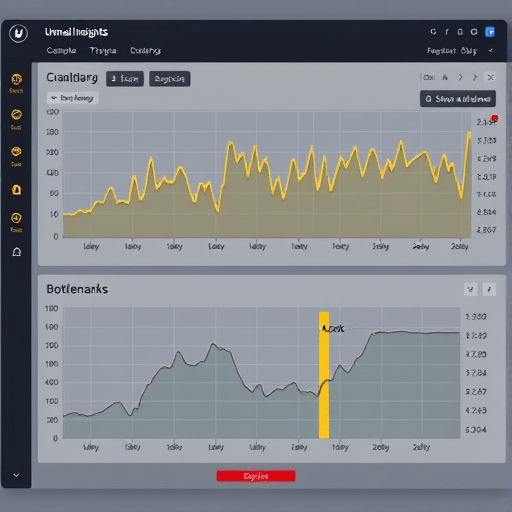
In 2026, your analytics should include a “depth-to-idle ratio” for each player segment. Track not just session length, but the percentage of sessions that involve a meaningful active action — completing a challenge, placing in a tournament, or upgrading a core build. If that ratio falls below a threshold for whales, it is a leading indicator of churn. Similarly, monitor “idle fatigue,” the moment when a player stops returning even for passive rewards. That signals that your idle loop is too shallow or too disconnected from the game’s core fantasy.
Another useful metric is “whale skill velocity” — how quickly a high-value player can advance through the content that requires active mastery. If whales complete all skill-based challenges and then have nothing to do but wait for idle timers, their interest decays rapidly. Your design needs to ensure that there is always a new active layer to unlock, even if that layer is gated by accumulated idle resources.
For a deeper look at tracking player behavior in live-service games, consider how community-driven analytics can complement your internal dashboards.
Event Structures That Serve Both Casual and Whale Cohorts
Events are the heartbeat of live-service design, but classic event formats often split the player base. Casual players want simple, repeatable grinds. Mid-core whales want ranked leaderboards and exclusive rewards. In 2026, the most effective hybrid-casual events use a two-track structure: a casual track that anyone can complete by collecting idle resources and logging in, and a whale track that requires active performance, strategic teaming, or skillful execution.
The secret is to make both tracks visible to all players, but never force the more casual audience into the competitive track. For example, a seasonal event might have a “passive harvest phase” where all players accumulate event currency over time, followed by an “active bloom phase” that opens three days later, where players can spend that currency to enter short skill-based encounters. Whales can optimize their currency spend, practice the encounters, and compete for leaderboard rankings. Casual players can still progress through the reward track, but they will not feel punished for skipping the active phase.
This structure also creates a natural funnel from casual to mid-core behavior. A casual player who discovers they enjoy the active encounters may invest more time, eventually becoming a whale themselves. The event should surface that path clearly, not as a paywall, but as a depth option.
Reward Tiers That Respect Both Playstyles
Reward distribution is where many hybrid-casual designs fail. If the best rewards only come from leaderboard rankings, casual players feel alienated. If they come only from idle collection, whales feel bored. A balanced system offers mirrored rewards: for each rank in the leaderboard, there is an equivalent, differently-styled reward in the collection track. A whale might earn a golden weapon skin; a patient idle player earns a rare pet with similar cosmetic value but no stat advantage. This way, no one feels their time is second-class, but the paths remain distinct.
Additionally, consider seasonal “merge events” where the top idle collectors and top active performers must collaborate to unlock server-wide bonuses. This turns the two cohorts into allies rather than rivals, deepening the social fabric that keeps both groups engaged.
Avoiding the “Idle Cliff” — Keeping Mid-Core Engagement Alive
The biggest risk in any idle-infused live game is the “idle cliff,” the point where players realize that active play no longer matters. For casual players, that realization might come after they complete the main story or reach max level. For whales, it comes when they have optimized every system and every idle loop, leaving nothing to master. To prevent this, your live-service design must periodically introduce new active mechanics that temporarily override idle accumulation.
One strong pattern is the “focus shift.” Every few weeks, a new feature rotates in that ignores idle production entirely — a roguelike dungeon, a PvP arena with level scaling, or a cooperative boss that requires sequenced skill use. During this focus shift, idle yields are paused, but the game’s economy is tuned so that participating in the active feature grants more resources per minute than idle collection ever would. This resets the balance, reminding whales why they enjoy the game, while casual players can wait for the feature to end without falling behind permanently.
Another approach is to tie idle rewards to recent active performance. If a player performs well in a skill-based challenge, their idle production rate increases for the next 24 hours. This creates a positive feedback loop that rewards engagement without requiring constant play. Whales can maintain a high idle rate by playing hard for an hour; casuals get a baseline rate and occasional boosts from simple, low-stress actions.
Content Cadence and Expectation Management
Mid-core whales are often the first to exhaust new content. Your live-service calendar should be honest about that. Instead of promising a massive expansion every month, design smaller “depth patches” that add a single new active mechanic, one new idle upgrade, and a hand-crafted set of challenges that test skill. Communicate clearly that these patches are aimed at the game’s most dedicated players, while also offering a small cosmetic reward for everyone who logs in during the patch window. This sets expectations and prevents the inevitable disappointment that comes from overhyped updates.
Finally, never underestimate the power of letting whales create their own goals. A clan or guild system where players can set custom challenges and reward their own members with vanity items dovetails perfectly with idle mechanics. Idle production funds the guild’s shared treasury; active tournaments spend that treasury to unlock exclusive events. This self-directed loop gives whales an endless source of purpose, while casual players can join a guild and benefit from the shared progress without committing to daily active play.
A Balanced Loop, Not a Compromise
The future of hybrid-casual live-service design is not about choosing between idle retention and mid-core depth. It is about building a loop where each feeds the other. Idle rewards bring players in and keep the daily habit alive; active mastery gives those rewards meaning and keeps your most valuable players invested. By measuring depth-to-idle ratios, designing two-track events, and avoiding the idle cliff through periodic focus shifts, you can create a game that respects the attention of a casual player and the ambition of a mid-core whale. In doing so, your live-service design becomes more than a collection of mechanics — it becomes a self-sustaining ecosystem for every type of player.