Medication non-adherence remains one of the most stubborn problems in modern healthcare, costing the U.S. health system hundreds of billions of dollars every year and contributing to nearly 125,000 preventable deaths annually. In 2026, a growing wave of smartphone apps claims to fix this gap. They fall broadly into two camps: gamified pill reminders, which turn each dose into a small behavioral challenge, and passive notification apps, which simply beep until the user taps “taken.” The question is no longer whether a phone can remind you to take a pill; it is which design philosophy actually keeps patients on track long-term.
The Core Difference Between Gamification and Passive Alerts
At first glance, both approaches look similar: a notification pops up, you confirm or snooze, and the app records the dose. Under the hood, however, the design intent is completely different.
Passive notification apps treat medication as a task to be completed and forgotten. They rely on linear reminders, basic adherence percentages, and sometimes a calendar view. Their goal is simply to make sure the patient is aware the dose is due.
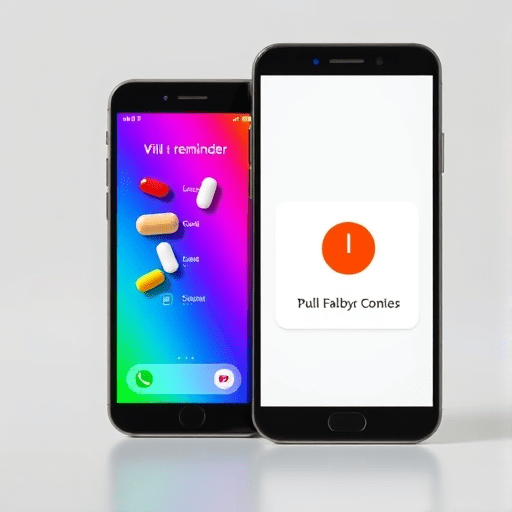
Gamified adherence apps treat medication as a behavioral loop. They borrow mechanics from mobile games and habit trackers: streaks, points, levels, virtual rewards, social leaderboards, and progress bars toward a longer-term goal. The reminder is just the trigger; the experience is the retention engine.
What a typical gamified reminder looks like
- A morning pill unlocks a “streak day” counter visualized as a growing flame or chain link.
- Earning 30 consecutive days grants a virtual badge or unlocks a charitable donation sponsored by the app’s partner.
- Sharing weekly progress with a friend or care team adds a social accountability layer.
Why Passive Notifications Lose Steam After Week Three
Behavioral science has documented a familiar pattern with simple alarms: they work well during the initial enthusiasm, then gradually get ignored. By week three, many users have either disabled the notifications, dismissed them reflexively, or hit “skip” so often that the data is meaningless.
The problem is not the alert itself. It is that passive notifications compete with dozens of similar pings: messages, delivery updates, calendar events, and social media. The brain learns to treat them as low-priority noise. A generic “Time to take your pill” chime blends into the same cognitive bucket as a coupon notification, so the medication reminder gets the same low-effort dismissal.
Predictably, adherence studies on reminder-only apps show an early boost followed by a decline back to baseline within 30 to 60 days.
The Gamification Layer: How Small Rewards Reshape Routine
Gamified pill reminders work because they exploit the same motivational loops that make mobile games compelling. Three design elements matter most:
1. Variable rewards
Instead of a fixed “Good job” message, the app might randomly reveal one of several encouraging phrases, a small surprise animation, or a bonus point. Variable rewards are notoriously effective at sustaining attention because the user never knows exactly what they will get.
2. Visible progress toward a meaningful goal
Most passive apps show a bland percentage: “87% adherent this month.” Gamified apps tend to reframe the number into a visual story: a garden that grows with each dose, a character that levels up, or a thermometer that fills toward a health milestone. The same statistic feels emotionally different.
3. Loss aversion and streak protection
Once a user has a 14-day streak, the prospect of breaking it becomes a powerful nudge. Many gamified apps add a “streak freeze” mechanic that lets users recover a missed dose with a small penalty, mirroring the “continue or watch an ad” mechanic common in casual games. This small loss-aversion loop is highly effective at re-engaging lapsed users.
What 2026 Apps Are Adding Beyond Points and Badges
The 2026 generation of adherence apps has matured beyond simple points. Several stand-out features are now common in the best gamified apps and missing from most passive ones.
- Adaptive timing: Machine learning models analyze when the user actually taps “taken” and shift the reminder window to a more realistic time, reducing annoying early alerts.
- Caregiver dashboards: Family members or clinicians can view streaks, missed days, and refill warnings without nagging the patient directly.
- Refill and pharmacy integration: The app can detect that pill supply is running low and trigger a prescription refill request automatically.
- Wearables and contextual triggers: Some apps now delay or suppress reminders if the wearable detects the user is asleep, driving, or in a known stressful situation.
- Health-economy incentives: Insurers in several markets now offer premium discounts or reward points redeemable for gift cards in exchange for verified adherence over 90 days.
Where Passive Notifications Still Win
Gamification is not the right tool for every patient. For some populations, simpler is better.
- Older adults unfamiliar with smartphones: A complicated gamified UI can confuse users who just want a clear chime that says “take your pill.”
- Polypharmacy patients: People taking 8 to 12 daily medications may find gamified apps overwhelming and prefer a minimal checklist.
- Patients with cognitive impairment: Streaks and badges add little value when the underlying challenge is memory, not motivation.
- Privacy-sensitive users: Gamified apps often require accounts, social features, or third-party integrations that some patients prefer to avoid.
Head-to-Head: Five Dimensions That Matter Long-Term
1. 30-day retention
Gamified apps consistently retain more users past the first month because the experience has intrinsic motivation. Passive apps see the steepest drop-off between days 21 and 45.
2. Doses taken on time
On the metric of “did the patient take the pill within the recommended window,” both styles perform similarly in the first two weeks. After that, gamified apps show a 15 to 25 percent advantage in published pilot studies.
3. Refill compliance
Neither design excels here unless paired with pharmacy integration. The gamified apps that include refill nudges and partner pharmacies show meaningfully better 90-day refill rates.
4. User satisfaction
Reviews in 2026 app stores reveal a split. Younger users overwhelmingly prefer gamified apps; older users often complain about clutter, animations, and forced social features.
5. Data quality for clinicians
Passive apps produce cleaner data because the input is binary and minimal. Gamified apps can introduce noise (taps logged as “earned points” rather than as a dose), but the best ones now separate the two events cleanly.
The Hybrid Future: Where the Best Apps Are Heading
The sharpest 2026 apps are no longer picking one side. They offer a quiet mode that strips the gamified UI down to simple, large-font reminders for users who want minimalism, and a full experience mode for users who want engagement. The toggle is in settings, not buried five menus deep.
This hybrid approach recognizes that adherence is not just a willpower problem. Some weeks, a patient needs encouragement and small rewards. Other weeks, after a hospitalization, they need quiet structure. The best apps adapt to the patient’s current life stage rather than locking them into one philosophy.
Conclusion
Passive notifications remain useful for patients who value simplicity and minimalism, especially older adults and those on complex regimens. Gamified pill reminders, however, consistently outperform them on the metrics that matter most for long-term adherence: 30-day retention, on-time dosing, and sustained motivation past the initial novelty window. For most general adults managing one or two chronic medications, a well-designed gamified adherence app offers the strongest chance of staying on track through month six, month twelve, and beyond.