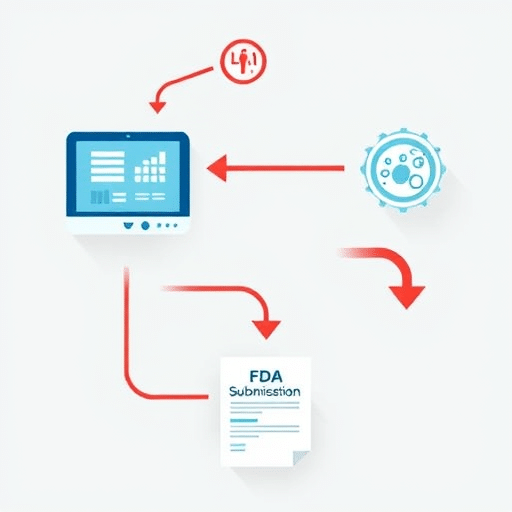
In 2026, the FDA’s Digital Health Center of Excellence (DHCoE) has tightened its guidance on digital therapeutics (DTx), demanding robust, adaptive, and patient‑centric trial designs that deliver clear clinical benefit. For a startup, navigating these regulatory waters is both a challenge and an opportunity to create a profitable DTx model that scales. This blueprint outlines the essential steps, from selecting endpoints to leveraging real‑world evidence, that will help your startup craft a trial design capable of winning FDA approval.
1. Start with a Regulatory‑First Mindset
Regulatory expectations are no longer a afterthought. The DHCoE now prefers adaptive, randomized, controlled trials (RCTs) that can incorporate real‑world data (RWD) and patient‑reported outcomes (PROs). Begin by:
- Engaging early with the FDA. Request a pre‑IND or pre‑submission meeting to discuss your trial architecture and endpoint strategy.
- Choosing the right regulatory pathway. Determine whether your DTx will qualify for a medical device classification, a drug classification, or the Digital Therapeutic Device (DTD) category. Each pathway carries distinct design requirements.
- Understanding the “digital” element. The FDA wants assurance that software updates, data collection, and algorithmic changes are controlled and documented.
2. Define Clinical Value with Adaptive Endpoints
Adaptive trial designs—such as Bayesian sequential trials or response‑adaptive randomization—allow you to adjust sample size or intervention arms based on interim data. This flexibility is crucial for DTx, where patient adherence can fluctuate.
Choosing the Right Endpoint
Endpoints must be clinically meaningful, measurable, and FDA‑acceptable. For most DTx in chronic disease management, the following categories are common:
- Primary Clinical Endpoint: A validated biomarker or disease‑specific score (e.g., HbA1c for diabetes, PHQ‑9 for depression).
- Secondary Endpoints: PROs such as the Patient Health Questionnaire or EQ‑5D, and engagement metrics (log‑ins, session duration).
- Safety Endpoints: Adverse event reporting, data privacy breaches, or algorithmic bias incidents.
Ensure the primary endpoint is objective and that your DTx can reliably capture it through its digital interface.
3. Build an Adaptive Randomization Algorithm
Digital therapeutics often benefit from a dynamic randomization strategy that favors more effective treatment arms over time. This not only improves patient outcomes during the trial but also gathers richer comparative data.
- Bayesian updating. Use Bayesian statistics to incorporate ongoing data, adjusting randomization probabilities without compromising trial integrity.
- Blinding considerations. Maintain double‑blind conditions by ensuring the algorithm and data dashboards are blinded to the treatment assignment.
- Safety monitoring. Integrate a Data Safety Monitoring Board (DSMB) that reviews interim safety data in real time.
4. Leverage Real‑World Evidence (RWE) Early
The FDA’s RWE framework supports the use of observational data to supplement RCT findings. For startups, RWE can reduce trial duration and costs.
Collecting RWD from Your Platform
Embed a data‑collection layer that captures:
- Device‑derived metrics (e.g., heart rate, sleep patterns).
- Electronic health record (EHR) integration for clinical lab values.
- Geolocation and environmental data that may influence treatment adherence.
These datasets must meet FDA standards for data integrity, provenance, and privacy compliance (HIPAA, GDPR). Use standardized vocabularies like SNOMED CT and LOINC to facilitate interoperability.
5. Prioritize Patient Engagement and Retention
Digital therapeutics succeed only when patients use them consistently. Your trial design should incorporate:
- Gamification and incentives. Leaderboards, badges, or small monetary rewards linked to engagement milestones.
- Remote monitoring. Wearables or mobile sensors that auto‑capture adherence data.
- Human‑centered design. Co‑create the user interface with patients to minimize friction.
Measure engagement as a co‑primary endpoint and link it to clinical outcomes to demonstrate a dose‑response relationship.
6. Implement a Robust Data Governance Framework
Regulatory bodies scrutinize how digital data is stored, processed, and shared. Startups must:
- Adopt secure cloud infrastructure with ISO 27001 or SOC 2 compliance.
- Use cryptographic techniques (e.g., homomorphic encryption) for sensitive data.
- Maintain a transparent data dictionary and version control system for algorithms.
Document every change to the software (e.g., feature updates) in a Change Log to satisfy FDA’s software as a medical device (SaMD) guidelines.
7. Plan for Post‑Approval Lifecycle Management
FDA approval is just the beginning. DTx companies need a lifecycle strategy that addresses:
- Software updates. Define an update schedule and ensure each version is re‑validated in a sandbox environment.
- Patient support. Offer continuous support and education to sustain engagement.
- Data analytics. Use post‑market surveillance to monitor safety signals and refine treatment algorithms.
A well‑documented lifecycle plan demonstrates to regulators that your product will remain safe and effective beyond the clinical trial period.
8. Secure Funding by Demonstrating a Scalable Trial Design
Investors scrutinize the feasibility of scaling a DTx product. Present a trial design that shows:
- Reduced trial duration thanks to adaptive randomization.
- Cost savings from integrated RWE collection.
- Clear pathways for international regulatory approvals (e.g., EMA).
Use a staged funding approach: seed rounds to build the platform, Series A to run the pilot, and Series B to scale the full trial.
9. Build a Collaborative Network
Partner with academic institutions, payers, and patient advocacy groups to:
- Access diverse patient populations.
- Validate endpoints with clinical experts.
- Secure reimbursement pathways post‑approval.
These collaborations can also provide additional data sources for RWE and improve the credibility of your trial results.
10. Timeline Snapshot for a 12‑Month Trial
Below is a high‑level timeline for a typical 12‑month adaptive RCT for a DTx targeting a chronic condition.
- Month 1‑2: FDA pre‑submission, endpoint finalization, algorithm design.
- Month 3‑4: Platform development, security hardening, IRB approval.
- Month 5‑6: Recruitment launch, baseline data collection.
- Month 7‑8: Interim analysis, adaptive randomization update.
- Month 9‑10: Continued data capture, safety monitoring.
- Month 11‑12: Final analysis, dossier compilation, FDA submission.
Adjust the timeline for larger trials or different disease areas as needed.
Conclusion
Designing a digital therapeutic clinical trial that satisfies FDA requirements in 2026 demands a strategic blend of adaptive methodologies, real‑world data integration, patient engagement, and rigorous data governance. By starting with a regulatory‑first approach, choosing adaptive endpoints, and building a scalable post‑approval plan, startups can transform a promising digital health concept into a clinically validated, market‑ready product that delivers both health outcomes and business value.