For years, the indie development ritual has remained stubbornly analogue: build a build, ship it to a Discord server, ask friends to break it, then spend three days combing through stack traces, log files, and grainy video captures to reproduce a single crash. That ritual is finally changing. In 2026, game engines are adding built-in AI debugging at every level of the editor, and AI-native workflows are quietly replacing manual QA in indie teams of every size. This isn’t about a chatbot that suggests where to add a semicolon — it’s a full rethinking of how errors are detected, traced, and resolved directly inside the engine.
When we talk about built-in AI debugging, we’re not describing an optional plugin that reads scripts and flags missing references. We’re describing deeply integrated systems that monitor your game at runtime, learn its expected behavior, and then step in when something goes wrong — often before a human would even notice. The result is a debugging experience that feels less like medical diagnosis and more like having a co-developer who already read the entire codebase and watched every playtest.
The Old QA Bottleneck That Indie Teams Couldn’t Scale Past
Indie teams have always operated under an asymmetric threat model. The codebase grows, the systems multiply, and the number of possible states the player can reach becomes astronomically large. Meanwhile, the team size stays flat. A typical four-person indie studio can’t afford a dedicated QA engineer, let alone a full test matrix across platforms and hardware configurations. So what do they do? They test the happy path, patch the obvious edge cases, and pray that the physics collision in the third boss fight doesn’t explode on a low-end laptop.
That approach is no longer sustainable. Game size doesn’t double every year, but the complexity of interactions does. Modern indie games blend procedural generation, dynamic physics, elaborate animation systems, and online replication — each layer adding new failure modes that only manifest after hours of play. Manual QA simply cannot cover that combinatorial space. This is why built-in AI debugging isn’t a luxury anymore; it is the only scalable answer for teams that want to keep their production budgets under control.
What AI-Native Debugging Actually Looks Like
Let’s get concrete. Imagine you’re an indie developer working in Unreal Engine or Unity, and your game just crashed in a build sent out to sixty playtesters. Traditional debugging would force you to ask the playtester what they were doing, then try to reproduce the crash locally, then maybe add logging and repeat. With built-in AI debugging, the engine itself records something much richer than a stack trace: it captures a semantic timeline of the game session, including state changes, player decisions, asset loads, and network events.
Contextual Reproduction Instead of Manual Guesswork
The AI debugging module doesn’t just show you the line of code that failed. It reconstructs the conditions leading up to the failure. It can answer questions like: “What was the player’s health exactly when the door tried to open?” or “Which object was overlapping the trigger volume at the moment the memory allocator threw an error?”
That’s a paradigm shift. Indie teams no longer need to reproduce a bug in order to fix it. The engine has already built a compact, human-readable summary of the event — complete with variable snapshots, call history, and even a text explanation of what changed in the last game frame compared to a successful run. This is the core of AI-native debugging: the machine does the hypothesis generation, and the developer verifies and fixes.
From Log Spamming to Root-Cause Narratives
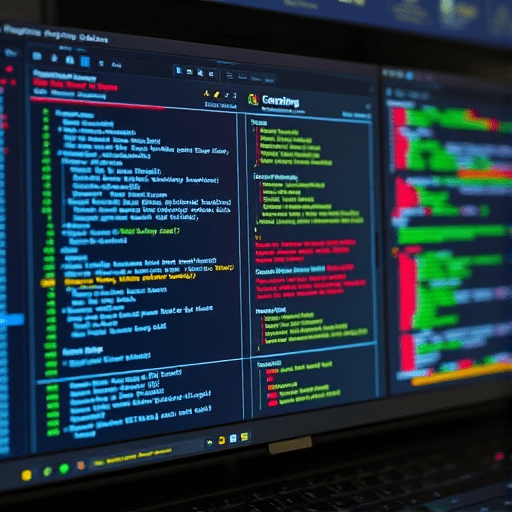
Traditional engine logs are written for machines to parse, not for humans to understand. Twenty lines of warnings, then an error, then a string of hexadecimal pointers. Built-in AI debugging turns that wall of noise into a narrative. Instead of “BulkData: Out of bound” followed by meaningless trace data, the AI debugger writes: “Attempted to read index 72 in an array of size 8 when handling projectile hit at position (12.4, 9.1, 33.2). The project was probably destroyed because its owner was already despawned.”
That narrative approach, often powered by large language models grounded in the engine’s own runtime data, is a massive win for solo devs and small teams. You don’t need to be an expert in memory management or networking to understand what went wrong. You need to understand your own gameplay logic, and the AI debugging system already does most of the low-level translation.
Better yet, this isn’t a one-way explanation. The debugger can offer a set of fixes and ask you to choose between them. “Do you want to add a null check, clamp the index, or lazy-disable the projectile system when the owner despawns?” Each option comes with a predicted impact on performance and an estimated risk of side effects. That level of decision support makes manual QA look like probing in the dark.
How Engines Are Baking AI Into the Editor
The shift from external tools to built-in AI debugging has accelerated because the major engines finally have the compute and the data architecture to make it seamless. Unreal Engine’s runtime analysis framework can now run an AI agent in the background while you playtest in the editor. Unity’s DOTS and Mega City systems generate huge amounts of telemetry that an embedded AI model can process in real time. Even smaller engines like Godot have introduced experimental AI debugging plugins that hook directly into the visual scripting editor.
The Editor Center: Where Playtesting Becomes Augmented
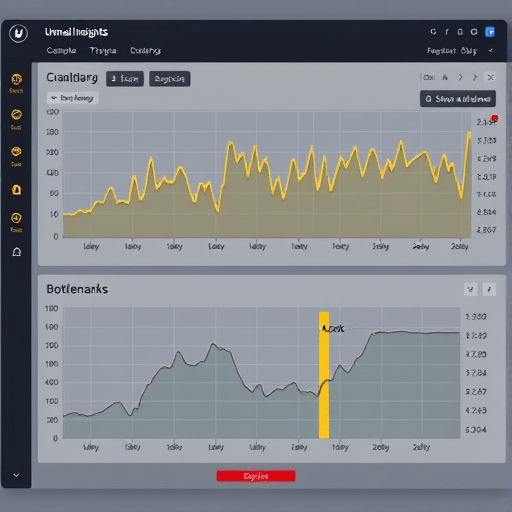
In the past, debugging meant pausing the game and inspecting variables. Now, you can enter a “live insight mode”: the AI highlights unusual behavior in the game view itself. A floating widget might say: “Player walked into this zone but the camera did not transition. The event bus did not receive the OnZoneEnter message because the collider is 0.2 meters too short.” That’s happening while you’re playing, not after. That’s the editor becoming an AI-native environment.
Engine developers are also integrating AI debugging into their build pipelines. When an indie developer uploads a build to a test cloud, the engine’s cloud service automatically plays through the game using machine agents — not just button-mashing random actions, but behaviorally directed testing that mimics real player habits. Then the engine matches every bug found in the cloud to the exact commit that introduced it. It’s like having a QA team that runs overnight and leaves you a concise report in the morning.
What This Means for Indie Teams Who Adopt It
For an indie team, the benefits of built-in AI debugging can be measured in two currencies: time and confidence. The time you used to spend on the boring 80% of debugging — reproducing, bisecting, adding log statements — is now compressed into minutes. One indie developer we encountered was able to resolve a physics-related crash that had troubled them for two weeks, in under an hour. The AI debugger identified that the crash only happened when the player was carrying two oversized items and walking through a narrow doorway. The engine still couldn’t fix the design, but at least the bug was clear.
Confidence is even more important. The standard indie worry is “what did we miss?” Built-in AI debugging doesn’t guarantee zero bugs, but it provides a continuous safety net. The AI monitors any play session, whether from a build testing service or a playtester’s stream, and automatically categorizes all issues, from visual glitches to hard crashes. This lets indie developers release more frequently, knowing that a fleet of AI assistants is watching for regressions of previously fixed bugs.
The Limits and Real Risks of AI Debugging
We shouldn’t romanticize this transition. Built-in AI debugging has its own pitfalls. The AI models are only as good as the telemetry they receive. If your game relies on obscure external interactions — like a streaming service, a custom SDK, or a hardware device — the AI may not have enough context to reason about failures. False positives happen too. The system might flag a well-designed behavior as a bug simply because it deviates from the statistical pattern of previous sessions.
There is also the danger of over-reliance. If an AI debugger says “the problem is the empty reference”, you might immediately add a null check without asking why the reference is empty in the first place. The underlying design flaw remains. AI-native debugging is a tool, not a oracle. Indie teams should still invest in code reviews, architectural design, and basic testing discipline.
Finally, the cost of integrating these AI systems into your workflow is not zero. Most built-in AI debugging features are available in the paid tiers of engines, and they require more CPU and GPU resources while running in the editor. Some indie developers on low-end machines will feel the performance hit. But as the technology matures, these costs will drop, and the clear productivity gains will make it hard to justify going back to the manual QA era.
Embracing a New Debugging Culture
Built-in AI debugging is not simply a feature checkmark on an engine comparison table. It changes how indie devs approach failure. Bugs become less scary, because the process of hunting them is no longer a needle-in-a-haystack exercise. Instead, you get a contextualized report, a set of suggested fixes, and the freedom to move on to more interesting creative work. Manual QA isn’t going to disappear entirely, but it will be reserved for what AI still cannot understand — narrative quality, game feel, and the X-factor of delight.
For small teams, that is a genuinely exciting future. The engines are no longer just compiling code and rendering frames; they are actively collaborating to find the cracks in the game before your players do. That is the heart of the AI-native workflow, and it’s finally becoming a default, not a novelty.
Indie developers who start using built-in AI debugging now will find themselves shipping more stable games, fixing bugs in hours instead of days, and maintaining the same tiny team size while producing games with greater scope. That is not just an incremental improvement — it is a strategic advantage for anyone willing to trust the machine to help clean up its own mess.