For many indie devs, the path to a successful launch goes through Steam wishlists. Yet the classic demo—a vertical slice of the full game—has quietly become a double-edged sword. Players can finish a demo, feel satisfied, and never wishlist your game. That’s why more indie developers are shifting to a free prologue: a standalone teaser chapter that drives more wishlists than a demo by telling a story that simply cannot end there. If you’re preparing to market a 2026 release, the prologue is the smartest way to build a launch audience without spoiling your full game.
The Problem with Demos: Satisfaction Kills Wishlists
Demos were once the gold standard for pre-launch marketing. They give players a chance to try the mechanics, feel the movement, and judge performance. But the modern indie market has changed how players treat demos. With thousands of games competing for attention, many players use a demo as a filter rather than a commitment. They try five minutes, decide the game is “fine,” and move on. They rarely hit the wishlist button.
Worse, a traditional demo often puts the player in a comfortable early-game state with no dramatic stakes. You’re showing off systems, not storytelling. The player finishes the demo and thinks, “I’ve seen what this game has to offer.” That feeling of completion is the exact opposite of what you want before launch. You want players to feel incomplete, curious, and hungry for more.
There’s also a logistical problem: demos require long-term maintenance. If you release a demo during Steam Next Fest, it’s usually temporary. Once removed, all that marketing momentum disappears. A free prologue, on the other hand, is a permanent storefront fixture. It keeps working for you month after month.
Why a Free Prologue Works Differently
A free prologue is not a demo with a fancy name. It’s a designed, self-contained narrative experience that acts as a doorway into your game’s world. Instead of giving players a slice of the full game, you give them a complete chapter that ends with a hook. The story doesn’t feel finished—it feels paused.
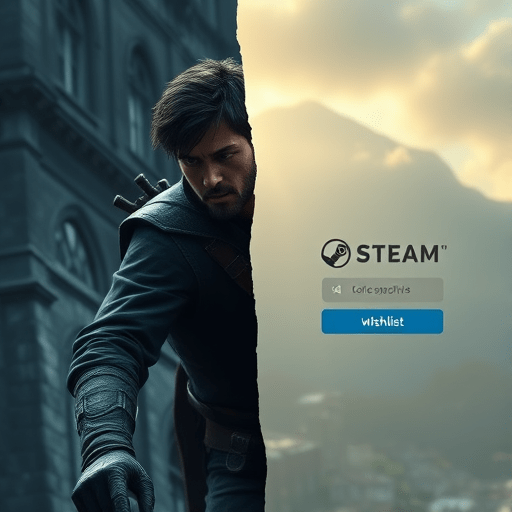
That pause is what drives wishlists. A player who reaches the final scene of a prologue and sees the protagonist standing at the edge of an unknown abyss will instantly want to know what happens next. They don’t want more mechanics; they want resolution. Adding the full game to their wishlist is the only way to ensure they’ll be notified when that resolution arrives.
This approach has been proven in the indie scene. Doki Doki Literature Club used a free teaser to build a massive following before its full release. More recently, several 2025 breakout hits used prologues to turn a three-hour first chapter into millions of wishlists. The pattern is clear: curiosity is a stronger motivator than comfort.
Emotional Investment Over Feature Checking
Demos invite players to evaluate your game. Prologues invite players to feel your game. That emotional investment is what separates a wishlist from a download-and-forget.
Think about the last great indie game you loved. Did you wishlist it because the menu animations were polished? Probably not. You wishedlist it because the characters, world, or story grabbed you. A prologue is designed to create that emotional grip in the first twenty minutes.
- Introduce your protagonist’s goal in a way that resonates immediately.
- Use gameplay as storytelling—let the player solve a small mystery or overcome an initial obstacle that mirrors the full game’s themes.
- End on a narrative cliffhanger that makes the wishlist button feel like the only possible next step.
When players are emotionally invested, they don’t just wishlist—they tell their friends, they make fan art, they ask questions on Discord. That organic momentum is impossible to manufacture with a demo. A demo proves your game works; a prologue proves your game matters.
How to Design a Standalone Teaser Chapter
Building a prologue for your indie game isn’t just about cutting the first few levels. It requires a thoughtful design process that treats the prologue as its own tiny game. Here are the core principles:
Scope for 30 to 90 Minutes
Keep the playtime short. Players are more likely to start a free game if it promises under an hour. It’s also easier for you to polish and maintain. A tight prologue is better than a bloated one.
Show One Core Mechanic, Not All of Them
Pick the mechanic that best communicates your game’s fantasy. If your full game is about stealth and choosing between lethal and non-lethal tools, show the player one small stealth scenario in the prologue. Don’t dump every upgrade, skill tree, and crafting system into the teaser. You want the player to think, “Wow, I can’t wait to see what else this game does.”
Create a Self-Contained Story Arc
Your prologue should feel like a complete narrative unit with a beginning, middle, and end. But that end should leave a major question unresolved. For example, if the full game is about escaping a cursed planet, the prologue could end with the player activating an old distress beacon that wakes a malevolent force. The immediate goal is achieved, but the larger threat is only now revealed.
Polish the First Impression
The prologue is your game’s handshake. While the full game might have a slow-burn opening, the prologue needs to grab attention immediately. Polish the visuals, audio, and pacing as if this were your launch build. A janky prologue will hurt more than no prologue at all.
Distribution and Store Strategy
Where and how you release your prologue is just as important as its content. Many indie devs assume that a prologue just goes into the same Steam demo slot. Don’t do that. Instead, release the prologue as a separate, free-to-play game on Steam, or at least as a standalone app tied to your main game.
Why separate? Because a separate store page gets its own reviews, its own screenshots, and its own placement in search results. That means more visibility. Players who enjoy the prologue can click through to your main game page and hit wishlist. You can also update the prologue over time with bug fixes and small additions, making it a living piece of marketing rather than a frozen artifact.
Use the Steam “Special Edition” or “Cross-Sell” features to link the prologue to the full game. Make the full game’s store page visible in the prologue’s end screen. A simple “Continue the journey — Wishlist the Full Game” button after the final cutscene can convert a huge percentage of your prologue players.
Don’t forget to promote the prologue beyond Steam. Upload videos to YouTube, make a demo of the prologue available on itch.io, and let streamers play it during your development period. The prologue is shareable content by nature; a demo feels like a product sample, while a prologue feels like a story worth talking about.
Measuring Success: Wishlists and Beyond
When you release a prologue, you’re not just looking for downloads. You want to track the wishlist conversion rate from prologue players. Tools like Steamworks provide analytics that show how many players who own the prologue also wishlist your full game. A good conversion rate is 20–30% or higher. If you’re below that, you may need to make the cliffhanger stronger or make the call-to-action more prominent.
Also pay attention to churn—where players stop playing the prologue. Use that data to refine pacing. If players drop off before the big hook, tighten the early moments. The prologue is a beautiful feedback loop: it markets your game before launch, and it gives you player behavior data to improve the full experience.
Prologue as a Long-Term Asset
One often overlooked benefit of the prologue is that it stays relevant after launch. Many full games release a free demo and then remove it to avoid cannibalizing sales. A prologue can remain free forever, serving as an entry point for players who discover the game months or years later. It’s also a great way to introduce sequels or expansions. Imagine releasing a prologue for your second game that directly sets up the story—your existing fanbase will be delighted, and new players can jump in without commitment.
In an era where players are bombarded with seasonal, temporary events and limited-time demos, a permanent free prologue signals confidence. It says: “We trust our story enough to give you the first chapter for free, because we know you’ll want the rest.”
Conclusion
As the indie gaming landscape grows more crowded, attention is the scarcest resource. A demo may prove your game’s reliability, but a free prologue proves its heart. By crafting a standalone teaser chapter that ends on a cliffhanger, you can convert casual browsers into emotionally invested fans who are eager to wishlist and wait for launch. In 2026, the most successful indie launches won’t be the ones with the most polished vertical slices—they’ll be the ones that tell a story worth following.