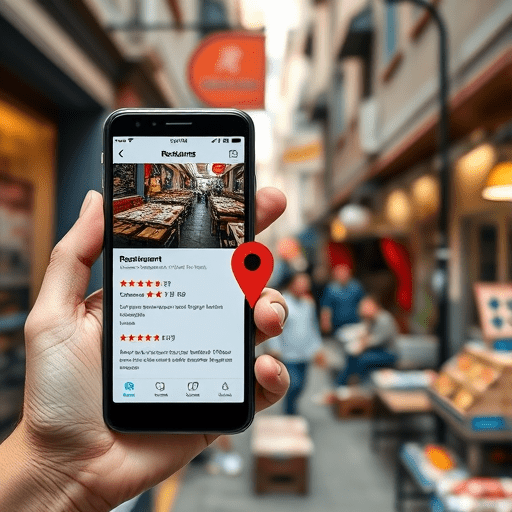
The gap between a five-star tourist bistro and the neighborhood canteen that locals queue for often comes down to one thing: language. The smartest way to find local food gems without ordering from a tourist menu is to filter Google Maps reviews by local-language keywords. When the app is set to English, you only see what other travelers see: polite praise for “great pad thai” and “lovely staff.” Switch to the local language, and the map changes entirely — the same blocks suddenly reveal weekday lunch counters, family-run noodle stalls, and reviews written for people who already know the city.
Why Google Maps Reviews Are a Goldmine (and a Minefield)
Google Maps holds billions of reviews, but most visitors never see the most useful chunk of them. In popular destinations like Bangkok, Mexico City, or Lisbon, many restaurants accumulate a surprising number of reviews in languages tourists cannot read. Those are not simple translations of the same experience; they are written with different priorities. A traveler reviews the decor and whether the staff speaks English. A local reviews whether the soup tastes like the one their grandmother made on Sundays.
That distinction makes local-language reviews the most underrated filter in travel planning. But they deserve caution too. Restaurant owners in tourist zones know that English reviews drive visitor business, so they invest heavily in cultivating them. Local-language reviews, by contrast, are far less monetized. No one pays a resident to say “the papaya salad is as good as the market version.” They post because they actually ate there.
Build Your Local-Language Keyword Toolkit
The trick is not to search for the local word for “delicious” — that still returns tourist-heavy results. You want keywords that signal a neighborhood regular, indifference to outsiders, or a focus on authenticity. Prepare a short list before you land, or jot one down while settling into your hotel. Some proven starting points:
- Spanish (Mexico/Colombia): “comida corrida” (daily worker’s menu), “fonda” (family-run diner), “tortillas hechas a mano” (handmade tortillas).
- Thai: “ร้านประจำ” (regular spot), “กับข้าว” (home-style side dishes), “ตามสั่ง” (cook-to-order).
- Indonesian/Malay: “masakan rumahan” (home cooking), “warung” (small family stall), “nasi uduk” (coconut rice breakfast).
- Portuguese (PT/BR): “prato feito” (set lunch), “comida caseira” (home cooking), “tasca” (unpretentious tavern).
- Japanese: “定食” (set meal), “地元” (local), “昭和” (retro, no-frills style).
- Hindi: “घर का खाना” (home food), “tiffin” (light meal), “thali” (combo plate).
Pair these with the kind of experience you want. Searching “comida corrida” near a market gets you the lunch counter where office workers eat in fifteen minutes. Searching “masakan rumahan” leads to a house with plastic chairs and a menu written on a whiteboard. These are the opposite of a tourist menu.
How to Filter Google Maps by Language Without Losing Your Mind
The mechanics are simple once you know where to look. On Android and iOS, open a restaurant’s reviews and tap the filter icon — the small slider at the top. Choose Language and select the local language. Google Maps will then restrict the review stream to posts written in that language. On desktop, the language filter appears in the same review dropdown.
You can also force the shift by changing the app language itself. Go to Settings, then Google Maps, then Language, and select the local language for the duration of your trip. When the entire interface is in the local language, the default review sort swings dramatically, and search results skew toward the same places locals see rather than pre-loaded English picks.
One extra shortcut: choose “Newest” instead of “Top” in the sort menu. Fresh local reviews are more likely to reflect the current menu and daily specials, and less likely to have been seeded by an owner during a promotional blitz.
What to Look for in Translated Reviews
Do not rely too heavily on Google’s automatic translation. It is decent for entertainment but flattens nuance. Instead, skim the original text for specific food words and compare them across several reviews. If five local reviewers mention the same dish — “the khao soi is rich,” “the biryani has too much ghee” — that dish is the one to order. If every review praises the “ambiance,” you are looking at a room tourists enjoy, not a plate a local craves.
Recognize the Signs of a True Neighborhood Favorite
Local-language reviews are only useful if you can decode the signal. Ignore the star count and look for these patterns:
- Time-specific mentions: “Queued for 20 minutes at noon” is a marker of loyal regulars.
- Complaints about portions, not service: Locals care whether the rice is dry or the broth is salty, not whether the waiter smiled.
- References to nearby workers: “The mechanics from the garage eat here” tells you it is a working lunch spot.
- Nostalgia and repetition: “I have been coming here since the 90s” appears in local reviews but rarely in tourist ones.
These signals are hard to fake because they are incidental. An owner can pay for a five-star review, but they cannot force a truck driver to write that the morning curry tastes like every canteen in Kerala. That detail is the fingerprint of authenticity.
Verify With Street Views and Menu Photos
After filtering the reviews, do not stop there. Switch to the photos tab and look for user-submitted images that show handwritten menus, daily special chalkboards, or counters without tables. A place that does not need a menu because the owner already knows every customer is a local gem. A place featuring laminated English menus in every photo is a tourist zone, no matter what the reviews say.
Pair that with a street-view glance at the storefront. Family-run gems usually have weathered signage, a few plastic stools outside, and no queue for photo spots. Neighborhood places are designed to be eaten in quickly, not photographed. If the exterior looks intentionally arranged for Instagram, trust the local reviews a little less.
Keep the Algorithm Honest
There is one catch to all of this: fake reviews are getting smarter. In 2026, AI-written reviews in multiple languages have become a genuine problem on Google Maps. A suspicious sign is an unusually large number of reviews with generic sentence structure, no dish-specific detail, and a five-star rating across every category. A genuine local review is messy. It complains about the air conditioning, mentions a waiter by name, or says “not as good as last time.” That texture is exactly what AI-generated reviews lack.
Use the language filter as a starting point, but always read a few reviews in full. If a place has 300 reviews, every one in the local language is glowing and vague, walk away. Real neighborhoods have critics; only tourist menus get universal praise.
The Last Bite
Filtering Google Maps reviews by local-language keywords rewires the way you explore a city. It turns the map from a guidebook written for visitors into a conversation among people who actually live there. You will still order the occasional bad bowl of noodles, but the probabilities shift decisively in your favor. The local language is your secret menu — and it was hiding in plain sight on the screen all along.