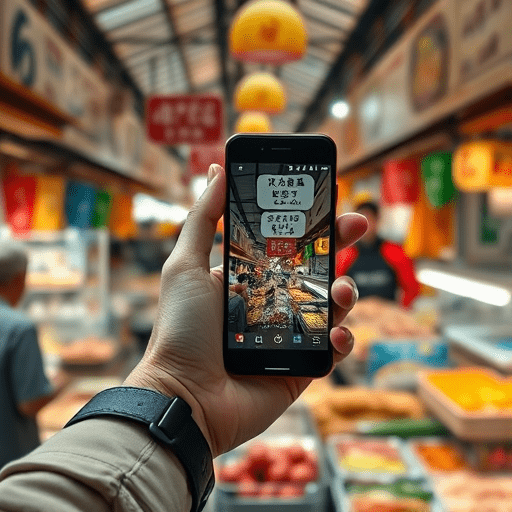
You’ve been there: you open a review app in a new city, scan the top-rated spots, and end up in a crowded plaza serving mediocre pasta next to a thousand other tourists. The problem isn’t your taste buds—it’s your language filter. When you leave review apps in English, you only see the opinions of other travelers. To truly eat like a local, the most powerful trick is simple: switch reviews to native language. By filtering out your own language and reading what locals write in their own tongue, you expose a parallel universe of dining recommendations that the tourist bubble never shows. This isn’t about avoiding every popular spot; it’s about gaining access to the restaurant rows, street stalls, and family-run trattorias that locals have been quietly rating for years.
Why English-Language Reviews Are Skewed Toward Tourist Spots
Review apps are ruthless curators of public sentiment, but they amplify the loudest voices—and the loudest voices are often tourists. English-language reviews tend to cluster around places that are easy to find, have English menus, or are listed in guidebooks. Locals rarely bother reviewing these spots in English because they don’t need to; they already know where to eat. Moreover, the sheer volume of tourist reviews drowns out the local minority. A restaurant with a 4.8 rating from 3,000 English reviews might be a tourist assembly line, while a local gem with a 4.5 from 400 Greek-language reviews is invisible in your default feed.
The language skew also affects the type of food you’re exposed to. In Lisbon, for example, the top English-rated restaurants are heavy on seafood and pasteis de nata—because that’s what visitors came to eat. But switch to Portuguese, and you’ll see bifanas, grilled chouriço, and humble tascas where the price is right and the portions are generous. Locals write about different dishes, different atmospheres, and different priorities. They care about the lunch special, the chef’s short temper, and whether the house wine is drinkable—not whether the staff speaks English.
How to Filter Review Apps by Native Language
The actual mechanics of filtering reviews by language vary by platform, but the concept is universal. You want to isolate reviews written by people whose primary language matches the country you’re visiting. Here are a few practical ways to do that across popular apps.
Google Maps: Use the Search Bar Like a Local
Google Maps doesn’t have a built-in “language filter” toggle, but you can get close. Search for restaurants using local terms—like “comida típica”, “trattoria”, or “izakaya”—and then read the reviews. Then, tap “All reviews” and use the “Sort by” drop-down to select “Most relevant.” Scroll past the top dozen or so, and you’ll start to hit reviews written in the local language. Better yet, use the “Filter reviews” option (on mobile) and select a specific language like “Portuguese” or “Japanese.” That instantly removes English and highlights what locals have to say.
Tripadvisor: Leverage the Language Filter
Tripadvisor is more explicit. On any restaurant page, look for “Write a review” and below it, you’ll often see “Languages” or “Reviews in your language” with a drop-down. Choose the local language (e.g., Spanish, Italian, Thai). You’ll then only see reviews submitted in that language. This is one of the fastest ways to bypass the tourist echo chamber. Also, use the “Traveler’s Choice” ranking sparingly—it’s crowdsourced from a broad international pool, so it doesn’t always reflect local taste.
Yelp and Regional Apps
Outside the US and a few countries, Yelp is less dominant. In France, it’s La Fourchette; in Germany, TripAdvisor and Yelp coexist; in China, Dianping; in Korea, MangoPlate. For any of these, the same trick applies: switch the app’s UI language to the local one, and check the language tags on reviews. Many apps allow you to set a preferred language for reviews in settings—look for that and select the local tongue. When in doubt, read the one-star and three-star reviews in the native language. They often reveal honest flaws (and hidden strengths) that tourist reviews smooth over.
The Hidden Bias in Translated Reviews
You might think that using your phone’s auto-translate is enough. It’s not. Machine translation is decent for directions, but for food reviews it loses the cultural nuance that makes them useful. A local might write, “The chef comes from my hometown and he still overlooks the queue on Sundays,” which translates poorly, losing the sense of a neighborhood institution. Worse, translated reviews often flatten sarcasm, anger, or joy. A Japanese review that says “Not bad for tourists” is a scathing condemnation in context, but a literal translation might sound neutral. Similarly, Italian reviewers often use hyperbole ironically; a “fantastico!” might mean “overpriced” if they’re writing about the owner’s attitude.
Another hidden bias: translated reviews tend to be short. Local reviewers write longer, more detailed accounts in their own language. They mention the history of the place, the family that runs it, and the specific dish that changes with the seasons. When you read these in translation, you miss the emotional weight behind phrases like “la passatelli non era come la faceva mia nonna”—a profound critique of authenticity that no machine can convey. Reading in the original language—even with a dictionary in hand—forces you to slow down and interpret tone, which leads to better food decisions.
Beyond Language: Additional Cues From Local Reviewers
Language is the first filter, but it’s not the only one. Once you’ve toggled to native reviews, pay attention to the meta-information. Local reviewers often include photos of dishes that never make it onto the English-language feed. They photograph the daily special, the raw counter, or the hunk of bread that comes free at the start. They also mention price anchor differently. A local saying “it’s a little expensive” means something different than a tourist saying “it’s cheap.” You also learn about the rhythm of the place: what time to come to avoid the queue, which dish to order for one person versus a group, and whether to ask for the “signora’s sauce” (a phrase you’ll only find in local reviews).
Watch out for reviewers who write in the local language but are actually expats or long-term tourists. The clue is often in their review history—if they’ve reviewed hotels and car rentals in other countries, they might not be a reliable local. Look for reviewers with a high number of reviews in the same city, or those who answer questions from other users about neighborhood food. Those are the digital food heroes you want to trust.
Practical Steps to Discover Authentic Local Restaurants
Ready to upgrade your travel dining game? Follow this checklist the next time you land in a new city.
- Turn off English first: Before opening any review app, go to settings and change the content language to the local language. This resets the default bias.
- Search with local keywords: Use terms like “bodega”, “hawker”, “osteria”, or “diner” in the local language to reveal different business categories.
- Sort by “Newest” or “Lowest rating”: Locals are harsher reviewers and more likely to flag a slipping quality. A low score from locals is often more authentic than a high score from tourists.
- Look for food-specific phrases: If a review mentions the name of a dish you’ve never heard of, that’s a good sign. Locals don’t waste time reviewing the default tourist platter.
- Check the restaurant’s response: Local owners often reply to local-language reviews with more detail and humor. This back-and-forth reveals relationship dynamics that tourists never see.
- Duplicate your search in at least two apps: Cross-reference a spot by looking at its reviews on Google Maps and a regional app (like Sofa in Denmark or Gurumet in Portugal). If locals praise it in both, it’s likely the real deal.
A Note on AI-Powered Review Aggregators
As review algorithms get smarter, you might hope they’ll solve this bias automatically. But AI can also make things worse if it translates and prioritizes English reviews for you. Some newer apps claim to use NLP to “discover authentic local spots” by analyzing review sentiment in native languages. That’s promising—but be careful. These tools still rely on your explicit inputs and the underlying language tags. The best approach for 2026 is to use AI as a starting point, but then manually toggle to native-language reviews to verify the recommendations. No algorithm can replace the human ability to detect that a local reviewer is gushing because the chef added fried capers to the salad, not because the restaurant has a beautiful view of the square.
Conclusion: The Native-Language Filter Is Your Best Travel Tool
Filtering out your native language in review apps is not about being pretentious. It’s about giving yourself access to a richer, more accurate picture of what a city actually eats. When you read the opinions of locals in their own tongue, you stop being a passive consumer of tourist hype and start being an active participant in the local food culture. You’ll find the corner kiosk with the perfect spring rolls, the trattoria where the matriarch still makes the ragù on Sundays, and the late-night noodle shop that has served three generations of shift workers. Your palate will thank you—and so will your Instagram feed, even if you never post a single photo. The next time you’re abroad, do one thing: switch reviews to native language. The locals have been waiting to tell you where to eat.