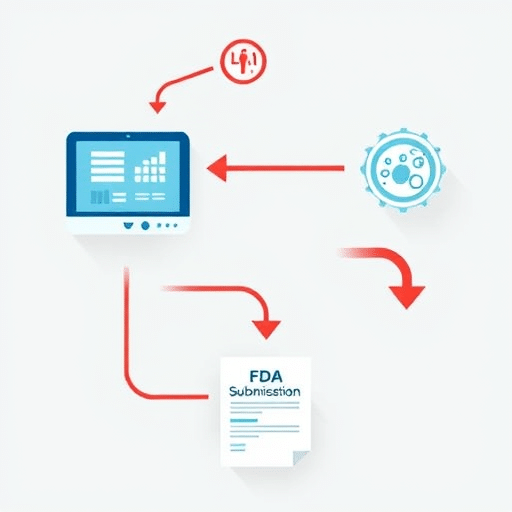
When a machine learning model learns to read chest X-rays better than its previous version, regulatory teams should celebrate, not panic. Yet for years, every meaningful algorithm update risked a fresh 510(k) or De Novo submission, locking innovation behind lengthy review cycles. The FDA’s Predetermined Change Control Plan (PCCP) framework, now maturing through 2026 guidance, finally offers a path to update AI/ML-enabled Software as a Medical Device (SaMD) within a pre-agreed envelope, without triggering a full premarket resubmission. For companies selling or preparing to sell in both the United States and the European Union, the real question is no longer whether to file a PCCP, but how to write one that satisfies FDA expectations and harmonizes with EU IVDR change notification protocols.
Why the PCCP Matters More in 2026 Than It Did in 2024
The FDA’s March 2024 final guidance on PCCPs was the starting gun, not the finish line. Through 2025 and into 2026, the agency has been issuing additional examples, modular templates, and review feedback that have clarified what makes a plan acceptable. Reviewers increasingly reject vague plans that simply promise “periodic retraining” without specifying performance bounds, data governance, or rollback logic. At the same time, the EU IVDR’s Annex VIII and Article 48 change-notification regime has matured, with notified bodies publishing their own best-practice templates. Sponsors who treat these as parallel tracks end up duplicating work; sponsors who treat them as a single, harmonized file reduce regulatory overhead dramatically.
The shift is not just procedural. The FDA has signaled that a well-constructed PCCP can be a competitive differentiator, particularly for AI/ML SaMD in radiology, cardiology, pathology, and digital therapeutics, where model drift is an operational reality, not a theoretical risk.
The Three Pillars of a Defensible PCCP
A PCCP is not a vague promise of future flexibility. It is a structured document with three required sections, each of which the FDA will scrutinize line by line.
1. Description of the Specific Modifications
This section defines the modification scope: what parts of the SaMD can change, and to what extent. Acceptable language is precise. Instead of “we may update the algorithm,” the FDA expects statements such as “retraining using new labeled data, limited to data from FDA-cleared imaging devices listed in Table 3, with no change to input modalities, user interface, or intended patient population.” Boundaries must be explicit, including:
- Input data characteristics (modality, resolution, demographic distribution)
- Output type (binary classification, segmentation mask, probability score)
- Architectural constraints (e.g., “convolutional backbone; transformer layers permitted up to 12 attention heads”)
- Performance floors (minimum sensitivity, specificity, AUC against a locked reference dataset)
2. Modification Protocol (the “How”)
This is the operational heart of the PCCP. It must describe the methods, procedures, and acceptance criteria that govern each authorized change. A strong protocol in 2026 will reference:
- Data acquisition and curation procedures, including bias mitigation, ground-truth validation, and provenance tracking
- Retraining triggers and cadence, both scheduled (quarterly) and event-driven (significant distribution shift detected by monitoring)
- Pre-release verification and validation, with locked test sets, statistical equivalence or superiority margins, and subgroup performance checks
- Post-market performance monitoring, including real-world dashboards and drift detection thresholds
- Rollback and contingency procedures, specifying how a degraded model is reverted and how users are notified
3. Impact Assessment
Sponsors must demonstrate that the planned modifications do not introduce new risks or significantly affect existing risks. The FDA expects a structured risk analysis aligned with ISO 14971, a benefit-risk re-evaluation, and an explicit statement on whether the modification triggers new questions of safety or effectiveness. This section is also where IVDR alignment pays dividends, because the EU’s GSPR checklist and risk-management file can be cross-referenced directly.
Mapping PCCP Sections to EU IVDR Change Protocols
One of the most persistent myths in 2026 is that the FDA PCCP and the IVDR change notification process are fundamentally incompatible. They are not. The IVDR distinguishes between changes that require a new conformity assessment (substantial changes) and those that can be handled under the manufacturer’s quality management system (non-substantial). A well-drafted PCCP operates in the same conceptual space: pre-agreed, bounded, monitored, documented.
Shared Documentation Backbone
Both regimes reward the same documentation practices:
- A versioned SaMD architecture description, ideally in the form of a “model card” or “software bill of materials” (SBOM)
- A pre-specified performance reference dataset, ideally held by an independent third party
- A change history log with cryptographic integrity (often blockchain or append-only storage)
- A post-market performance monitoring plan aligned with both FDA’s lifecycle expectations and IVDR’s post-market surveillance (PMS) requirements under Article 83
Where the Two Regimes Diverge
Differences remain, and a competent PCCP acknowledges them. The IVDR’s concept of “substantial change” is more interpretive than the FDA’s predetermined modification scope, and notified bodies may still request a new technical documentation assessment even when the manufacturer considers a change non-substantial. The practical implication: build a modular technical file where the PCCP, the performance evaluation, and the PMS plan are discrete sections, each with its own version history. That way, an IVDR substantial-change notification pulls only the relevant modules into review, rather than the entire file.
Five Practical Mistakes That Still Trigger a Resubmission
Even with the FDA’s clarified guidance, sponsors continue to make the same errors. Avoiding these will dramatically reduce the chance of being told to refile.
1. Conflating Retraining with Full Redesign
A PCCP that authorizes “any retraining” effectively authorizes a new device. Limit scope to specific training data sources, label types, and hyperparameters.
2. Opaque Performance Floors
“Maintain performance” is not acceptable. State numerical thresholds against a locked reference dataset, including subgroup minimums.
3. Weak Rollback Plans
If you cannot describe how to revert to the cleared version within 24 hours, reviewers will assume you cannot manage the risk.
4. Ignoring Human Factors
A model update that changes the user interface, even subtly, may require new human factors validation. Either constrain the UI in the PCCP or commit to validation activities.
5. Forgetting the Labeling Section
Updates that affect indications, contraindications, or warnings must be reflected in the PCCP’s labeling annex, with a clear commitment to submit a labeling supplement at the time of release.
Building the PCCP: A Step-by-Step Workflow
A mature 2026 PCCP program follows a disciplined sequence rather than a one-off documentation exercise.
- Inventory the model. Document inputs, outputs, training data, evaluation data, and intended use in a single source of truth.
- Define modification boundaries. Use the Description of Modifications section as a forcing function; if you cannot describe a change precisely, it probably should not be in the PCCP.
- Align risk files. Run the modification list through ISO 14971 and IVDR GSPR checklists in parallel, flagging any divergence.
- Lock reference datasets. Commission or acquire independent, demographically balanced test sets with documented ground truth.
- Specify monitoring KPIs. Drift, calibration, subgroup performance, complaint rates, and time-to-rollback.
- Dry-run the protocol. Before submission, perform one full update cycle end-to-end and capture the evidence package. Sponsors who do this consistently report shorter FDA review cycles.
- Submit concurrently where possible. FDA accepts PCCPs as part of an original 510(k), De Novo, or PMA, and increasingly as a standalone “PCCP supplement.” Coordinate the EU technical documentation update with the same evidence package.
What “Acceptable” Looks Like to a 2026 FDA Reviewer
Talk to sponsors who have cleared PCCPs in the past 18 months and a pattern emerges. Reviewers reward specificity, traceability, and humility. They penalize marketing-style language, unbounded scope, and a missing rollback story. They also reward PCCPs that explicitly cross-reference the SaMD’s performance testing protocol and the post-market surveillance plan, treating the entire submission as a coherent lifecycle argument rather than a stack of disconnected documents.
Equally, reviewers are increasingly asking sponsors to commit to annual PCCP performance reviews, where the actual modifications deployed are compared against the pre-authorized scope, with any deviations disclosed in a periodic report. This is a quiet but significant expectation, and one that aligns neatly with the IVDR’s PSUR (Periodic Safety Update Report) cycle.
Conclusion
The PCCP is no longer an experimental tool; it is the default pathway for any AI/ML SaMD that expects to evolve after clearance. Sponsors who treat the FDA PCCP and the EU IVDR change protocol as a single, harmonized regulatory deliverable, anchored in precise modification scope, rigorous verification, and disciplined post-market monitoring, will move faster, deploy updates sooner, and spend less on resubmissions. The framework above is not theoretical. It is how leading digital-health companies are operating right now, and the regulators, on both sides of the Atlantic, are paying attention.