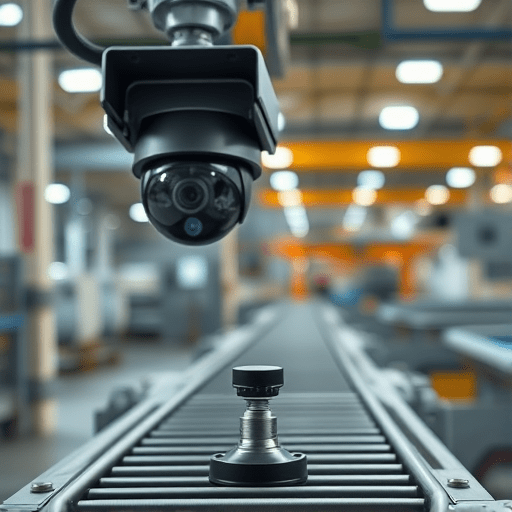
Modern factories are quietly undergoing a neural upgrade, and the combination of edge AI inferencing on private 5G is rapidly replacing cloud-only pipelines for real-time defect detection. While cloud computing once seemed like the natural home for machine learning workloads, the physics and economics of high-throughput manufacturing now favor inference that happens milliseconds away from the camera, antenna, and conveyor belt. In 2026, the factories getting ahead on quality control are those treating the network and the inference engine as a single, tightly coupled system rather than a distant service.
The Hidden Latency Tax of Cloud-Based Defect Detection
Cloud inferencing is not slow in absolute terms, but it is slow in the context of a production line moving at one to two meters per second. When a high-resolution camera captures a frame, encodes it, sends it over a public network, lands it on a remote GPU, runs a model, and returns a verdict, dozens of milliseconds pile up. Add in jitter, the unpredictable spikes in round-trip time, and a control system waiting on a decision is forced into one of two compromises. Either it accepts delayed responses that allow defective products to move downstream, or it throttles line speed to give the network room to breathe.
Private 5G with on-premises edge inference collapses that round trip to under five milliseconds in most deployments. For a vision model inspecting thousands of parts per hour, the difference between 80 ms and 5 ms is the difference between catching a flaw at station three versus chasing it through rework at station eleven.
Why Private 5G Is the Network Defect Detection Actually Needs
Wi-Fi has served factories well for laptops and tablets, but vision-heavy AI workloads punish it. Handover glitches, interference from welding equipment, and unpredictable contention from employee devices all conspire to make Wi-Fi unsuitable as the spine of a quality control system. Private 5G changes the calculus.
- Deterministic uplink performance for hundreds of cameras streaming compressed frames simultaneously.
- Network slicing that isolates inspection traffic from IT and OT applications on the same physical infrastructure.
- Time-sensitive networking features that let cameras, robots, and PLCs share a synchronized clock for coordinated actions.
- Coverage in harsh environments including metal-rich floors, mezzanines, and outdoor staging areas where Wi-Fi signals fade.
For defect detection specifically, the most underappreciated benefit is uplink symmetry. Cloud pipelines depend on pushing bursts of image data northbound. Private 5G delivers consistent upstream throughput, which means more pixels per part, fewer dropped frames, and tighter statistical confidence on borderline defects.
Edge AI Inferencing: More Than a Cloud With Shorter Cables
Edge AI is often described as “the cloud, but closer,” but that framing undersells what changes when inference moves to the factory floor. Three dynamics matter most for quality control engineers evaluating the shift.
1. Model Confidence Improves With Local Context
An edge node attached to a single cell or station knows things a cloud endpoint cannot. It knows which mold is currently active, which shift is running, and what ambient temperature the line is operating at. Models running on-site can adapt thresholds on the fly, weight recent defects more heavily, and blend in process telemetry that would be expensive or impossible to stream continuously to a public cloud. The result is a defect detector that is tuned to the line it is watching, not a generic model averaged across an entire enterprise.
2. Closed-Loop Control Becomes Real
When inference results are available locally in single-digit milliseconds, they can drive actuators, rejection arms, or laser markers directly. A cloud inference loop forces a control decision to wait for a round trip across the public internet, which is unacceptable for any line that must physically divert a part within the same motion cycle. Edge inference closes the loop, transforming defect detection from an alerting system into a real-time part of the manufacturing process.
3. Operational Data Stays On-Site
Defect images are often proprietary by nature. They reveal tooling geometry, surface finishes, and assembly techniques that manufacturers are reluctant to share, even with trusted cloud vendors. Edge inference keeps raw frames and intermediate feature maps inside the plant network. Only summary statistics, anonymized embeddings, or aggregate quality metrics need to leave the site, which simplifies compliance with customer contracts, export controls, and internal IP policies.
Counterarguments: When the Cloud Still Makes Sense
An honest comparison acknowledges that cloud inferencing retains a few advantages in specific scenarios. Training new models is still cheaper in the cloud, especially for plants that lack GPU procurement budgets. Multi-site benchmarking and model comparison also benefit from a centralized compute pool. And for very low-volume lines, the cost-per-inference of edge hardware may not pencil out.
However, the trend line is clear. As accelerator chips become smaller, more power-efficient, and priced like industrial controllers, the break-even point for edge inference keeps moving toward higher line speeds and lower part values. By 2026, the typical high-mix electronics or automotive parts line has crossed that threshold.
Architectural Shifts Driving Adoption This Year
Three quiet shifts are making edge AI on private 5G the default rather than the exception.
- Compact industrial inference servers built around low-power accelerators now fit inside standard control cabinets and tolerate factory ambient conditions without active cooling.
- 5G standalone cores with edge computing profiles expose compute resources as a managed service to OT teams, reducing the need for deep telecom expertise on site.
- Open model formats allow plants to run the same vision model on edge silicon today and on a newer accelerator tomorrow, protecting investments as hardware evolves.
Together, these shifts reduce the integration friction that kept edge AI in pilot purgatory for years.
What Plant Managers Should Evaluate Before Switching
Migrating defect detection from the cloud to a private 5G edge stack is not a software install. A short readiness checklist helps separate genuine wins from premature bets.
- Map the existing inspection network. Identify every camera, sensor, and rejection mechanism that would benefit from sub-10 ms response.
- Quantify the cost of false negatives. If undetected defects trigger warranty exposure or recalls, the math strongly favors edge inference.
- Audit spectrum availability. Private 5G requires licensed, shared, or local spectrum rights that vary by country.
- Plan for model lifecycle. Edge inference does not eliminate the need for training pipelines; it just relocates them.
- Design for graceful degradation. The system must continue safe operation if a single edge node fails or loses connectivity.
The Bigger Picture: Quality as a Real-Time Signal
Once defect detection becomes a real-time, on-site capability, it stops being a quality department metric and starts becoming a control signal. Lines can auto-adjust process parameters the moment an anomaly pattern emerges, suppliers can receive instant feedback on incoming components, and engineering teams can correlate defect trends with specific machine states without waiting for end-of-shift reports. The factory begins to behave less like a batch of independent stations and more like a single nervous system.
That shift is why private 5G plus edge AI is more than a networking upgrade or a compute relocation. It is a structural change in how factories learn about themselves while they run.
The factories that treat edge inference and private 5G as a unified platform, rather than two separate modernization projects, are the ones writing the new playbook on quality. Cloud-only defect detection will keep serving back-office analytics and historical reporting for years to come, but the front line of manufacturing now belongs to inference that lives where the parts do.