The economics of smurfing now runs deeper than ranked anxiety. In competitive shooters, account buying has become a standard answer to a monetization system that makes one main account expensive and risky. When skin prices pass $100 and loot boxes depend on chance, a purchased smurf account starts to look like the smartest financial move in the game. It is not just a way to beat matchmaking; it is a way to hedge against the house.
The Main Account Is a Sunk-Cost Vault
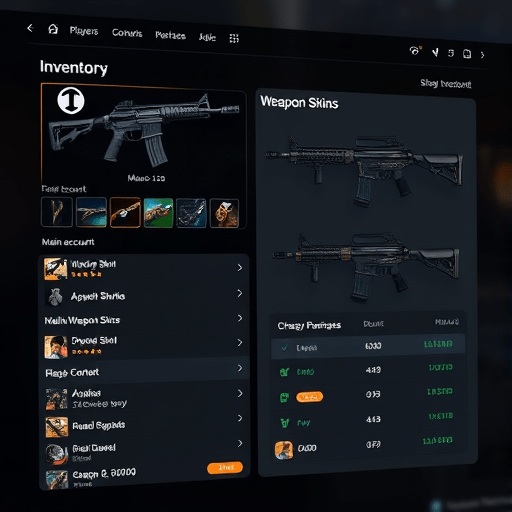
Modern shooters turn a main account into a personal gallery. Skins, battle passes, and unlockables pile up on one identity, and players feel the weight of every dollar sunk. In Valorant or CS2, a single weapon skin can cost as much as a full game. Once that money is attached to a main account, the thought of losing points, getting banned, or simply playing badly is enough to make the player log out.
Consider a player who has completed eight battle passes and traded for rare limited skins. That account is a one-of-a-kind collection. The fear of an accidental ban on that account is not competitive anxiety; it is financial panic. A smurf account changes the calculation. For a few dollars, a player gets a disposable identity with no history and no valuable inventory. It can absorb risky matches, new meta experiments, and low-stakes warm-ups without threatening the account that holds hundreds of dollars worth of cosmetics. The convenience of buying a smurf is nothing more than the market responding to the price of identity.
Loot Boxes Create the Supply Side of Account Buying
High skin prices alone might not create an account marketplace, but loot boxes do because they add randomness. Players who want a specific knife or rare skin rarely buy it directly; they open cases or crates with low odds and high expected cost. When the spins fail, the player looks for a loophole. Third-party sellers provide it: they offer smurf accounts that already include the desired skin for a fraction of the cost of unboxing it.
This is the missing link in the smurfing debate. Most people talk about rank inflation, but the loot box economy is what makes the supply of smurf accounts so abundant. As long as pulling a desired skin is unpredictable, there will be sellers who turn a smurf into a curated cosmetic package. The buyer gets a new identity plus the skin; the seller gets a margin; the developer is left without a direct sale. The monetization system, not the player, is the original catalyst.
Duplicate Protection Does Not Stop the Temptation
Some games have added duplicate protection and crafting currencies, but those systems only soften the pain. Players still face dozens of openings before getting the item they actually want. After enough, buying a smurf that already owns the skin feels more rational, even if it arrives with a small ranked history attached.
For every player who buys a smurf to escape rank, another buys one to escape the casino. The same mechanism—randomized rewards—pushes both types of buyer to search for a fixed-price alternative. In that way, the loot box is the most reliable lead generator for the account market.
Seasonal Ranked Resets Make a Clean Slate Cold Currency
The competitive calendar amplifies the demand. Every season, ranked ladders reset, and players must play placement matches again. Those matches are stressful on a main account with a valuable inventory and a rank to protect. The first weeks of a new season become a minefield, and the temptation to use a fresh MMR account is enormous.
So the sale of “fresh placement” smurfs spikes at every reset. A smurf bought the day before a reset has no patterns, no sunk cost, and no hidden anxieties. It exists to absorb the chaos of season opening. This is especially true in 2026, when many shooters use multiple ladders and hidden rating floors, making the main account even more important to protect.
Some developers have tried to curb smurfing with phone verification or hardware bans, but those systems rarely touch the account market. Sellers simply use new SIM cards and virtual machines. The real value is not in the account’s history; it is in the ability to decouple competitive play from a long-term financial identity. Until a game can separate money from identity, the secondary market will continue to find a way.
What Account Prices Reveal About Monetization
Account sellers don’t price by rank alone. Their price lists are strange and revealing:
- A fresh level-50 account with no cosmetics sells for a few dollars—because the buyer wants a disposable ranked identity.
- A smurf with a rare limited skin can cost five to ten times more—because the buyer is treating the account as a loot-box shortcut.
- An account with a high rank and a legacy battle pass can command premium rates—because the buyer wants social proof without having to grind or pay for future monetization.
The existence of these price tiers is a mirror of in-game monetization. It sells the same things: identity, status, and the fantasy of starting over. When skins are expensive and loot boxes are random, a secondary-market account is simply a different kind of storefront.
When Smurfs Become Financial Pass-Through Assets
In the resale market, a smurf account is not always a throwaway. Buyers play a season on it, keep its rare skins, and then relist it. This turns account buying into a pass-through economy. Skin prices and loot boxes anchor the resale value: a limited-time skin from an old battle pass can appreciate simply because it is gone forever. Loot boxes add scarcity, and scarcity makes accounts with specific cosmetics more attractive.
That does not make every smurf an investment. Most remain cheap, disposable ranked tools. But the category now includes cosmetic-curated accounts that are effectively anti-loot-box purchases. A Valorant account with a rare Champions bundle and an immortal rank badge can be priced like a collectible, even if the buyer barely plays ranked. Both types are rational responses to a system where identity itself carries a price.
The Bottom Line
The economics of smurfing is a direct consequence of how competitive shooters monetize identity. High skin prices protect the main account. Loot boxes make that protection impossible to afford. Seasonal resets create a need for clean records. When cosmetics are expensive and randomized, the smartest player buys a smurf instead of a skin. Until the monetization architecture changes, account buying will keep growing because the math keeps saying that a smurf is the best deal in the game.