As digital therapeutics (DTx) expand into chronic disease management, the pressure to generate compelling evidence for payer value-based contracts has never been greater. The core challenge of DTx evidence generation for value-based contracts lies in balancing payer expectations for robust, real-world outcomes with the financial realities of a small, fast-moving product team. The 2026 answer is not a larger randomized controlled trial, but a smarter hybrid one—pairing pragmatic trials with synthetic control arms to generate decision-grade data at a fraction of the traditional cost. This article lays out a practical roadmap for that shift.
Why Payer Evidence Demands Have Outpaced Traditional Trials
Payers evaluating DTx today no longer ask the binary question of whether a product works. They ask whether it works in their specific patient population, at a defined price point, and with whatever adherence pattern emerges in routine care. That shift makes site-based, placebo-controlled RCTs increasingly ill-fitting. The complexity of digital products—rapid updates, onboarding variability, and fluctuating user engagement—calls for an evidence approach that mirrors real-world deployment from day one.
Meanwhile, full RCTs for DTx can easily cost several million dollars and take two to three years. For a startup offering a mobile app for hypertension or anxiety, that is an impossible barrier. In 2026, the most astute DTx companies are moving toward pragmatic trial designs that not only cut costs but also produce evidence payers find more relevant for value-based contracts.
Pragmatic Trials: Evidence Gathered Where Care Actually Happens
A pragmatic trial collects data in routine clinical settings with broad inclusion criteria, minimal extra visits, and outcomes derived from existing electronic health records, claims data, and patient-reported scales. The goal is to assess effectiveness under “real-world” conditions, not to prove efficacy in a laboratory-like environment.
For DTx, pragmatic trials are natural partners. The therapy itself is often the data collection mechanism—each login, lesson, or biometric readout becomes a source of evidence. But pragmatic trials have a known weakness: the lack of a randomized control group. Randomization is often difficult in a clinic where providers choose to prescribe a DTx product for one patient and not another. That is where synthetic control arms enter the picture.
Synthetic Control Arms: Turning Historical Data Into Your Comparator
A synthetic control arm (SCA) uses external datasets—historical cohorts, claims databases, or national registries—to build a patient cohort that simulates the outcomes of a control group. Instead of enrolling half your subjects in a placebo arm, you construct a statistically matched group from existing data. The savings are dramatic: the cost of a synthetic arm can be 40–70% lower than recruiting and running a prospective control group.
Regulators have matured in their view of SCAs. The FDA has accepted external control arms in several approvals, and European HTA bodies increasingly allow them for digital health products. However, the true test in 2026 lies with commercial payers negotiating value-based contracts. They want evidence that a synthetic control arm mirrors the target population closely enough to support health-economic modeling and outcomes-based payments.
The key is to combine SCAs with pragmatic trial data in a way that feels transparent. That means pre-specifying your data source, matching methodology, and sensitivity analyses—so payers see the reasoning, not just the result.
The 2026 Roadmap: Five Steps to a Contract-Ready Evidence Package
Here is a practical, stepwise roadmap for launching and running a DTx evidence generation program that meets payer outcomes without bankrupting your budget.
Step 1: Define the Payer Outcome Contract Up Front
Before writing a protocol, engage payer or health system partners to define the exact outcomes they will reward—hospital readmissions, blood pressure reduction, medication adherence, or patient-reported quality of life. Too many teams gather generic evidence and then try to shoehorn it into a value-based contract. Reverse the order: let the contract define the endpoints.
Step 2: Select and Validate Your Synthetic Control Data Source
Identify an external dataset that covers your target population, has frequent enough outcome measurements, and is acceptable to payers. Validate the dataset by running internal pilot analyses. For example, if your DTx concerns diabetes, ensure the synthetic cohort includes the same insulin-use distribution, HbA1c ranges, and comorbidity scores as your pilot population. This step builds peace of mind for both your statisticians and the payer’s health economist.
Step 3: Embed the Pragmatic Trial in Routine Clinical Workflows
Recruit clinical sites that use DTx as part of standard care. Allow physicians to prescribe the product naturally, but set simple, low-burden data collection points—for instance, using the DTx app to record patient outcomes and integrating with the site’s EHR to capture adverse events. This reduces the overhead of dedicated study coordinators and keeps the trial within a realistic deployment budget.
Step 4: Pre-Specify the Analysis and Equivalence Margins
To convince payers, you cannot fish for favorable results after the fact. Pre-specify the primary and secondary endpoints, the propensity score matching model, the acceptable balance metrics, and the equivalence or superiority margin that would make your outcome contract viable. This is the single most important step to build trust with skeptical payer actuaries.
Step 5: Generate the Evidence—and Iterate for Contract Terms
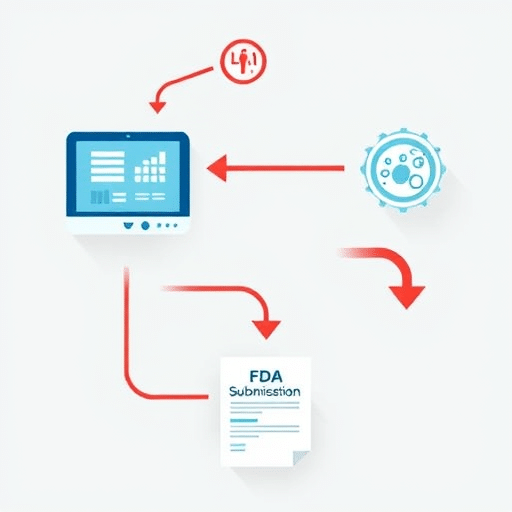
Run your pragmatic trial while simultaneously building the synthetic control arm. Once the data arrives, perform the pre-specified analysis, then run sensitivity analyses and subgroup evaluations. If the outcomes meet the promised thresholds, use that evidence package to finalize the value-based contract. If not, you have a clear signal about which parts of your intervention need refinement. It is a far cheaper failure than an all-or-nothing RCT.
Meeting Payer Outcomes at a Fraction of the Cost
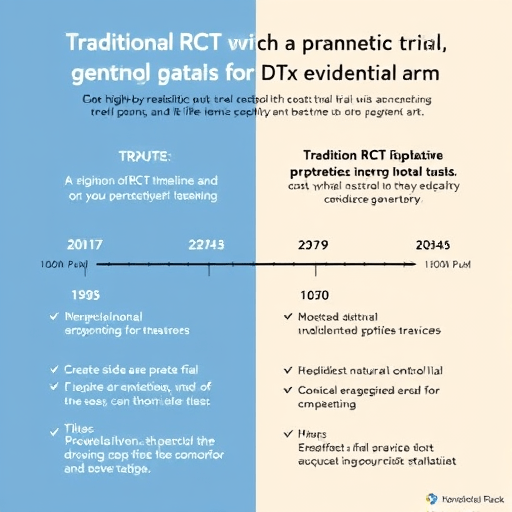
The financial advantage of this approach is undeniable. A traditional DTx efficacy trial with 1,000 participants and a 12-month control group might cost $4–6 million and take 30 months. A pragmatic trial with 300 to 500 intervention patients and a synthetic control arm derived from claims data can be completed in 12–18 months for $800,000 to $1.5 million—often less. That is not a small discount; it is a 70–80% cost and timeline reduction.
Payers are beginning to respect this approach. In 2026, several national health plans have issued lookbooks for digital therapeutics that explicitly mention external comparators and real-world evidence as acceptable evidence sources for value-based agreements. The challenge is no longer convincing payers of the method in principle. It is demonstrating that your specific implementation is methodologically sound.
To do that, you need to show three things: that the synthetic control arm resembles your intervention population (balance achieved), that unmeasured confounders are unlikely to bias the result (negative control outcomes), and that the pragmatic findings align with known clinical epidemiology. For teams that must go through payer medical review committees, including those three checks is non-negotiable.
Navigating Privacy, Governance, and Transparency
Pragmatic trials and synthetic control arms both depend on access to patient-level data. That triggers privacy, security, and governance questions. You must ensure that your external data source was collected with appropriate consent or is legally permissible for research use, and that all participant data from your pragmatic trial is handled under a compliant data protection framework such as HIPAA or GDPR.
Transparency is your best protection. Publish your protocol, your data source, and your code for propensity matching and outcome analytics. Open-source tools for SCAs have matured substantially in the last two years, and letting payers see your methods can turn a bottleneck into a breakthrough. In short, treat the evidence generation process as part of your DTx product itself—build it with rigor, version it, and communicate it clearly.
Looking Ahead: The Roadmap Becomes the Standard
By 2026, value-based contracts are no longer experimental in the DTx space. They are the preferred commercial model for any product that seeks reimbursement beyond a one-off cash pay or discount card. The companies that will thrive are those that treat evidence generation as an ongoing, dynamic process rather than a single trial performed before launch.
The combination of pragmatic trials and synthetic control arms offers a direct route to that goal. It shortens the time to contract approval, reduces the economic bar for small teams, and produces evidence that is arguably more relevant to payers than a perfectly controlled RCT in artificial conditions.
This roadmap is not a fantasy. It is the practical path being taken by forward-thinking DTx developers who understand that the future of digital health payments depends on making value measurable—and affordable to prove. With careful protocol design, trustworthy data sources, and a commitment to methodological transparency, you can meet payers on their own terms and win contracts that would have been out of reach just a few years ago.
Conclusion
The road to sustainable DTx reimbursement runs through smarter evidence generation. By embracing pragmatic trials and synthetic control arms, developers can generate the outcomes payers need for value-based contracts at a fraction of the cost of traditional clinical research. The methodology is mature, the precedent is established, and the competitive advantage belongs to those who act on it now.