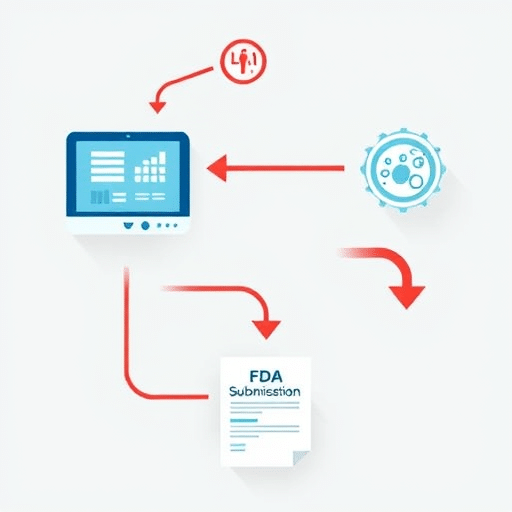
A digital biomarker promising to transform Parkinson’s progression tracking, sleep stage analysis, or early sepsis detection can still hit a wall when reviewed by the FDA. Despite elegant algorithms, peer-reviewed publications, and impressive accuracy on paper, many submissions stall or receive refusal-to-accept letters because the underlying digital biomarker validation process does not align with the agency’s expectations for clinical evidence, technical verification, and analytical validation. The real story behind these failures in 2026 is rarely the algorithm itself. It is the fragmented, site-bound, and inconsistent data pipeline feeding it.
Enter decentralized clinical trials. By shifting collection into patients’ homes and onto wearables shipped directly to participants, sponsors can generate the dense, longitudinal, real-world datasets regulators now expect. But decentralization is not a magic wand. It introduces new challenges around device provisioning, data provenance, and remote verification. This article explores where most digital biomarker programs go wrong with the FDA and how thoughtfully designed decentralized trials can address each gap.
The Hidden Assumptions That Undermine Digital Biomarker Validation
Many digital biomarkers begin life as research-grade algorithms inside academic labs. They are trained on clean datasets, validated against gold-standard in-clinic measures, and published in high-impact journals. The leap from that controlled environment to an FDA submission exposes hidden assumptions:
- Static patient populations: Academic cohorts often exclude elderly patients, those with multiple comorbidities, or users with darker skin tones for optical sensors. Real-world FDA submissions must demonstrate performance across the intended use population.
- Single-environment data: Algorithms trained on gait data captured in a motion lab rarely generalize to stair climbing in a participant’s home, intermittent Bluetooth dropouts, or a pet walking under the bed.
- Snapshot verification: A single in-clinic correlation study does not prove a biomarker captures change over months or years, which is often the actual claim sponsors want on the label.
These assumptions create what regulators call “context of use” gaps. The biomarker works in the environment where it was developed, but the FDA requires evidence that it works in the environment where it will be deployed.
Why Traditional Site-Based Designs Fail Modern Biomarkers
Site-based clinical trials dominate the historical regulatory record. Participants travel to academic medical centers, perform scripted tasks, and have their data captured by trained staff using calibrated equipment. This produces pristine datasets but has three major weaknesses for digital biomarker development.
First, the data is episodic. A participant visiting a site every 12 weeks cannot show how their gait, sleep, or heart rate variability fluctuates between visits. Most digital biomarkers measure continuous phenomena, and gaps in the data destroy the very signal sponsors are trying to capture.
Second, the Hawthorne effect distorts measurements. Participants who know they are being observed walk differently, sleep differently, and report symptoms differently. Regulators are increasingly aware of this bias and discount data that shows suspiciously low variability.
Third, site-based recruitment excludes most of the patient population. A trial requiring 12 visits over 18 months effectively excludes working adults, caregivers, rural patients, and anyone without reliable transportation. This throttles enrollment and produces a non-representative sample.
What Decentralized Trials Actually Change for Digital Biomarkers
Decentralized clinical trials move data collection out of the clinic and into the participant’s daily life. For digital biomarkers, this produces three structural advantages:
1. Continuous, High-Frequency Data Capture
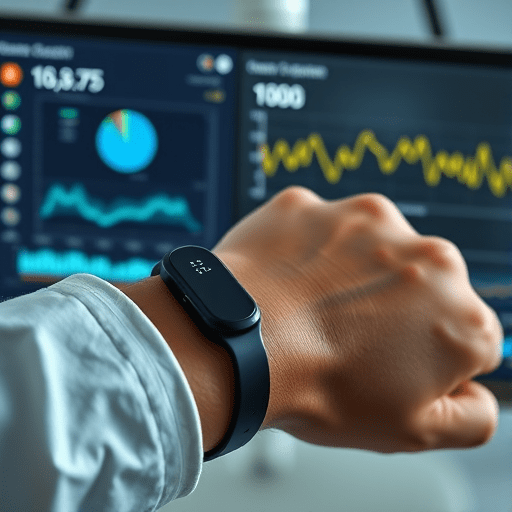
Wearables worn 16 to 24 hours a day generate thousands of data points per participant per day. A six-month decentralized study can produce more relevant observations than a three-year site-based study. For biomarkers measuring variability, drift, or change-point detection, this density is essential.
2. Real-World Context
Participants use the device in their actual environment — uneven floors, different mattress types, varied activity patterns. This produces data that matches the eventual deployment context, which the FDA explicitly favors. The agency’s 2023 guidance on digital health technologies emphasizes that performance should be demonstrated in representative conditions.
3. Larger and More Diverse Cohorts
Removing the travel burden dramatically expands the eligible population. Decentralized designs routinely enroll two to five times more participants than site-based equivalents, and that scale enables the subgroup analyses regulators now require for digital biomarkers intended for broad populations.
The New Failure Modes Decentralized Trials Introduce
Decentralization solves several problems but introduces its own. Sponsors who treat decentralization as a logistics decision rather than a data-quality decision often find themselves with different validation failures.
Device Variability and Provisioning
When thousands of participants each receive a wearable, device-to-device variability becomes a real concern. Sensor calibration drift, battery degradation, and firmware version differences can introduce artifacts that masquerade as clinical signal. The FDA expects sponsors to demonstrate that device variability is quantified, monitored, and bounded.
Adherence and Data Gaps
Without clinic staff watching, participants forget to wear devices, charge them, or sync them. Missing data is not just inconvenient — it can invalidate longitudinal analyses. Modern decentralized protocols must include digital adherence interventions, remote troubleshooting, and pre-specified handling rules for missingness.
Data Provenance and Chain of Custody
Regulators need to know exactly where each data point originated, which firmware version produced it, when it was transmitted, and whether it was modified. Decentralized pipelines that pass data through multiple cloud services, third-party analytics platforms, or home Wi-Fi networks can obscure this chain. Building immutable provenance logs into the architecture is no longer optional.
Aligning Decentralized Pipelines with FDA Expectations
The FDA’s framework for digital health technologies distinguishes between analytical validation (does the sensor measure what it claims?), clinical validation (does the measurement relate to a clinical outcome?), and clinical utility (does using it improve care?). Decentralized trials support all three, but only if designed deliberately.
Build Verification Into the Protocol
Schedule remote verification sessions where participants perform a brief standardized task while wearing the device, captured via video or a paired smartphone sensor. These “digital site visits” anchor the continuous stream to a known reference, similar to a traditional in-clinic assessment.
Pre-Specify Handling of Real-World Noise
Define how the algorithm will treat interruptions, off-wrist periods, and sensor saturation events before unblinding. Regulators are wary of post-hoc data cleaning that could be tuned to produce favorable results.
Capture Context Metadata
Pair biomarker data with environmental context — ambient temperature, activity self-report, medication timing — to enable sensitivity analyses. The FDA increasingly asks whether the biomarker is robust to known confounders, and contextual metadata provides the evidence.
The 2026 Reality: Hybrid Designs Are Winning
Few sponsors in 2026 run purely decentralized or purely site-based studies for digital biomarker validation. The dominant pattern is hybrid: a small number of site visits for gold-standard assessments and biospecimen collection, combined with extended at-home data capture through provisioned wearables and Bring Your Own Device strategies.
This hybrid model delivers what regulators actually want: dense longitudinal data anchored by trusted reference measures, collected from a population representative of the eventual users. Sponsors who treat the hybrid design as a unified evidence package, rather than two disconnected datasets, are the ones clearing FDA validation milestones on schedule.
Conclusion
Digital biomarkers fail FDA validation most often because their evidence base does not match their intended use. Decentralized trials, designed with attention to device variability, data provenance, and adherence, can produce the continuous, representative, context-rich datasets regulators now expect. The winners in 2026 are not those who simply ship devices to participants. They are the sponsors who engineer their decentralized pipelines as rigorously as the algorithms they are validating.