When a mid-sized digital health company set out to CE-mark a decentralized clinical trial (DCT) remote monitoring app in 2025, the initial roadmap assumed a 14-month approval process under the EU Medical Device Regulation (MDR). By the time the app received its CE certificate, the team had cut that estimate to just five months. The decisive factor was not faster testing or a lenient notified body, but a series of early MDR scoping decisions made before a single line of technical documentation was written. This case study examines how early scoping of the CE-marking a DCT remote monitoring app turned a potentially sluggish submission into one of the most efficient digital health approvals in the company’s portfolio.
The Challenge: MDR Ambiguity for a Decentralized Trial Device
The app in question was designed to collect patient-reported outcomes, vital signs from connected wearables, and medication adherence data from participants in a Phase II decentralized trial for a rare neurological condition. The team initially assumed the app would qualify as a Class IIa medical device under MDR Rule 11, since it provided information used for clinical management decisions. That assumption triggered a long list of requirements: full quality management system audits, extensive clinical evaluation, and notified body involvement. The project plan reflected this burden, reserving 14 months for the CE mark process.
However, during an early regulatory scoping workshop—conducted before any development milestones were finalized—regulatory affairs specialists uncovered a more nuanced reading of MDR Annex VIII. The app did not itself drive therapy decisions; it simply transmitted structured data to a clinician dashboard for review. Crucially, the decision-making logic lived entirely on the physician-facing platform, not in the patient app. That functional separation changed the classification conversation.
Early Scoping Decisions That Changed the Timeline
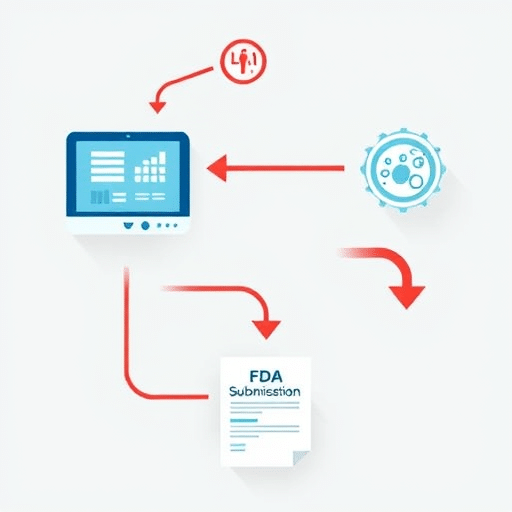
The first decision was to separate the patient-facing mobile app from the clinician dashboard as distinct regulatory artifacts, even though they shared a common backend. While the clinician dashboard remained a Class IIa device, the remote monitoring app itself could be classified as Class I under Rule 11 because it did not make diagnostic or therapeutic decisions and did not create data intended to directly alter a patient’s treatment. This was not a gray-market loophole; it was a defensible interpretation aligned with MDCG 2021-24 guidance on borderline products.
That reclassification had an immediate impact. Class I device certification under MDR does not require a notified body assessment, except for sterile or measuring devices, which this app was not. The team still needed to produce technical documentation, implement a quality management system, and issue a Declaration of Conformity, but the timeline dropped dramatically because they avoided notified body interaction for the main app component.
Why the Distinction Was Legitimate
To be clear, this was not an attempt to “down-classify” a high-risk product. The app had no alarm functionality, no interpretative algorithms, and no feedback loop that could change a participant’s dose or schedule. It functioned as a digital transport layer for clinical data. The team documented this in a detailed intended purpose statement early in the process, and that statement became the anchor for all subsequent decisions.
Building the Technical Documentation in Parallel
Another key scoping decision was to start technical documentation in parallel with the design freeze, rather than after feature completion. The company’s regulatory team wrote the software requirements specification, risk management file, and usability engineering report using the iterative design outputs, not the final build. This approach meant that by the time the app’s development ended, the documentation was already 80 percent complete.
The technical documentation followed a modular structure recommended by MDR Annex II and Annex III. The team mapped each requirement to a verification activity, and used a traceability matrix to connect user needs to design inputs and test cases. Because the app was Class I, they did not need to prepare a full clinical evaluation report to the same depth as a Class IIa device, but they still conducted a literature review and documented clinical benefits based on the device’s intended purpose.
Engaging a Notified Body Before Submission
Even though the remote monitoring app did not require notified body approval, the company made the strategic decision to engage a notified body anyway—not for the app, but for the associated clinician dashboard that would still need a Class IIa certificate. This early engagement served two purposes.
- It clarified the boundary between the two devices in the eyes of the assessor, reducing the risk that the app would be pulled under the dashboard’s conformity assessment because they shared the same backend infrastructure.
- It allowed the team to test their scoping rationale before the official application, so any questions about the app’s role could be resolved before submission rather than during the review clock.
The notified body agreed with the classification analysis after a single technical meeting. That meeting, held five months before the intended submission, effectively derisked the entire approval pathway. In the end, the Class IIa dashboard certificate was issued in four months from submission, and the Class I self-certification for the app was completed in just five weeks from final documentation sign-off.
What the 9-Month Gain Meant for the DCT Study
The original 14-month timeline would have placed CE certification after the planned first patient visit for the decentralized study. That would have forced the sponsor to either delay enrollment or run the study with an unregistered device, which is not acceptable for a significant-risk trial in the EU. Instead, the early scoping decision allowed the app to be fully CE-marked before the regulatory submission for the study was even filed with ethics committees and national competent authorities.
Because certification was completed nine months ahead of the original estimate, the company achieved three concrete benefits:
- Reduced capital burn: regulatory affairs staff were reallocated to other projects after five months instead of fourteen, saving an estimated €180,000 in internal costs.
- Faster site contracting: sites were willing to sign contracts sooner because the device had a CE mark, eliminating a common negotiation sticking point.
- Competitive advantage: the company could offer sponsors a fully compliant remote monitoring platform while competitors were still waiting for their own certifications.
Lessons for Other Digital Health Teams
This case study is not about finding loopholes in MDR. It is about the power of early, structured regulatory scoping—especially for digital health products that combine mobile apps with backend services. There are four takeaways that apply broadly.
1. Classification Is a Design Activity, Not a Regulatory Afterthought
Classification decisions under MDR should be made during the design phase, when features can still be adjusted. The remote monitoring app’s role was deliberately limited to data acquisition and transmission. Had the team added a clinical decision-support algorithm or automatic alerts, the classification would have changed. Every feature that adds interpretive or decision-making capability pushes a digital health product into a higher regulatory class, with all the time and cost that entails.
2. Write the Intended Purpose Early and Keep It Sharp
The intended purpose statement is the lens through which all regulators and notified bodies see a product. In this case, the statement explicitly said the app “does not interpret, diagnose, or make clinical recommendations.” That one sentence, repeated throughout the documentation, made the classification rationale defensible and easy for the notified body to accept.
3. Separate Components Even If They Share a Backend
The decision to treat the patient app and clinician dashboard as separate devices was legally sound, but it required careful separation of functions, cloud environments, and user management. The team had to show that the app could operate without the dashboard—even if in practice it only sent data to it. This separation was documented in the architecture description and confirmed through the QMS change control process.
4. Engage Your Notified Body Before You Need Them
For products that involve even a remote chance of notified body involvement, an early technical review meeting is worth every euro. The meeting may be informal, but it gives assessors a chance to flag classification issues when there is still time to change the design or documentation. In this case, the meeting took place five months before submission and saved more than a year of potential back-and-forth.
Conclusion
The CE-marking of a DCT remote monitoring app does not have to be a nine-month regulatory marathon if teams commit to early, evidence-based MDR scoping. By separating the app from the clinician dashboard, documenting a tight intended purpose, and engaging a notified body before submission, the company in this case cut its approval timeline by nine months—without compromising compliance. For digital health teams planning their own MDR pathways, the lesson is clear: the decisions made before development begins are often the ones that determine whether a CE mark arrives on time, or not at all.