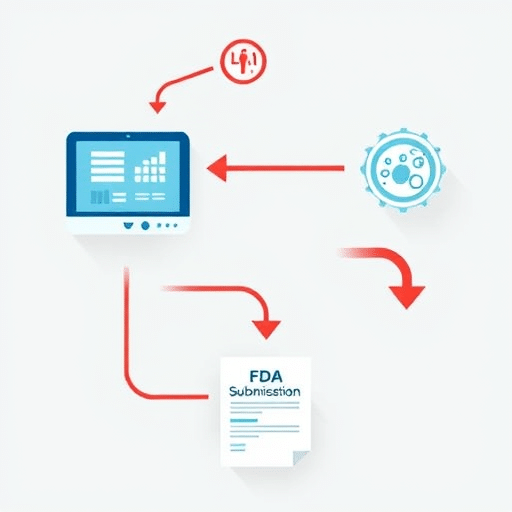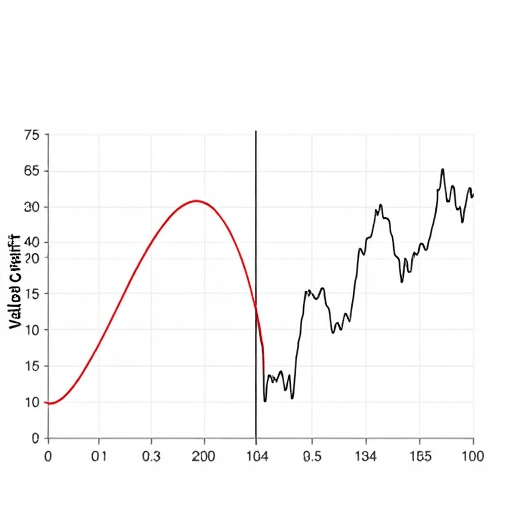
Deploying a model from pilot to practice is rarely as straightforward as reusing the same validation script. The best-performing candidate on a holdout set can start degrading in production not because of code changes, but because of silent data shifts—distributional changes in inputs, labels, or relationships that never appeared during standard validation. Most teams treat validation as a performance gate: compute accuracy, precision, recall, or AUC, and then proceed. Yet the deeper question—whether the data your model will see tomorrow still matches the data you validated on—goes unanswered. That is the data audit your ML validation misses.
The Hidden Failure Mode: When Validation Curves Look Fine
Silent data shifts are insidious because they do not always produce obvious degradation in aggregate metrics. A model can maintain a steady accuracy while silently misclassifying an increasingly important demographic segment. Or the feature distribution can drift gradually enough that the model’s outputs become biased toward a pattern that no longer exists in real-world behavior. Traditional validation techniques, like a movie-style split of train/validation/test, assume that the future data will be drawn from the same static distribution. That assumption breaks down the moment your pilot transitions to live traffic.
Consider a fraud-detection model validated on six months of historical transactions. The validation set shows a 0.98 AUC. In production, fraudsters adapt their tactics, changing the feature relationships that the model learned. The drift is silent because the overall transaction distribution looks similar—except for a subtle shift in the correlation between transaction amount and merchant category. The model’s AUC drops, but not until weeks later, after real money is lost.
This is not a theoretical edge case. In the current AI landscape, where models are continuously re-trained on streaming data, the risk of silent shifts is higher than ever. Yet most validation pipelines still focus on point-in-time metrics rather than ongoing distributional health.
Why Traditional Validation Sets Aren’t Enough
Static validation sets are built from historical data curated at a single point in time. They give you a snapshot of model quality, but they cannot tell you whether the world has moved on. Cross-validation, while useful for hyperparameter tuning, still assumes that each fold draws from the same distribution. Time-series-aware splits help, but only if you explicitly probe for temporal drift—and most teams do not.
Another overlooked issue is label leakage in the validation phase. When validation labels are collected too close to the prediction date, they may reflect outcomes that the model itself influenced, a feedback loop common in recommendation and credit systems. This creates a false sense of stability, hiding the fact that the model’s outputs are changing the data generation process itself. The model is no longer predicting the world—it is partly creating it.
The solution is not to throw away your validation set. Instead, you need to append a data audit that systematically interrogates your inputs, labels, and performance slices for signs of silent shift. This audit should run alongside your traditional evaluation, not as a one-off activity, but as a structured checklist that catches the gaps your loss curve cannot expose.
Building the Data Audit into Your Validation Phase
To catch silent data shifts, you need to go beyond aggregate performance and inspect the underlying data at multiple levels. The following four-step audit can be integrated into any validation pipeline, from a simple sklearn workflow to a full MLOps platform.
Step 1: Profile Distributional Characteristics
Start by profiling the statistical properties of your validation inputs against a reference window from the training period. For each feature, compute key statistics such as mean, variance, quantiles, and the frequency of missing values. Use statistical tests like the Kolmogorov-Smirnov test for continuous variables and chi-square tests for categorical ones. Do not rely on p-values alone—also visualize the empirical cumulative distribution functions. A shift might be statistically significant but practically irrelevant, or vice versa. The goal is to flag features whose distributions have moved in a way that could affect model behavior.
Step 2: Monitor Feature and Concept Drift Indicators
Feature drift is when the input distribution changes. Concept drift is when the relationship between inputs and labels changes. Both can happen silently. A powerful way to detect concept drift is to train a small “shift detector” model that tries to distinguish between the training-time data and the current validation-period data. If the detector achieves an AUC much higher than 0.5, the two datasets are not from the same distribution. This technique works even for high-dimensional data where manual feature monitoring becomes unmanageable.
Another practical indicator is the prediction drift: the average of your model’s confidence scores or class probabilities over time. If the model begins to produce consistently more uncertain predictions, that is often a leading signal of silent shift. Compare the current prediction distribution to the training-time distribution, not just the final accuracy.
Step 3: Label Integrity Checks
Validation labels are not infallible. In many real-world systems, labels arrive after a delay and can be contaminated by noise or human error. Silent shifts in label quality are particularly damaging because they corrupt both your validation metrics and your future training labels. Add checks for label distribution changes, sudden increases in label disagreement across annotators, and inconsistencies between label timestamps and feature timestamps. If your validation set contains labels that were generated under a different definition than the one you expect in production, your performance numbers are meaningless.
For example, in a medical triage model, if the definition of a “critical” case changes between pilot and practice, the validation labels no longer reflect the target outcome. The model might appear to work well on old labels while missing new critical cases. A label audit should catch this by comparing label prevalence and definition across time windows.
Step 4: Cohort-Level Performance Slices
Aggregate metrics hide silent shifts because they average over many subgroups. The fix is to compute performance metrics on meaningful cohorts, such as geographic regions, user segments, or product categories. Then, during validation, compare the cohort-level performance against a baseline. A shift that affects a small but growing cohort will appear as a dip in that slice long before it affects the global metric. This is also critical for fairness and responsible AI practices, as silent shifts often amplify pre-existing biases.
For each cohort, track not only accuracy but also calibration error. A model can be accurate yet poorly calibrated, and the calibration might degrade silently even when accuracy stays flat. Use reliability diagrams and expected calibration error (ECE) to measure this.
Automating the Audit: Tools and Practices for 2026
The steps above are manual if you do them once, but the real value comes from automating them as part of your validation phase. Modern data-centric AI platforms now include built-in drift detection modules that output a health score for every model version. Open-source libraries like Evidently, whylogs, and Alibi Detect provide ready-to-use statistical tests and visualizations. Your validation pipeline should emit a “data audit report” alongside the standard metrics, and you should gate promotions to production on both.
Another emerging practice is to run a shadow validation during the pilot phase. Instead of using only historical data, you deploy your candidate model in shadow mode, where it receives live requests but its outputs are logged and not acted upon. This gives you a real-time distribution of inputs and predictions from the actual production environment, which you can then compare to your training distribution. This is the ultimate test for silent shifts. A few weeks of shadow data can reveal shifts that months of historical data would never uncover.
Finally, build a feedback loop into your validation audit. When a data shift is detected, do not simply retrain the model. Investigate the root cause. Was it a sensor change, a new user behavior, a policy update? Document these findings and use them to refine your monitoring thresholds. The more you learn about how your data shifts in practice, the better you can design models that are robust to change.
Conclusion
Silent data shifts are the quiet killers of machine learning systems in production. They hide behind healthy-looking validation curves and only surface after real damage is done. By embedding a structured data audit into your validation phase—covering distributional profiling, drift detectors, label checks, and cohort slices—you can catch these shifts at the critical pilot-to-practice boundary. The cost of this audit is small compared to the price of a model that silently fails after deployment. Make it a mandatory step, not a last-minute consideration.