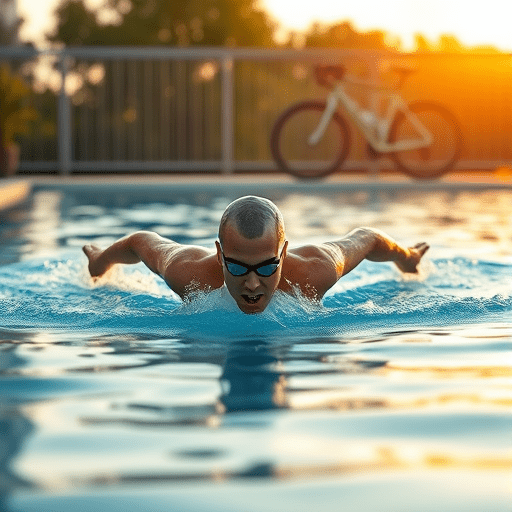
It sounds backwards at first. You spend hours in the saddle, hammer out miles on the bike, and yet the pain shows up in your shoulder after a swim session. If you are a cyclist adding open water or pool time to your training plan for 2026, you are far from alone. Coaches and sports medicine clinicians are reporting a steady rise in shoulder complaints among riders who cross-train in the water, and the cause is rarely a single bad stroke. It is usually a combination of posture adapted to the bike, equipment choices borrowed from pure swimmers, and a few form habits that quietly load the rotator cuff in ways the body was never designed to handle.
Understanding the connection between cycling posture and shoulder stress is the first step toward fixing it. Once you know why the pain develops, the right gear swaps and stroke adjustments become obvious rather than guesswork.
The Hidden Link Between Cycling Posture and Swimmer’s Shoulder
Hours on a road or gravel bike shape your upper body in ways most riders underestimate. A forward-leaning torso, protracted shoulder blades, and a chin that drifts ahead of the handlebars all become the default resting position. When you climb out of the saddle and roll to the pool, that same posture follows you into the water.
Swimming demands the opposite: a long spine, shoulders stacked over hips, and scapulae that glide freely along the rib cage. The mismatch is where trouble begins. The shoulder joint is a ball and socket that relies on muscular balance to stay centered. When the chest and front deltoids are chronically tight from cycling, the rotator cuff has to work overtime to keep the humeral head in place during every freestyle catch. Add repetitive overhead rotation and you have the recipe for impingement, tendinopathy, and the catch-all diagnosis coaches call swimmer’s shoulder.
A 2025 survey of age-group triathletes found cyclists entering the swim leg had roughly 40 percent less shoulder internal rotation than pure runners, a flexibility deficit that tracked closely with reported pain during and after open water sessions.
Why Your Swim Gear Might Be Making It Worse
Most cyclists new to swimming borrow gear from pool regulars or buy whatever a shop recommends. Some of those choices quietly load the shoulder. Three pieces of equipment deserve a closer look in 2026.
Paddles That Are Too Large or Too Stiff
Hand paddles are popular for building pull strength, but oversized paddles exaggerate the force your shoulder must manage at the catch and pull phases. If you notice your hand entering the water well ahead of your head, or feel a dull ache deep in the shoulder joint after using paddles, size down or set them aside for a few weeks.
Pull Buoys That Pinch the Arm Path
A pull buoy keeps the hips up but it also encourages a wider, straighter arm recovery. For cyclists whose lats and pecs are already tight, that high elbow position can pull on tissues that are irritated. Try a softer, smaller buoy that sits between the thighs rather than the ankles, which forces a slightly narrower and more sustainable arm path.
Wetsuits That Resist the Shoulder
Modern triathlon wetsuits use neoprene panels around the shoulder to improve buoyancy, but cheaper suits can feel like a rubber band pulling the arm back. Look for Yamamoto-style panels with gusseted underarms that move with the catch. In 2026, several brands have released suits with stretchier shoulder zones specifically marketed to cyclists adding open water racing.
Form Tweaks That Take Pressure Off the Shoulder
Equipment helps, but stroke mechanics determine whether the shoulder stays healthy over a full season. Three form tweaks consistently reduce pain in cyclists learning to swim.
Catch the Water in Front of the Shoulder, Not Under It
Many riders drop their elbow too low during the catch, which forces the shoulder into internal rotation under load. Imagine pressing your palm down toward the bottom of the pool right beneath your head. That is the position to avoid. Instead, reach forward so your hand enters the water about 12 to 18 inches ahead of your head, then bend the elbow so the forearm angles down and back. The shoulder stays in a more neutral position and the rotator cuff has far less work to do.
Rotate the Hips, Not Just the Shoulders
Cyclists often use the shoulders to generate rotation because their core stability is strong in one plane but weak in the rotational plane. Practice drills like side kick with a neutral head and six-kick switch to teach the hips to lead the rotation. Once the body rolls as one piece, the shoulder simply follows the line of the body rather than twisting in isolation.
Keep the Head in Line With the Spine
Looking straight ahead at the wall rather than forward at the bottom of the pool is a small change with a big payoff. Lifting the head to sight or breathe forces the cervical spine into extension, which in turn tugs on the upper trapezius and alters the shoulder mechanics. A subtle chin tuck with eyes angled toward the pool floor keeps everything aligned.
Strength and Mobility Work That Targets the Real Problem
Form changes are only one part of the picture. The shoulder needs both stability and mobility to thrive in water after a winter on the bike. Two areas respond especially well to short daily sessions.
First, mid-back mobility. Foam rolling the thoracic spine for two minutes before every swim session helps reverse the hunched posture that cycling builds. Pair it with open-book stretches on the floor to remind the rib cage how to rotate.
Second, external rotation strength. The infraspinatus and teres minor are the muscles that resist internal rotation, the exact motion that overloads them during freestyle. Light band work, two sets of 15 slow reps twice a week, builds the endurance these muscles need to keep up with a 60-minute swim set.
Skip the heavy bench press variations while a shoulder is grumpy. Cycling already trains the chest adequately. Pulling movements like inverted rows and band pull-aparts restore the balance.
Building a Swim Routine That Fits a Cycling Schedule
The most common mistake cyclists make when adding swimming is treating the pool like another hard ride. It is not. Recovery and low-intensity volume are the foundation. Two shorter sessions of 30 to 40 minutes per week outperform one long grueling session for joint health.
Schedule swims on days following the hardest rides, or in the middle of a recovery week. Keep the intensity mostly in zone 2 heart rate, saving the fast 100s for once a week when the shoulder feels fresh. Many age-group triathletes in the 2026 season are reporting the best swim improvements of their careers simply by slowing down the easy work.
If you are preparing for an early-season open water race, spend at least four weeks in the pool before stepping into a lake or the ocean. Cold water tightens the shoulders more than a 78-degree pool, and unprepared tissues are the first to complain.
Conclusion
Shoulder pain in cyclists who swim is not bad luck or a sign that swimming is the wrong sport. It is the predictable outcome of a body shaped by the bike asked to move in a completely different way. The good news is that the fixes are practical: gear that supports rather than restricts, a catch that respects the shoulder joint, and a few minutes of mobility work that keeps the thoracic spine honest. Treat the swim as a technical discipline rather than a cardio afterthought and the shoulder stops being the limiting factor in your season.