Learning how to prevent knee pain when combining cycling and swimming starts with recognizing that both activities can load the same joint in different ways. Cycling demands repeated knee flexion and extension, especially when cadence is low or resistance is high. Swimming is generally kinder to the knees, but forceful kicking, breaststroke, push-offs, and awkward transitions can still irritate sensitive tissues. The best plan is not simply to train through discomfort; it is to manage equipment, movement quality, workload, and recovery together.
A practical plan for 2026 should focus on consistency rather than perfect technique. Small changes in bike fit, stroke habits, strength training, and rest can reduce cumulative strain while allowing you to keep both sports in your routine.
Why Cross-Training Can Overload the Knee
The knee is a hinge joint, but it is influenced by the hip, ankle, foot, and trunk. When one area is not controlling movement well, the knee may absorb more stress than it should. Cycling commonly increases stress at the front of the knee when the saddle is too low, the handlebar position encourages excessive reach, or the rider pushes a large gear at a slow cadence. Swimming is usually non-weight-bearing, yet breaststroke can place the knee in a loaded, rotated position during the whip kick. Intense freestyle or butterfly kicking can also create tension through the quadriceps and hip flexors.
The problem is often cumulative. A long bike ride, followed by a pool session, then another demanding workout can leave the knee with enough repeated irritation to produce pain. Training on consecutive days may be appropriate, but the total load matters more than the number of activities.
Pain should not be treated as a badge of endurance. Mild discomfort that settles quickly may reflect unfamiliar training, while swelling, sharp pain, instability, or pain that persists into ordinary walking deserves attention from a qualified healthcare professional.
Set Up the Bike to Reduce Forward Knee Stress
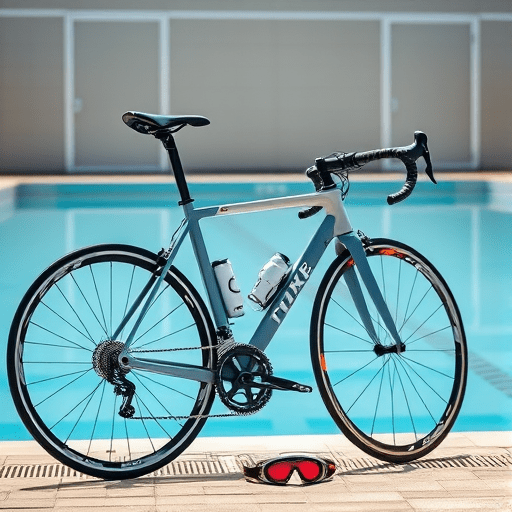
Before changing your training schedule, check the bicycle fit. A saddle that is too low increases flexion at the knee throughout the pedal stroke. A saddle that is too far forward can place the knee ahead of the foot and increase pressure around the front of the joint.
- Set saddle height conservatively. At the bottom of the pedal stroke, the knee should retain a slight bend rather than locking straight. A professional bike fit is especially useful if pain is persistent or recurring.
- Check fore-aft position. When the pedals are level, a vertical line from the front of the kneecap should fall near the center of the pedal axle. This is a starting reference, not a universal rule for every rider.
- Bring the bars closer or higher if needed. Excessive reach can make you slide forward on the saddle, altering the knee angle and forcing the quadriceps to work continuously.
- Use a sensible cadence. Aim for smooth, controlled pedaling rather than grinding at a very low cadence in a heavy gear.
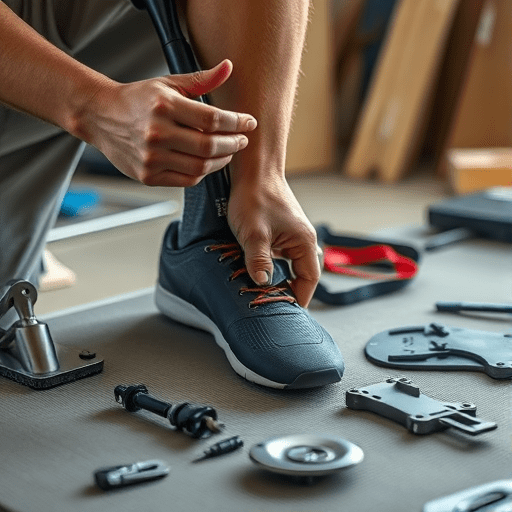
- Support your feet. Cleats and shoes should allow the knee to track naturally. Avoid forcing an inward or outward foot position if it creates strain.
Do not make several major fit adjustments at once. Change one variable, ride at an easy effort, and observe how the knee responds over the next day or two.
Choose Swimming Gear That Supports Better Mechanics
Swimming equipment cannot replace technique, but the right choices can reduce unnecessary resistance and improve body position. A well-fitted swimsuit and goggles are basic; more specialized equipment should address a specific issue rather than create a new one.
A pull buoy can reduce the effort required from the legs and help you focus on upper-body technique, but it is not a solution for persistent knee pain. Fins may alter ankle and knee loading, so use them cautiously if the knee is already sensitive. During breaststroke, a large, forceful kick can place considerable stress across the knee. Reducing kick width, keeping the movement controlled, and avoiding abrupt changes in volume can help.
Pool conditions also matter. Pushing off the wall repeatedly, using tight turns, or completing a large number of breaststroke laps may aggravate symptoms. Alternate stroke types, use a gentler push-off, or shorten the session when the knee feels irritated. A swim coach can assess whether your kick, body rotation, or lane alignment is contributing to the problem.
Manage Training Load Instead of Adding More Miles
Overuse injuries usually develop when training changes faster than the body can adapt. Combining cycling and swimming does not automatically cause knee pain, but rapidly increasing one activity, adding hills, or scheduling several intense sessions close together can overwhelm the joint.
Use a simple progression. Increase one main variable at a time, such as weekly cycling time, swim distance, or resistance. Avoid raising duration and intensity simultaneously. Keep most sessions easy enough to control your form, and reserve hard efforts for planned days with recovery between them.
A useful structure is to alternate demanding sessions with lower-impact or rest days. For example, place a long, hard ride away from a breaststroke-focused swim session. If both disciplines are trained in one day, keep the total intensity manageable and use the cooler session to restore easy movement rather than compete for training volume.
Tracking discomfort alongside training is helpful. A simple daily score from zero to ten, recorded with session duration and effort, can reveal patterns. A rising trend is a reason to reduce load; pain that disappears during exercise but returns afterward still deserves respect.
Build Strength Around the Hip, Knee, and Ankle
Strength training can improve the way force is distributed away from the knee. The goal is not to isolate one muscle endlessly, but to build control through the entire leg and trunk.
- Split squats or step-ups to develop single-leg strength
- Hip hinges and Romanian deadlifts for posterior-chain control
- Side steps or resistance-band walks for hip stability
- Calf raises to support ankle and knee mechanics
- Core anti-rotation exercises to improve force transfer on the bike
Start with two short strength sessions per week, using controlled repetitions and moderate effort. Avoid training to failure when your knee is already sore. Muscle soreness should be noticeable but not limit normal movement. If an exercise produces joint pain, shorten its range or substitute a less stressful movement.
Range of motion matters too. Gentle knee flexion and extension, ankle mobility, and hip movement can be maintained with easy cycling, walking, or mobility work. Stretching should feel comfortable and should never be used to force a painful position.
Use Recovery Habits That Protect Both Sports
Recovery is where adaptation occurs. Sleep, nutrition, and lower-intensity movement all influence how well tissues tolerate repeated training. A practical recovery plan does not need expensive devices.
- Keep at least one easy or rest day between unusually demanding sessions.
- Finish harder workouts with several minutes of easy movement rather than stopping suddenly.
- Eat enough protein and total energy to support training and tissue repair.
- Stay hydrated, particularly during long rides or warm pool sessions.
- Use ice or a cold pack briefly for temporary symptom relief if a clinician has not advised otherwise.
- Avoid repeatedly training with poor sleep, illness, or unusually high life stress.
Foam rolling and massage can reduce muscle tightness, but they should not be applied directly over an acutely painful or swollen knee. Gentle movement is usually more useful than aggressive treatment.
Adjust the Plan When Warning Signs Appear
Modify activity before pain becomes disabling. Reduce cycling resistance, shorten the duration, and avoid deep or forceful breaststroke kicks temporarily. Substitute upper-body pool work, easy swimming, or low-impact cycling when appropriate. The knee should not be pushed through sharp, escalating, or lingering pain.
Seek professional assessment if pain lasts more than a few days, worsens with normal walking, follows an injury, or comes with swelling, locking, giving way, or weakness. A sports physiotherapist or clinician can evaluate bike fit, movement patterns, and the specific structures involved. Early assessment is particularly important for pain concentrated on the inside, outside, or front of the knee, because each pattern can have a different cause.
A simple rule is to progress only when the knee feels normal during training and returns to baseline by the next day. That does not mean waiting for perfect comfort every session; it means respecting the difference between mild effort and meaningful irritation.
A Sustainable Weekly Framework
For a recreational athlete, a balanced week might include two or three cycling sessions, two swimming sessions, and two brief strength sessions, with harder efforts separated by easier movement. Exact volume depends on fitness and medical history, so the plan should begin below your current maximum capacity.
Use one session as a low-intensity recovery session. Keep it conversational, avoid heavy resistance, and stop if the knee becomes painful. If a new pool drill or cycling interval causes irritation, return to the prior comfortable level rather than trying to “test” the knee repeatedly.
Most importantly, treat swimming as more than an active recovery tool. It can be a valuable part of a knee-friendly program, but breaststroke, forceful kicking, and hard push-offs still require sensible loading. Combining the two sports works best when the plan accounts for their shared effects rather than assuming that being in the pool protects the knee completely.
Conclusion
Preventing knee pain across cycling and swimming comes down to controlling the details that shape repeated load. A comfortable bike fit, smooth pedaling, appropriate swim equipment, controlled breaststroke technique, gradual progression, targeted strength work, and adequate recovery can substantially reduce overuse risk. By adjusting the plan when discomfort begins and seeking assessment for persistent symptoms, you can keep both activities enjoyable without asking the knee to absorb more stress than it is prepared to handle.