Precision medicine and consumer sleep tracking have spent years on parallel tracks. One decodes your DNA to guide drug selection; the other reveals how long you spend in deep sleep each night. In 2026, those tracks are converging. This guide explains how to combine wearable sleep data with pharmacogenomic dosing in practice — an emerging approach sometimes called chronopharmacogenomics — and why sleep-derived circadian timing deserves a place in clinical decision-making.
Why Sleep Timing Is Chronopharmacology’s Missing Ingredient
Drug metabolism is not a steady process. Circadian rhythms modulate hepatic enzyme expression, renal blood flow, gastric emptying, and protein binding across the 24-hour day. A drug that is rapidly cleared at 8 a.m. might persist longer when taken at 10 p.m. The enzymes CYP3A4 and CYP2C19, for example, tend to be more abundant during daytime; CYP1A2 activity rises toward morning and is strongly influenced by caffeine and smoking. These patterns mean that “once daily” is not biologically equivalent at every hour.
Concrete examples are easy to find. Statins such as simvastatin and atorvastatin are typically dosed at night because HMG-CoA reductase activity peaks in the early morning hours, yet a patient who falls asleep at 2 a.m. may need a more precise administration window than label instructions suggest. Similarly, proton pump inhibitors work best when taken about thirty minutes before the first meal of the day — and wearable data can identify exactly when that meal occurs for someone with an irregular sleep–wake pattern.
What Wearable Sleep Data Actually Adds
Quality sleep trackers now collect more than total sleep time. Sleep onset, wake time, sleep stages, heart-rate variability, and sleep regularity are all available from mainstream devices. The most drug-relevant metric is circadian phase, which can be approximated by the average midpoint of sleep on free days. A person who sleeps from midnight to 8 a.m. has a midpoint around 4 a.m.; a person who sleeps from 2 a.m. to 10 a.m. has a midpoint around 6 a.m. Genetically, the two may have similar total sleep, but their endogenous clocks are offset — and so should be their drug timing.
Social jetlag, weekend sleeping shifts, and fragment sleep add important noise. Rotating shift workers often have a circadian phase that disconnects from the external clock by several hours. Wearable-based continuity data offers a ground truth that a single doctor’s visit may miss.
Pharmacogenomic Results That Influence Drug Timing
Pharmacogenomic panels provide enzyme phenotypes, not static numbers. Combining them with wearable information requires translating a genotype into a dynamic dosing strategy. Key examples include:
- CYP2D6: A poor metabolizer receiving a prodrug such as codeine or tramadol needs a reduced dose, while an ultrarapid metabolizer may need an earlier or more frequent dosing schedule for drugs like metoprolol or atomoxetine. Sleep data can reveal whether a morning dose worsens next-morning sedation or impairs nocturnal heart-rate recovery.
- CYP1A2: This enzyme peaks after waking and is highly inducible by caffeine and cigarette smoke. A slow-metabolizing CYP1A2 phenotype combined with an early chronotype suggests that bedtime dosing of a CYP1A2 substrate may avoid peak toxic exposure during the most active metabolic window.
- CYP3A4/3A5: Still rarely included in standard panels, but drug-drug interaction phenotyping — such as a midazolam probe — can estimate CYP3A4 activity. For narrow-therapeutic-index drugs, circadian timing of the dose relative to the individual’s sleep midpoint matters as much as the total daily amount.
- Sleep and clock genes: MTNR1A/B sequences are emerging in PGx reports, mostly for melatonin receptor sensitivity. Polymorphisms in CLOCK, BMAL1, and PER2/3 are not yet ready for widespread dosing, but they will likely complement wearable-derived chronotype estimates in the near future.
Building a Personal Dosing Workflow
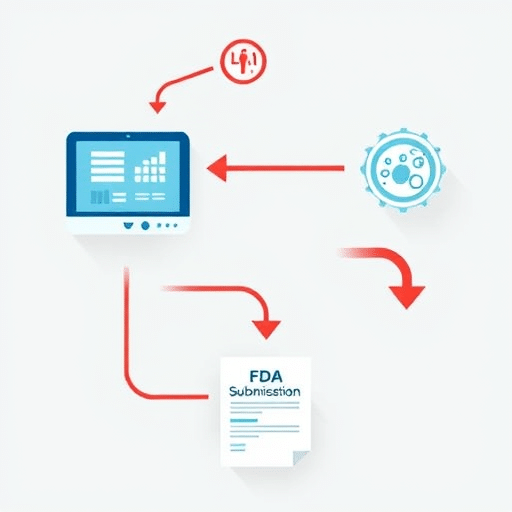
Combining the two data streams isn’t as complex as it sounds. A structured, stepwise approach creates a reproducible workflow.
- Capture baseline sleep data for at least a week. Look at regular bedtime, wake time, average midpoint, and night-to-night variability. Make a note whether the patient is naturally lark-like or owl-like.
- Estimate the individual circadian phase from the midpoint of sleep on free days, and derive the estimated timing of major CYP activity peaks using published chronopharmacology models.
- Overlay the relevant PGx phenotype. Not every enzyme needs circadian adjustment. Focus on the drug’s primary metabolizing enzyme, its therapeutic window, and whether the drug is a prodrug or an active metabolite.
- Adjust dose, then timing, not both at once. Change the time of administration first while keeping the daily dose stable, unless the genotype clearly indicates a dose change per CPIC guidelines. This gives the patient a clean variable to interpret.
- Feed the wearable outcome back into titration. After two to three weeks, compare changes in sleep onset latency, wake after sleep onset, HRV, and resting heart rate against the previous baseline. Use these signals in addition to formal symptom scales.
A practical example: A 41-year-old engineer takes metoprolol for blood pressure. His wearable shows a 3:30 a.m. average sleep midpoint, with a short sleep duration and fragmented sleep on weekdays. PGx testing reports a CYP2D6 intermediate metabolizer phenotype. Instead of keeping the drug evenly split across morning and evening, his clinician shifts a larger portion to the morning, monitors resting heart rate and HRV for two weeks, then reviews the wearable data. The patient reports less next-morning grogginess, and evening blood pressure remains stable.
Limitations and Clinical Judgment
Wearable devices are designed for consumer use, not medical diagnosis. Sleep-stage estimates can be inaccurate, and photoplethysmography remains imperfect for people with darker skin or low-perfusion states. Likewise, PGx panels capture an increasing but still incomplete picture; enzyme activity depends on diet, disease, inflammation, and interactions with other drugs. No current CPIC guideline explicitly incorporates circadian timing, so this approach remains an adjunct to standard dosing, not a replacement.
Clinicians should also be cautious about over-interpreting a single night’s data. A minimum of a week of consistent wear improves reliability. Before any dose change, the patient’s medication list must be reviewed for interactions — sleep data and genotype cannot override a strong CYP3A4 inhibitor like clarithromycin.
Conclusion
Combining wearable sleep data with pharmacogenomic dosing turns two previously separate data streams into a practical tool for personalization. The brain and the liver are both time-dependent organs, and matching drug timing to an individual’s circadian phase is a natural extension of genotype-guided prescribing. As wearable validation improves and clock-gene panels mature, the margin between “correct dose” and “optimal dose” will continue to narrow.