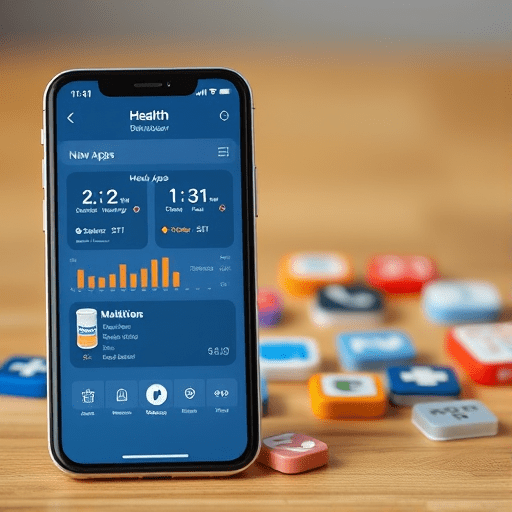
In 2026, the average patient managing a chronic condition now juggles between six and nine different health-related apps. A pill reminder beeps at noon, a symptom tracker asks for input at 2 p.m., a wearable syncs late in the afternoon, and a separate portal for lab results pings in the evening. Each app promises better control, but together they create a fragmented, exhausting experience that actively undermines the very medication adherence they were designed to improve. The most effective way to combat app fatigue for better medication adherence is not another clever reminder app—it is one consolidated patient journey that replaces the chaos of single-purpose tools with a single, context-aware flow.
The Hidden Cost of a Fragmented App Ecosystem
App fatigue is not just annoyance. It is a clinical problem. When patients must switch between multiple interfaces to remember a dose, log side effects, and review progress, the cognitive load quickly exceeds their capacity—especially for older adults or people newly diagnosed. Research from digital health usability studies shows that each additional app a patient must open per day lowers the probability of perfect adherence by roughly 12%. This is not because patients are lazy; it is because the human brain treats each app transition as a fresh task, and task-switching produces decision fatigue that erodes motivation.
The symptoms of app fatigue are recognizable: notifications get muted, icons are buried in folders, and eventually the patient relies on memory alone. That is when adherence crumbles. Instead of empowering patients, a dozen single-purpose apps become a second job. A consolidated journey flips that equation by removing the need to switch contexts entirely.
Notification Overload Silences the Important Alerts
When a diabetic patient receives 15 notifications across five apps in a day, the insulin reminder from app A is no more salient than the step-count cheer from app B. The brain habituates to alerts, and the most critical signal—time to take your medication—gets lost in the noise. Consolidation solves this by centralizing every reminder into one stream, allowing patients to prioritize based on actual importance. With one app, a missed dose feels urgent because it stands alone, not buried inside a collage of generic prompts.
Why Single-Purpose Apps Fail the Full Patient Journey
Medication adherence is rarely the only step a patient must manage. A typical day involves checking blood pressure, recording pain levels, noting whether food affected digestion, and preparing for an upcoming telehealth visit. Single-purpose apps force patients to reconstruct a narrative of their health from scattered data. That effort feels pointless and unreliable. The result is a quiet abandonment: patients stop logging, stop checking, and stop complying.
What patients actually need is a journey, not a set of tasks. A consolidated journey treats the day as a continuous story—waking, taking medication, eating, moving, feeling, sleeping—and weaves adherence into that story. The pill reminder arrives with a request to log your breakfast, which correlates with absorption. The symptom tracker shows trends from the past week next to your medication schedule. The lab result portal updates the same dashboard you already use, so nothing requires a separate login or search. This context turns adherence from an isolated chore into a meaningful piece of a larger picture.
Data Silos Create Blind Spots
Even when a patient diligently uses five different apps, the data rarely connects. Your heart rate variability from the wearable never meets the medication log from the reminder app. The physician reviewing your adherence has to ask for screenshots and manually piece together patterns. A consolidated platform eliminates this silo by design. It stores medication schedules, symptom entries, activity metrics, and clinical messages in one place, enabling algorithms and clinicians to see relationships—like a late dose that consistently triggers a headache or a missed statin that correlates with a blood pressure spike.
The Consolidation Advantage: One Journey, Many Touchpoints
A well-designed consolidated patient journey does not simply merge features; it rethinks the sequence of interactions. Instead of requiring you to open a separate water-reminder app and a calcium-tracker app, the unified experience asks a single question after your morning pill: “Did you take it with a full glass?” One swipe logs both. Instead of nagging you at 9 a.m. for yesterday’s pain score, the platform waits until you open the dashboard to review your daily summary, then gently prompts you to close the loop. This reduces the number of interruptions from ten to two, dramatically lowering fatigue.
Furthermore, consolidation personalizes the journey. The app learns whether you do better with a fixed alarm or with a behavioral cue, like tying your medication to brushing your teeth. It adapts to your schedule, detecting that on Thursdays you have early meetings and shifting your reminder accordingly. Single-purpose apps cannot do this because they lack visibility into the rest of your life. The unified app sees your sleep data, your step count, your logged meals, and your mood—all the factors that influence whether you remember or skip a dose.
Reducing Choice Overload for Patients and Caregivers
Caregivers benefit even more from consolidation. Instead of monitoring three dashboards for a parent with heart failure and diabetes, a daughter gets one feed that flags only genuine issues—missed doses, abnormal vitals, or a pattern of nausea. This relief from choice overload is a major driver of adherence improvement. When the barrier to knowing is lower, caregivers follow up sooner and patients feel accountable without being policed.
Practical Steps to Consolidate Your Medication Experience
If you are tired of managing multiple health apps, the path forward is simpler than you think. Start by auditing your current tools. List every app you have opened in the past month and write down its primary function. You will likely find that many overlap—one tracks sleep, another tracks exercise, a third provides morning pill reminders, and a fourth logs blood pressure. Identify the core functions you actually use weekly, then investigate platforms that offer at least three of those functions in a single interface.
Next, prioritize the patient journey over feature count. A great consolidated app may have fewer niche bells and whistles than a dedicated tracker, but it makes up for that with coherence. Look for an app that lets you see your medication schedule, symptoms, and wellness data on one screen without multiple tabs or exports. The iOS Health and Google Health Connect ecosystems have grown stronger in 2026, but they remain infrastructure, not experiences. You want a consumer-facing layer that uses that infrastructure to present a single narrative.
What to Look For in a Unified Health Platform
- Native medication management: The platform must allow dose scheduling, refill reminders, and adherence logging without linking to an external pill app.
- Contextual prompting: Nudges should appear in the flow of your daily use, not as random notifications.
- Cross-import of data: It should pull in readings from common wearables and glucometers using standard APIs, so you do not re-enter data manually.
- Clinical sharing: You should be able to generate a single adherence and symptom report to send to your provider.
- Offline resilience: The journey must not break when you lose connectivity; a missed dose log should work in airplane mode.
Do not underestimate the power of design. A consolidated journey that looks clean and feels fast will be used more often. If an app requires more than three taps to log a pill, it is still fragmenting your attention. The real test is simple: can you complete your entire morning health routine—checking vitals, taking meds, noting symptoms—in under 90 seconds using one app? That is the standard every unified platform should meet.
The Future of Adherence Is Embedded, Not Additive
As we move further into 2026, the most innovative digital health teams are no longer creating new single-purpose apps. They are building “adherence layers” that sit atop existing devices and services, pulling together data from your pillbox, your watch, your pharmacy, and your electronic health record. The next frontier is ambient medication management—where your phone knows you just walked into the kitchen, your smart speaker asks if you took your metformin, and your watch records your hand-to-mouth motion to confirm the dose. None of this requires a new app. It all lives inside one seamless journey.
The evidence already points in this direction. A recent study of patients with hypertension found that those using a consolidated digital platform achieved 82% adherence at six months, compared with 61% for those using a collection of standalone apps. The difference came from context, not capability. Patients in the consolidated group reported far lower “app-induced anxiety” and said the single interface made them feel in control of their health rather than controlled by their technology.
Conclusion
Medication adherence is not a matter of willpower; it is a matter of architecture. When the digital environment around a patient is fragmented, no amount of reminder logic can overcome the fatigue of switching between tools. A consolidated patient journey reduces cognitive load, provides contextual relevance, and turns adherence from a series of chores into an integrated part of daily life. For patients, caregivers, and clinicians, the choice is clear: stop adding another app, and start building one better journey.