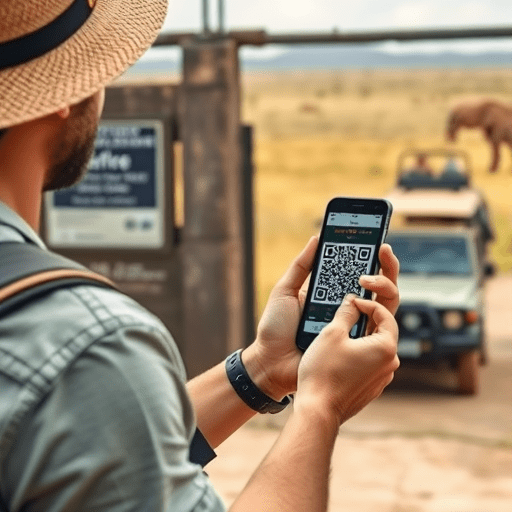
For decades, ethical wildlife tours have lived and died by their marketing copy. A lodge calls itself “eco-friendly,” a safari operator claims 10% of profits go to anti-poaching, and tourists buy in on faith. But in 2026, faith is finally being replaced by verification. Blockchain tracking — the same distributed-ledger technology behind cryptocurrencies — is now being deployed across the wildlife tourism sector to turn vague promises into auditable, immutable proof. And that shift is making old-school greenwashing nearly impossible to sustain.
The Greenwashing Problem Is Worse Than You Think
Greenwashing in wildlife tourism isn’t just misleading — it’s destructive. When travelers unknowingly support tours that bait wild animals, disturb breeding grounds, or funnel money away from local communities, they’re paying for the very harm they hoped to prevent. Regulation has been slow, and certification schemes remain fragmented and often self-serving. A recent industry review found that fewer than a third of eco-certified tour operators publish transparent, third-party reports on their actual conservation spending. That trust deficit has opened the door for a technological reset.
How Blockchain Tracking Turns Claims into Proof
At its core, blockchain tracking creates a permanent, tamper-proof record of financial and operational data. Every time a tour company moves money, records a conservation action, or logs a wildlife sighting, that entry can be verified by independent auditors — and by tourists themselves. Here are three concrete ways the technology is changing the game.
1. Immutable Proof of Conservation Contributions
Instead of taking a brochure’s word that “a portion of profits supports rangers,” travelers can now trace a donation from their booking payment to a specific park account. Smart contracts hold funds in escrow and release them only when defined conditions are met — say, a minimum number of patrol hours logged or a confirmed reduction in snare incidents. The donation isn’t a narrative; it’s verifiable data on the chain.
2. AI-Powered Verification of Actual Wildlife Encounters
Blockchain tracking works best when paired with AI. Camera traps and image-recognition systems can confirm that a guide took tourists to a genuine wildlife viewing site — and not into a fenced enclosure with tranquilized animals. Those AI-verified sighting records are stamped onto the blockchain, giving travelers an uneditable “proof of encounter” that matches exactly what was advertised in the tour itinerary.
3. Transparent Ecotourism Supply Chains
Wildlife tours depend on a web of providers: lodges, transport, local guides, food suppliers. Every sustainability claim — solar-powered camps, locally sourced meals, fair-wage guides — can be logged on a shared ledger. Travelers scan a QR code on their booking confirmation and see a real-time map of who was paid, when, and for what. It’s radical transparency, and it directly undermines the vague certifications that greenwashers have relied on for years.
From Seals of Approval to Self-Executing Trust
Traditional eco-labels ask you to trust a third party. Blockchain flips the model: it asks the data to prove itself. Conservation payments can be structured so that a portion of each tour fee is held by a smart contract and automatically released to a community-managed wildlife trust only when a reputable monitoring group confirms the promised impact. No middleman, no marketing department. The path from tourist wallet to on-the-ground conservation becomes transparent, open to public inspection, and virtually impossible to fake without collusion across multiple independent validators.
What Travelers Actually Get from a Ledger-Backed Tour
For the average traveler, the experience of an ethical wildlife tour doesn’t change much on the surface. You still wake up for a pre-dawn game drive, track elephant prints with a local guide, and watch the sun rise over the savanna. What changes is everything you can verify after the trip. Tourists can access a simple dashboard showing the exact conservation contribution their trip made, complete with on-chain timestamps, geotagged photos, and AI-verified ranger patrol records. That kind of post-trip transparency turns a one-time experience into a long-term accountability relationship.
More importantly, it rewards the operators who are actually doing the work. Tour companies that embrace blockchain tracking can stand out in a crowded market with hard evidence rather than buzzwords. A safari company can publish its ledger publicly — every dollar allocated, every patrol confirmed, every community payment logged — and let the data speak against competitors whose claims remain flimsy and unverifiable.
Will It Really Scale? The Challenges Ahead
It would be dishonest to call this an overnight revolution. Blockchain adoption faces two major hurdles in the coming years.
First, the digital divide in many key wildlife regions. A park ranger in a remote conservancy may not have reliable internet access to upload patrol logs, let alone maintain a blockchain node. Offline-first mobile apps — which sync data to the ledger whenever connectivity appears — are already being piloted, but widespread deployment will take time and dedicated funding.
Second, the threat of ledger greenwashing. If blockchain tracking becomes fully commercialized, bad actors could misuse it to legitimize the wrong data. A tour could log conservation spending on-chain while still enabling harmful animal encounters. That is why governance matters: independent verification, AI-trained auditors, and meaningful community oversight all need to work hand-in-hand with the technology.
The Road to Verifiable, AI-Powered Field Data
The most exciting frontier isn’t just automated payments — it’s autonomous data collection. AI systems that identify individual animals are generating a living census of threatened species. When these AI registries are anchored to a blockchain, conservationists get something they’ve never had before: a tamper-proof, continuously updated record of where species are thriving or declining. Tour operators can align their routes and impact commitments with real, current conservation data instead of static reports from years ago.
Imagine a tour operator who can say, with a public ledger to back it up: “We relocated 25 elephants away from a conflict zone, our rangers intercepted 12 poaching attempts, and our local partners received $140,000 in verified payments. Every claim is traceable on-chain, and our AI sightings data was cross-validated by an independent consortium.” That is a fundamentally different value proposition from the old “we love nature” brochure — and it’s exactly where the industry is heading.
Holding the Wild to a Higher Standard
Ethical wildlife tourism has always been built on a paradox: travelers want to see endangered animals without accidentally funding the forces that endanger them. Blockchain tracking cannot solve every issue in conservation, but it can dismantle the dishonest marketing fog that surrounds “ethical” tours. When promises are written into transparent, verifiable code, greenwashing loses its footing. The tours that endure will be the ones that can prove their impact — to the data, to the ledger, and to a new generation of travelers who expect nothing less.