The world of adaptive sports is no longer just about participation—it’s about precision. In 2026, adaptive sports tech innovations have moved past the prototype stage and into the training rooms, track lanes, and race courses where milliseconds matter. For para athletes, the latest generation of smart equipment and AI-driven coaching tools doesn’t just level the playing field; it redefines the field entirely. This article compares three breakthroughs—smart racing wheels, AI form coaches, and energy-storing prosthetics—and shows how they’re boosting performance in ways that once seemed out of reach.
These aren’t incremental updates. They represent a mindset shift: adaptive gear is now expected to generate data, adapt to the athlete, and store and return energy like a perfectly tuned spring. Whether you’re a coach tweaking a stroke pattern or an athlete seeking a personal best, understanding the capabilities and trade-offs of each innovation can be the difference between a bronze and a world record. Let’s break down what’s changed, what works, and where the real gains are coming from.
Smart Wheels: Where Grip Meets Real-Time Data
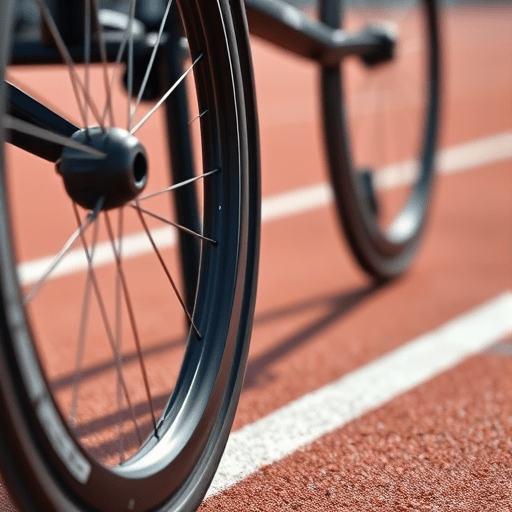
The racing wheelchair has been a static piece of equipment for decades—a welded frame, two big wheels, two small ones, and a set of push rims. In 2026, that’s no longer true. Smart wheels now embed sensors directly into the rim, hub, and tire, turning every stroke and every turn into a stream of telemetry. The result is a wheelchair that can tell an athlete exactly where they’re losing speed, how efficiently they’re transferring force, and when a tire is about to compromise their traction.
What Makes a Wheel “Smart”
- Integrated inertial sensors: Measure acceleration, braking, and angular velocity in real time.
- In-rim force meters: Detect the angle and magnitude of each push, identifying imbalances between left and right arms.
- Tire pressure and grip monitoring: Alert the athlete to pressure losses or surface changes before they become race-ending problems.
- Bluetooth and ANT+ connectivity: Send data to a smartphone or coach’s tablet for immediate analysis.
The practical impact is significant. Consider a para track cyclist or wheelchair racer who has been told for years to “push smoother” without concrete evidence. Smart wheels now provide a visual breakdown of each push phase—where force peaks, where it drops off, and how much energy is lost to sideways motion. In test runs with national-level athletes, this kind of feedback has been shown to improve propulsion efficiency by up to 12%, according to a 2025 study from the International Journal of Sports Engineering. That’s not marginal; that’s the difference between fourth place and a podium finish.
But smart wheels aren’t just for elite racers. Recreation athletes and weekend road racers benefit from the data too, especially when learning how to avoid common energy leaks. The biggest challenge remains price—a full smart wheel system can cost as much as a high-end racing chair itself. For teams funded by grants, that means making strategic choices about which athletes get the tech first.
AI Form Coaches: The Unblinking Eye for Technique
Video analysis has been part of sports training for decades, but the difference in 2026 is that AI form coaches don’t just record—they understand. Using computer vision and machine learning, these systems can now watch a para athlete’s movement pattern, compare it to a digital model of optimal biomechanics, and deliver corrections within seconds. No human coach can stand at every angle on every lap. An AI system can.
What sets this generation of AI apart is its adaptability to disability-specific mechanics. Unlike generic running or swimming apps, adaptive sports AI coaches are trained on datasets that include amputee runners, wheelchair basketball players, seated throwers, and para swimmers. They recognize that a one-arm push stroke or a unilateral gait pattern isn’t a deviation to be corrected—it’s a baseline to be optimized.
Where AI Coaching Excels
- Real-time form feedback: During a sprint or a swim set, a connected camera or wearable sensor offers audio cues like “shoulder drop” or “knee drift.”
- Long-term trend spotting: AI can analyze weeks of training logs to detect fatigue patterns that precede injury.
- Sport-specific drills: Generate personalized drill routines based on an athlete’s weak phases, not a generic exercise menu.
- Accessibility: Many apps now include voice control, high-contrast displays, and integration with hearing aid devices.
The most striking example comes from para swimming. AI form coaches using underwater cameras track stroke length, body roll, and breathing asymmetry. In one pilot program with a national para swimming team, athletes using these systems reduced drag-related time loss by an average of 0.42 seconds per 50 meters over a season. That kind of gain is almost impossible to get from human observation alone, because the differences are too subtle to see with the naked eye.
The caveat? AI is still a tool, not a replacement. A good coach knows how to interpret the data, motivate an athlete, and adjust the plan when life gets complicated. The most successful teams in 2026 are those that treat AI as an assistant—unbiased, tireless, and always available—rather than a substitute for human judgment.
Energy-Storing Prosthetics: The Promise of the Perfect Spring
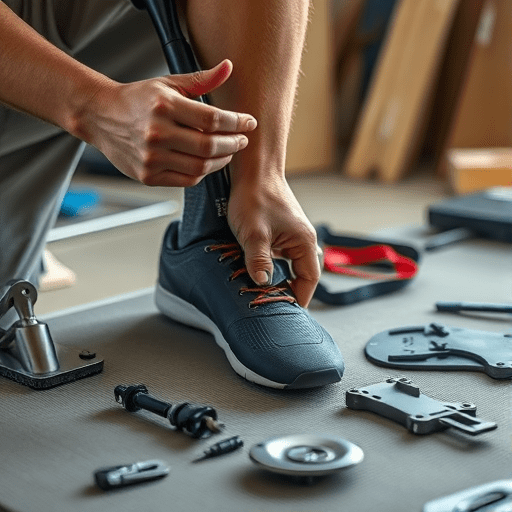
Energy-storing prosthetics are not new—the iconic flex-foot blade has been around for decades. But the 2026 generation of prosthetics has turned energy storage into a fine art. Advanced composite materials, optimized blade geometries, and even active micro-processor controls mean that prosthetic legs, feet, and even arm components can now absorb impact, store the elastic energy, and return it at the exact moment of push-off.
For sprinters, the effect is dramatic. The world’s best blade runners achieve a return rate of over 90% of the energy they put into the ground—far more than a human ankle can do on its own. That’s why the debate about “mechanical advantage” continues to rage. But for athletes within the rules, the newest prosthetics are not about cheating—they’re about reducing the physiological tax of every stride.
Key Developments in Energy-Storing Prosthetics
- Carbon fiber nanothread layers: Stronger and lighter than ever, with a more linear stiffness curve that mimics a natural spring.
- Adaptive heel mechanics: For everyday running and jumping, the heel’s compressibility changes based on terrain and speed.
- Sensor integration: Some bionic knees and feet now communicate with a smartphone app, logging load distribution and warning athletes when a component is fatigued.
- Modularity: A single socket can attach to different blade types—one for track sprints, one for long-distance road running, one for high jumping.
The performance boost is real, but so is the need for customization. A blade that feels perfect for a 100-meter sprinter may be completely wrong for a basketball player. With energy-storing prosthetics, the athlete’s socket alignment, blade stiffness, and toe angle all interact with body weight, muscle fiber composition, and even the surface of the competition venue. The best results in 2026 come from deep collaboration between prosthetists, biomechanists, and the athletes themselves, often using motion capture data to fine-tune the prosthetic to the millisecond.
Comparing the Three: Which Innovation Moves the Needle?
All three technologies promise performance gains, but they operate on different timelines and different athletic needs. Here’s a practical comparison:
- Smart wheels: Immediate feedback, high cost, and a relatively short pay-off period. Best for wheelchair racers and basketball players who want to refine technique quickly.
- AI form coaches: Available at a variety of price points, from free smartphone apps to high-end studio systems. The key variable is consistency—the more data you feed it, the better it gets.
- Energy-storing prosthetics: Significant investment, but the gains are built into the hardware. Once fitted and tuned, they require less ongoing analysis than the other two technologies.
For a team with limited resources, AI form coaches are probably the most cost-effective entry point. They require no new equipment—just a camera and a willingness to collect data. Smart wheels are a stronger choice for a wheelchair-based sport where propulsion economy is the main bottleneck. Energy-storing prosthetics are non-negotiable for amputee runners in track and field; there’s no competitor at a high level using a solid-ankle prosthetic anymore.
It’s also worth noting that these innovations don’t exist in isolation. One of the most exciting trends of 2026 is the integration between them. Imagine a wheelchair racer using smart wheels to identify a force imbalance, then using an AI coach to design a corrective strength routine, all while a prosthetic ankle with energy storage handles the final push off the start line. That’s not science fiction—that’s the adaptive sports training plan of a modern national team.
Conclusion
The wave of adaptive sports tech innovations arriving in 2026 is fundamentally changing what it means to train, compete, and win as a para athlete. Smart wheels turn every push into actionable data, AI form coaches offer a tireless second set of eyes, and energy-storing prosthetics put a high-performance spring in every step. None of these tools replace the hard work, dedication, and resilience of the athlete. But they do something just as important: they give that effort a sharper edge. For anyone involved in adaptive sports—whether as an athlete, coach, or engineer—the question is no longer whether to adopt these technologies, but how quickly they can start making them work.