Para badminton has come a long way from being an afterthought in adaptive sports. It is a fast, technical, and deeply competitive game that now has a clear international calendar and a growing base of recreational players. If your facility has been wondering how to start a para badminton program at your local gym, you likely already know the hard part: people with physical impairments are not a niche group, but they are often under-served by mainstream fitness and sport facilities. The good news is that a well-run program does not require massive capital investment. It requires an honest accessibility audit, a smart equipment plan, and a coaching team that understands IPC certification requirements. With those three pillars in place, your gym can offer a sport that keeps players coming back—and that might even produce the next generation of Paralympic talent.
Start with an Accessible Court Audit
Before you order a single shuttlecock, walk through your facility the way a wheelchair player would. A standard badminton court is a finite rectangle, but the experience of getting onto that court is just as important as the lines on the floor. The term “accessible courts” is often reduced to “does the door fit a wheelchair?”—but in practice, it means a complete pathway from the car park to the changing room, to the court, and then back out again.
Use this checklist for your first site review:
- Doorways and hallways: Measure clear width, not just doorway width. If a hallway has equipment, lockers, or furniture narrowing the path, that becomes the effective width.
- Reception and check-in: Ensure the front desk has a lowered section or a tablet that can be handed to a seated player. Nobody should have to wait for help just to sign in.
- Thresholds and ramps: Check for raised thresholds, uneven flooring, or small step-ups that can stall a manual wheelchair. Camber or slope matters more than absolute distance.
- Changing and toilet facilities: Accessible toilets are a legal minimum in many regions, but you should also check if the shower floor is non-slip and if there is enough space for a wheelchair to turn around.
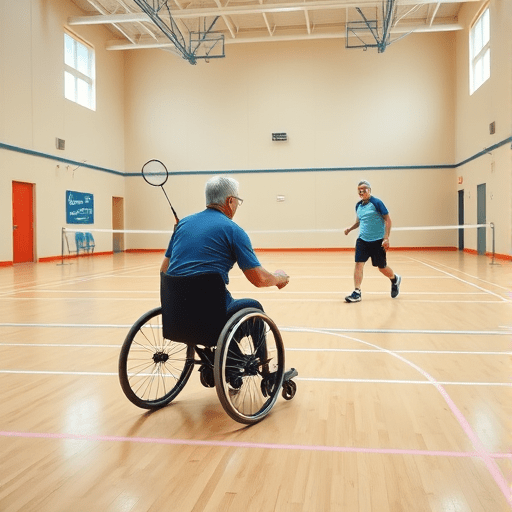
- Court surface and clearance: The playing area needs to be level, dry, and high-traction. Around the court, leave extra space—at least one full wheelchair length—so a player can move into position without scraping against walls or adjacent courts.
- Lighting and contrast: For players with visual impairments, even a small change in contrast between the shuttlecock and the background can be significant. Flickering or uneven lighting, or windows creating glare, can turn a simple rally into a safety issue.
If your gym already has multi-purpose courts, you may not need to build anything new. Many para badminton programs operate on regular badminton courts with removable wheelchair-friendly mats or additional space around the existing lines. The key is to document what you find, fix the critical barriers, and then be transparent about any remaining limitations.
Low-Cost Gear: Smart Choices Without Shrinking the Experience
One of the most common misconceptions about para badminton is that it requires expensive custom equipment for every participant. That is rarely true for a community-level program. Standard rackets, nylon shuttlecocks, and even the same portable nets used by junior players can work for most sessions. The real investment is in a small number of thoughtfully chosen items that make the sport feel serious and safe.
For beginners, look for rackets with a slightly larger head and a flexible shaft. These are easier to generate power with and more forgiving on the joints. You do not need the top-end carbon model used by world-ranked players; a handful of intermediate rackets in different balance points will give players a chance to find what feels right. Nylon shuttlecocks are the right choice for practice because they last longer than feather shuttles and behave consistently in a busy gym environment. If courts are nearby, buy a dozen of the same speed rating and label the tubes clearly.
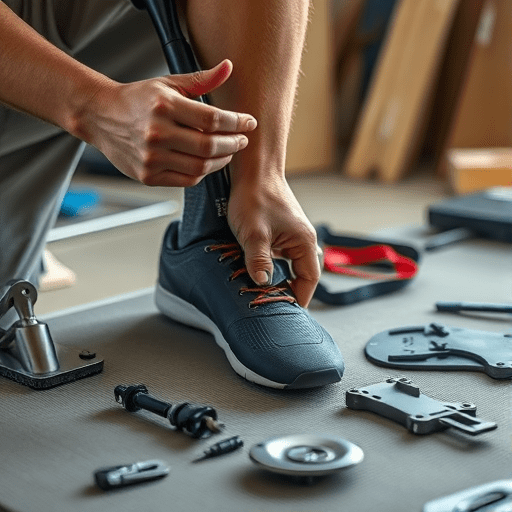
For wheelchair players, the biggest equipment challenge is usually the chair itself. Competitive sports wheelchairs can be expensive, but they are rarely necessary for the first season. Many local hospitals, rehabilitation centers, and mobility equipment suppliers are willing to lend or donate older manual wheelchairs that are no longer in clinical use. With a borrowed chair, you can host an introductory block while you build a business case for purchasing a used sports chair later. Add a few simple accessories that do not cost much:
- Small rubber wheel covers or guards to protect both the player’s hands and the court floor during sharp turns.
- Foam or gel seat cushions for comfort and posture stability during longer sessions.
- Non-marking anti-tip casters for wheelchairs that have them, to avoid scuffing the floor.
- Shuttle tube holders or storage baskets that can be attached to the chair, so players manage their own service practice without constantly bending down.
For standing classes with limb impairments, you may need little more than the existing badminton gear. Some players with a lower-limb prosthesis may prefer a brace or a small height adjustment before serving. Talk to each player individually. The cheapest equipment is the equipment that lets a person play without discomfort for ninety minutes.
IPC Certification: What Coaches Actually Need
“IPC certification” can sound like a single credential, but the reality is more layered. The International Paralympic Committee works with sport-specific international federations—for badminton, that is the Badminton World Federation (BWF)—to maintain classification rules, coach education pathways, and athlete development standards. A local gym does not need to have all its coaches certified at the highest international level from day one, but it should have a clear plan to raise its competency level quickly.
Start with an IPC- or BWF-recognized introductory course in para sport coaching. These courses cover basic concepts like impairment-specific movement patterns, communication strategies, and how to run a safe but intense training session. Crucially, they also introduce the classification system: for instance, the sport classes in para badminton include WH1 and WH2 for wheelchair users, SL3 and SL4 for standing lower-limb impairments, SU5 for upper-limb impairments, and SH6 for short stature. Coaches do not need to be experts in every class, but they need to know why classification exists and why it matters for fair competition.
Beyond the formal course, schedule a practical training session with an experienced para badminton coach or a local disability sport organization. Written material alone will not teach you how to adjust a serve for somebody who cannot grip the handle in the usual way. Ask your staff to sit in a manual wheelchair for a one-hour session and try to execute a drop shot. That experience will change how they coach.
Session Structure That Works for Mixed Impairment Groups
You do not need to wait until you have enough players for separate sport classes. Many successful community programs mix standing and wheelchair athletes in the same session, using adapted rules and some thoughtful station rotations. The first few weeks should be about skill development and fun, not tournament brackets.
A typical 90-minute session could look like this:
- Warm-up (15 minutes): chair mobility work for wheelchair players, gentle lunges and arm circles for standing players, and a group reaction game that gets everyone moving.
- Technical station work (30 minutes): set up three or four stations—clears, drops, serves, and net play. Provide rackets of different balances and allow players to switch stations freely.
- Modified games (30 minutes): play singles or doubles with flexible rules. For wheelchair players, allow the chair to count as part of the body and let two bounces happen before the return. For standing players, keep the standard rule unless the player asks for an adaptation.
- Cool-down and feedback (15 minutes): stretch, share what worked, and ask each player what they want to practice next week.
Having a flexible structure not only keeps costs low; it also creates a welcoming environment where players can try the sport before committing to a specific pathway. Some participants will want recreational play only. Others will ask about competition within a few months. Your session design should allow both goals to coexist.
Build Partnerships, Not Just Programs
The most successful para badminton programs are rarely a gym’s solo effort. They work because local rehabilitation centers, disability advocacy groups, and para-athlete networks know the program exists and feel personally invested in it.
Reach out to local hospitals and physiotherapy clinics with a short flyer that describes the program as inclusive and beginner-friendly. Offer to host an open day where clinicians can refer their patients directly. Connect with the national badminton federation and ask if there is a regional para badminton development officer. If there is no local para badminton group yet, you might be the organizer who brings coaches and players from neighboring towns together. This also positions your gym as a legitimate hub for adaptive sports, rather than just a venue that rents court time.
Keep the Program Accountable
Starting the program is the exciting part; keeping it alive requires regular evaluation. Review your attendance every month and look for patterns. Are players with wheelchairs stopping after the first session? Is the lighting still causing problems during late afternoon games? Do coaches feel confident running drills with mixed impairment groups? Ask players directly, in an informal way, what they would change. A simple question like “What made you miss last week?” can reveal practical barriers that a written form will never capture.
Budget for small repairs, too. Wheelchair gloves wear out, racket grips get sweaty, and shuttlecocks vanish with surprising speed. A modest monthly line item for consumables prevents the program from slowly deteriorating. If your gym is serious about growing para badminton, consider setting aside a separate fund for one or two used sports wheelchairs after the first six months of demonstrated demand. That single purchase can dramatically raise the level of play and attract more experienced athletes to the facility.
Conclusion
Starting a para badminton program at your local gym is not about building a perfect Paralympic training center overnight. It is about making deliberate, low-cost decisions that remove barriers. Audit your accessible courts, source flexible gear that can be shared, invest in IPC certification for at least one passionate coach, and design sessions that put the athlete’s experience first. Do that, and the program will grow not because of expensive equipment, but because it gives people a genuine chance to play a brilliant sport.