The question of why your next gaming PC should be a console used to sound like a compromise. For decades, “real” gamers bought PCs because they were objectively faster, more flexible, and future-proof. When you built a $1,200 rig, you knew exactly where the extra money went: raw frames per second. In 2026, that promise has quietly inverted. A $500 console now delivers a per-dollar gameplay experience that a $1,200 PC can only match with a heavy dose of patience, discount-hunting, and driver-troubleshooting. This isn’t a fanboy take; it’s an accounting of how modern game development, GPU pricing, and hardware design have reshaped the value curve.
The Shrinking Performance Gap Between $500 and $1,200
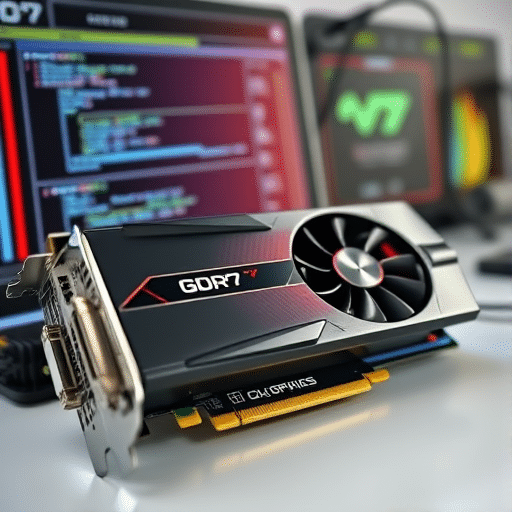
Let’s talk about the elephant in the room: the price of graphics cards. In 2026, the mid-range GPU market is brutal. A single GPU that comfortably plays new AAA titles at 1440p with high settings costs anywhere from $550 to $750 on its own. That leaves less than $500 for a CPU, motherboard, RAM, storage, power supply, and case — components that are also more expensive than they were two years ago, thanks to memory price hikes and shifting manufacturing costs. The result? The ideal $1,200 PC build is now a study in compromise: a decent CPU, a mid-tier GPU, budget cooling, and a case with cardboard-tier build quality.
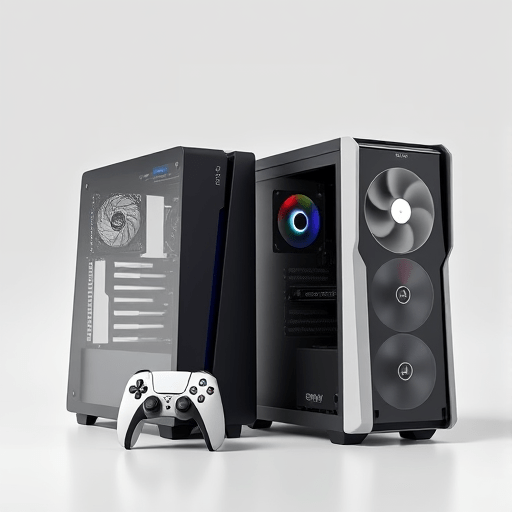
A $500 console, by contrast, is a fully engineered system. The custom APU, unified memory pool, and bespoke cooling are designed to work as one cohesive unit. When Sony or Microsoft ships a machine at that price, they are intentionally taking a loss or breaking even on hardware because they make their money elsewhere. That business model releases the player from the hobbyist tax. You are not paying for the “gaming” label on every internal component; you are paying for a curated experience that was tested, validated, and optimized for years.
Optimization Is the New Hardware Advantage
The old argument was that PCs always win because raw hardware eventually trumps optimization. That logic held when games launched on consoles and then slowly starved as they aged. In 2026, the opposite is true. Developers build games for console hardware first because that is where the most consistent install base lives. PC ports are increasingly layered on top — often with shader compilation stutters, bizarre CPU bottlenecks, and memory leaks that take months to patch. When a $500 console runs Cyberpunk 2077: Final Edition at a rock-solid 60 frames per second with ray-traced reflections, while a $1,200 PC still drops to 40 FPS during crowded scenes because of an unoptimized shader cache, the price-to-performance argument collapses.
This is also why the phrase “performance per dollar” has become a marketing shell game. If a PC has 50% more theoretical GPU power but loses 30% of it to inefficiencies, driver issues, and inconsistent game patches, the real-world performance delta is razor-thin. And when you factor in the Windows tax — background services, antivirus scans, and scheduled updates hijacking your frames — the console’s dedicated operating system starts to look like a serious competitive advantage.
What $500 Actually Gets You on a Console
Let’s be specific about the value proposition. The current generation of $500 consoles offers features that would cost double to replicate in a PC build:
- Near-instant suspension and resume: Pausing a game and returning to it two days later, in the exact same frame, still requires workarounds on PC. On a console, it is seamless and silent.
- Dolby Atmos and 3D audio: The spatial audio processing is baked into the hardware, not an extra license or a finicky software configuration.
- DualSense-style adaptive triggers and haptics: Features that most PC gamers never experience because the PC version either ignores them or requires third-party middleware to work.
- Zero shader compilation stutter: This alone has changed the gaming experience in 2026. Even expensive PCs suffer hitches when loading new areas or encountering new effects. Consoles hide this work behind loading screens.
These aren’t niche features. They touch every session, every time. When evaluating per-dollar performance, they deserve to be counted.
Where the PC Still Wins (And Why It Might Not Matter)
To be fair, the PC still dominates in a few areas. Mouse-and-keyboard shooters remain a genre-defining advantage for PC. Modding communities are still far more robust on PC, and the PC’s ability to run games at ultra-high refresh rates in esports titles like Valorant or Counter-Strike 2 with a budget APU is genuinely unmatched. Even the lowest console cannot touch a $400 PC built for 240Hz competitive play. Also, the PC’s library of older titles, through emulation and digital storefronts, dwarfs what the console offers.
But these are niche priorities in 2026. The average gamer buys a handful of titles a year, wants them to look good, and wants them to play smoothly. They are not upgrading GPUs every two years or tweaking a BIOS to activate XMP profiles. For them, the console’s “just works” philosophy is not a limitation; it is the entire point.
Who Should Actually Buy a PC in 2026?
Let’s narrow the demographic. A PC still makes sense if you are a competitive esports player, a streamer who needs multiple capture overlays and encoding flexibility, a programmer, or someone who simply enjoys the tinkering process as part of the hobby. If building a PC is the fun, this article is not speaking to you; go forth and build your monster. But if you are a parent buying a gaming machine for a teenager, a former PC gamer who just wants to sit down and play, or a budget-conscious enthusiast who wants the best visual experience without the spreadsheet planning, the argument is clear.
The economics become even more persuasive if you factor in the total cost of ownership. A $500 console in 2026 will realistically run the next wave of AAA games for the next five to six years. A $1,200 PC will also last five to six years, but you will likely be tempted to upgrade the GPU halfway through — if the PC port is stable enough to run at the quality you paid for. Add in the inevitable discounted subscription tiers and the console’s lower power draw, and the “cheap PC” myth dissolves completely.
The Real Reason Gamers Are Switching
The quiet truth is that gamers are switching because of fatigue. The joy of playing a game is being interrupted by the choreography of PC maintenance: driver updates, Windows reboots, game launchers that require three logins, and settings menus that offer 40 options you never touch. In 2026, an entire generation of players is aging out of that hobby. They care about per-dollar performance in the truest sense — how much joy, stability, and gameplay do you get for every dollar spent? The console answers that question with a simplicity the PC ecosystem cannot replicate.
This is not a eulogy for PC gaming; it is a message to people whose nostalgia for the platform has clouded their judgment. When the console offers a better frame rate in the games you actually play, at less than half the upfront cost, the category label “gaming PC” becomes just a name. The hardware inside the box matters less than the experience it delivers.
Conclusion
The 2026 gaming market has inverted the old hierarchy. A console is no longer the bargain-bin alternative to a serious PC; it is the rational choice for a majority of players who want maximum gameplay quality per dollar. The PC remains a wonderful platform for those who cherish flexibility, mods, and tinkering. But if your goal is simply to play great games with gorgeous visuals and a stable frame rate, the $500 console is the best gaming PC you can buy this year — it just doesn’t look like one from the outside.