For years, the classic safari has sat on every animal lover’s bucket list: open savannah, distant lions, and the low rumble of a diesel Land Cruiser. But as the departure lounge and the long-haul flight feel less like part of the dream and more like a contradiction, a quieter movement is growing. Bison watching in Poland offers Europe’s ethical safari alternative—a way to experience raw, unfiltered wildlife without crossing a continent or compromising on conservation. In the ancient woodlands of Białowieża and the meadows of Knyszyn, rewilding tours are redefining what a safari can be.
Why Poland’s Bison Watching Is the Safari Redefined
Traditional safaris are extraordinary, but they come with a heavy environmental price: long-haul aviation, water-guzzling lodges, and crowded game drives that disturb the animals they promise to show. Poland’s rewilding movement offers a counterbalance. Europe’s largest land mammal, the European bison, was once driven to extinction in the wild. Today, thanks to decades of careful conservation and rewilding, it is back—not in a zoo-like enclosure, but in free-roaming herds that shape the forest itself.
What makes this an ethical safari rather than a simple nature walk is the philosophy behind it. Rewilding tours don’t just observe bison; they exist to protect them. They limit group sizes, avoid feeding or baiting animals, and channel revenue directly into habitat restoration, anti-poaching patrols, and scientific monitoring. For animal lovers who care about the welfare of wildlife as much as the thrill of seeing it, this is a safari with a conscience.
Rewilding Tours vs. Traditional Safaris: A Side-by-Side Comparison
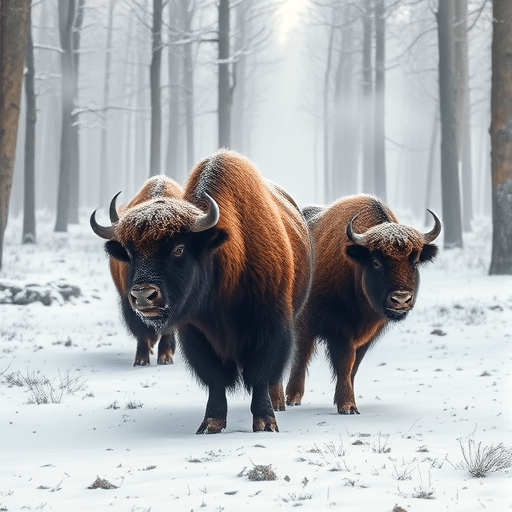
At first glance, a herd of bison plodding through a snowy clearing might not look like a lion hunt on the Serengeti. But compare the two deeper, and the advantages of a Polish rewilding tour become clear.
- Travel footprint: Traditional safaris often require intercontinental flights and long internal transfers. A bison safari in Poland is reachable by train or a short regional flight, making it a lower-impact alternative.
- The tourist pressure: African safari hotspots can see dozens of vehicles around a single lion sighting. In Białowieża, group sizes are intentionally small, and guides rotate trails to give the bison space.
- Wildlife guarantee: Traditional safaris often rely on habituated animals or predictable waterholes. Polish rewilding tours don’t make promises—the bison are genuinely wild, and the search is part of the experience.
- Conservation model: Safari fees in Africa can be opaque, with little local benefit. Rewilding tours in Poland are often run by NGOs, research stations, or state forest services with transparent reinvestment in the ecosystem.
- The experience itself: Instead of watching from a car, you walk through primeval forest, learning to read tracks, listen for branch breaks, and understand the forest’s ancient rhythms. It is a deeper, more active safari.
Where to See Wild Bison in Poland: Białowieża and Beyond
Białowieża Forest is the crown jewel of European bison watching. Straddling the border with Belarus, it is one of the last remaining parts of the primeval forest that once covered much of Europe. Here, the bison roam freely across more than 1,500 square kilometres, and experienced local guides know where to find them without harassing them.
But Białowieża is only the beginning. The Knyszyn Forest, northeast of Białystok, is another stronghold, with a smaller but growing herd and far fewer visitors. The Borecka Forest in the Masurian Lake District offers a more remote alternative, where the bison share the landscape with beavers, cranes, and wolves. More recently, rewilding projects have released bison into the forests of West Pomerania, creating new opportunities for low-key encounters in western Poland. That range of habitats is part of what makes Poland such a compelling safari destination: you can visit a different forest each season and never see the same landscape twice.
Behind the Scenes: How Rewilding Tours Support Bison Conservation
The European bison is a true conservation success story. All of today’s nearly 10,000 bison descend from just 54 animals kept in zoos and private reserves after the species went extinct in the wild after World War I. Rebuilding the population required more than just releasing animals; it required restoring entire ecosystems. Bison are ecosystem engineers—they graze, browse, knock down trees, and fertilise the soil, creating openings in the forest canopy that benefit insects, birds, and plants.
When you book a rewilding tour, your money does more than pay a guide. It supports the continuous monitoring of bison health, the careful genetic management that keeps the population strong, and the land purchases that expand habitat connections. Some tours cooperate with local farmers to install fencing and create wildlife corridors. Others help fund seasonal feeding stations that were established to keep bison from raiding villages during harsh winters. In every case, the tour is not separate from conservation—it is an active part of it.
What to Expect on an Ethical Bison Watching Tour
An ethical bison tour in Poland is not a roadside attraction. It begins early, often before sunrise, with a short briefing from a licensed guide who knows the forest’s current hotspots. The group moves slowly and quietly, stopping frequently to examine tracks, droppings, and scratched bark. You might walk for a while without seeing anything—and that is part of the point. The anticipation builds a connection to the land that a Jeep ride through savannah cannot match.
Then, as you round a clearing or look across a swampy meadow, you see them: massive, shaggy bison, seemingly prehistoric, standing motionless or rolling in damp earth. The guide will instruct you to keep a safe distance, usually at least 50 metres, and to stay downwind. You will watch the herd’s body language—a raised tail, a sudden turn, a low grunt—and learn to read those signals with your guide’s help. The encounter might last only minutes, but it stays in your memory far longer.
Ethical Safari Etiquette: Watching Without Interfering
The ethics of a bison safari rest on one principle: the animal’s welfare comes before the photograph. That means no calling, no baiting, no crowding, and no chasing. If a bison changes direction, the group moves with it, giving more space. If the animal is clearly stressed, the guide ends the observation and moves on. You will be asked to keep your phone on silent, speak in whispers, and avoid bright colours that could startle the herd.
Bison can weigh up to 900 kilograms and run faster than a horse. Respect for their space is not just an ethical choice—it is a safety one. Rewilding tours employ local experts who know the seasonal patterns of the herd, from the late-summer mating displays to the winter gatherings around feeding sites. They also know when to keep their distance.
When to Go and What to Bring
Every season in the Białowieża Forest has its own safari character. In spring, you might watch bison mothers with newborn calves, hiding in the undergrowth. Summer days are long and filled with birdlife alongside the bison. Autumn brings the bielik, or white-tailed eagle, and the mating season, when bulls can be more active and audible. Winter is the most reliable and dramatic time—snow-covered forest, animal tracks everywhere, and bison often gathering near the traditional feeding clearing that conservationists maintain.
If you want to increase your chances of seeing bison without compromising ethics, visit from November to February, when the animals are more visible in open areas. Dress in muted colours, waterproof layers, and sturdy boots. Binoculars are a must, and a telephoto lens for your camera will help you capture the experience without encroaching. Above all, bring patience. The bison are not performers; they are wild inhabitants of an ancient forest. And in that, they are a far more honest safari image than anything an enclave could offer.
Conclusion
Poland’s rewilding tours offer a rare synthesis: a genuine wildlife safari that enriches the ecosystem it celebrates. By choosing bison watching in Poland, animal lovers can trade the carbon-heavy safari for a more direct, humble, and hopeful connection with Europe’s own wild heart. The bison are waiting in the misty forests—patient, ancient, and finally at home.